

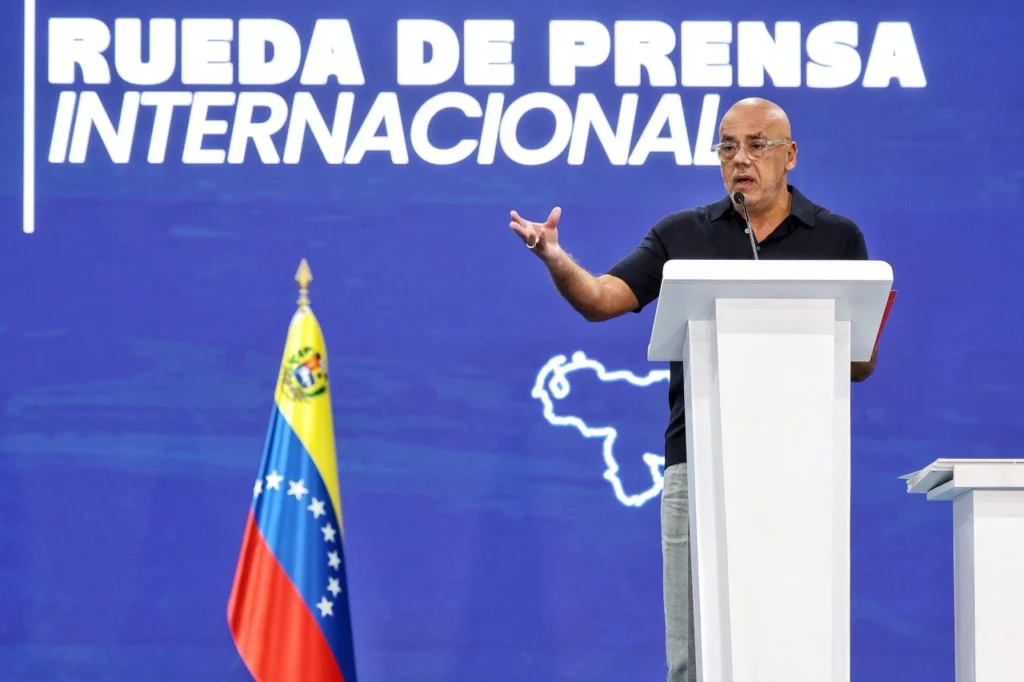
Venezuela housing reconstruction plan introduces biometric registry and rapid housing strategy to assist thousands after June earthquakes.
Related: Venezuela Earthquake Camps: 94 Crucial Shelters Provide Urgent Relief to Thousands
Venezuela housing reconstruction plan launches biometric system to assist earthquake victims
The Venezuela housing reconstruction plan has been officially launched as part of the government’s response to the devastating earthquakes of June 24, introducing a biometric registry system to streamline housing allocation for affected families. Authorities confirmed that the initiative aims to provide immediate and long-term solutions for nearly 18,000 people who lost their homes in the capital region.
Jorge Rodríguez, president of the National Assembly and head of the command structure overseeing temporary camps, presented the plan on July 11. He emphasized that the Venezuela housing reconstruction plan integrates technological tools and institutional coordination to accelerate recovery and ensure transparency in the distribution of housing.
The initiative includes the creation of a Unified Housing Registry, a biometric system using fingerprint technology that generates a QR-coded certificate, which will serve as official validation for receiving a new home.
Venezuela housing reconstruction plan introduces biometric registry system
A central component of the Venezuela housing reconstruction plan is the implementation of a biometric registration system designed to ensure accuracy and fairness in beneficiary selection. Each registered individual receives a digital certificate with a QR code, enabling authorities to track eligibility and prevent duplication or fraud.
Officials described this mechanism as a modernized approach to social policy, combining technology with public administration to improve efficiency. The system also supports the broader goal of targeted assistance, ensuring that resources reach the most vulnerable populations.
The Venezuela housing reconstruction plan also incorporates a comprehensive census of affected families, which will facilitate the distribution of direct financial assistance and guide reconstruction priorities.
Strategic pillars of Venezuela housing reconstruction plan
The Venezuela housing reconstruction plan is structured around three key strategies aimed at addressing both immediate and long-term housing needs.
First, authorities will prioritize the rapid construction of transitional single-family homes, providing immediate shelter solutions for displaced families. Second, the government plans to acquire properties from the secondary housing market, accelerating relocation efforts without waiting for new construction.
Third, the plan includes the completion of ongoing projects under the Great Housing Mission Venezuela, alongside the development of “earthquake-resistant cities” in La Guaira, designed to improve resilience against future disasters.
Together, these measures are expected to address an estimated demand of at least 25,000 housing units, reflecting the scale of the crisis.
Financing and international dimension
To support the implementation of the Venezuela housing reconstruction plan, the government has sought access to external financial resources. Authorities confirmed that formal communications were sent to international actors, including the United Kingdom, requesting the release of Venezuelan assets and gold held abroad.
These funds are intended to be directed into the “Venezuela Reborn Fund”, which would finance reconstruction projects and accelerate housing delivery. Officials argue that unlocking these resources is essential for ensuring the sustainability of the Venezuela housing reconstruction plan.
Updated impact figures and emergency response
The presentation of the Venezuela housing reconstruction plan included updated figures on the impact of the earthquakes. Authorities reported 4,333 fatalities and 16,740 injured, with approximately 91 percent of the injured already discharged from hospitals.
Currently, 94 temporary camps remain operational across Caracas, La Guaira and Miranda, providing shelter, healthcare and social support. These camps continue to serve as a bridge between emergency response and permanent housing solutions under the reconstruction plan.
Officials also addressed misinformation, denying reports of debris being dumped into the sea and clarifying that 1.28 million tons of rubble will be processed and reused through technological means. Additionally, they rejected claims of mass graves, stating that DNA and dental identification processes are being conducted to ensure dignified handling of victims.
Social support and infrastructure recovery
Beyond housing construction, the Venezuela housing reconstruction plan includes measures to restore damaged urban infrastructure. Authorities announced direct financial transfers to residential associations, enabling repairs to building facades, elevators and structural elements in affected neighborhoods such as Chacao, San Bernardino, Antímano and Mamera.
This approach reflects a broader strategy to stabilize communities while reconstruction progresses, ensuring that partially damaged housing can be safely rehabilitated.
The plan also considers employment reintegration, assessing the labor conditions of displaced individuals to facilitate their return to work, thereby supporting economic recovery alongside physical reconstruction.
Geopolitical context
The Venezuela housing reconstruction plan unfolds within a complex geopolitical environment, where access to financial resources and international cooperation plays a crucial role. The request to release Venezuelan assets abroad highlights ongoing tensions related to economic sanctions and financial restrictions.
These factors directly affect the country’s capacity to respond to large-scale disasters, influencing the speed and scope of reconstruction efforts. At the same time, the use of biometric technology in public policy reflects a broader global trend toward digital governance and data-driven social programs.
Regionally, the initiative underscores the importance of disaster preparedness and resilient urban planning in Latin America, where seismic risks remain significant. The success of the Venezuela housing reconstruction plan may serve as a reference point for future recovery strategies in similar contexts.
#ENVIDEO | El Gobierno de Venezuela anunció la creación de un fondo especial para apoyar a las juntas de condominio en la reparación de daños estructurales causados por el doble sismo. Además, puso en marcha un esquema de subvenciones para que las familias que perdieron sus… pic.twitter.com/DyDJxj4hQJ
— teleSUR TV (@teleSURtv) July 12, 2026
From teleSUR English via This RSS Feed.
With Marco Rubio running things…
