

Qatar aid Venezuela earthquake response expands with field hospitals and medical teams supporting thousands after deadly June 24 disaster.
Related: Venezuela to Deliver First 200 Quake-Affected Homes Next Week
Qatar aid Venezuela earthquake response strengthens medical support for victims
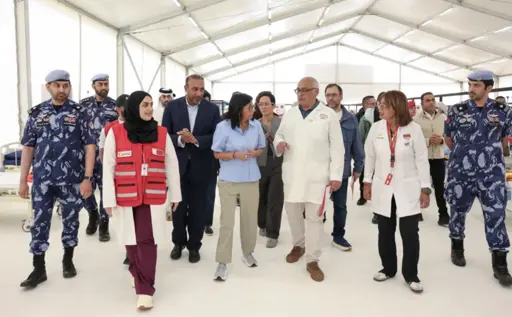
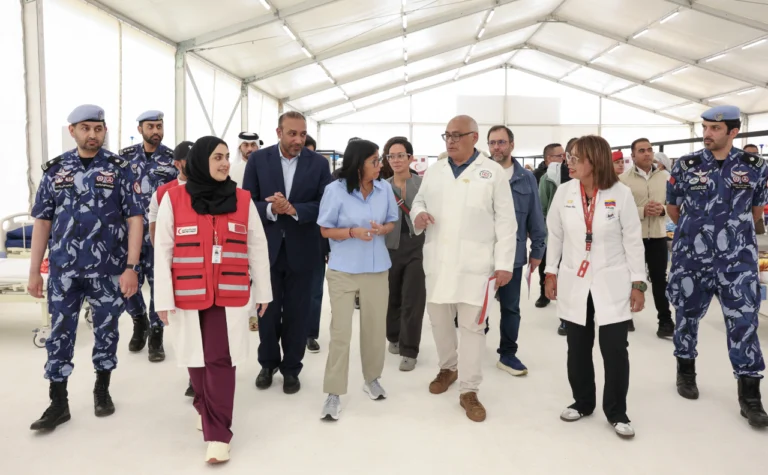
The Qatar aid Venezuela earthquake response has become a key component of the international humanitarian effort following the devastating earthquakes that struck the country on June 24. Acting President Delcy Rodríguez highlighted Qatar’s role during a visit to a mobile field hospital installed at the National Experimental University of Security (UNES) in Catia, Caracas, where she expressed gratitude for the support provided.
The Qatar aid Venezuela earthquake initiative forms part of a broader global response that has mobilized dozens of countries and humanitarian organizations. Thirteen field hospitals from different nations are now operating across Venezuela, providing critical healthcare services to displaced populations and those affected by the disaster.
Authorities confirmed that the earthquakes left over 1,400 people dead and thousands injured, with tens of thousands requiring ongoing medical attention. In this context, international medical cooperation has become essential to stabilizing the public health system.
Qatar aid Venezuela earthquake: field hospitals expand emergency care
The Qatar aid Venezuela earthquake effort includes the deployment of a fully equipped field hospital staffed by 27 specialized medical professionals, who began operations shortly after the earthquakes. The facility, located in Caracas, has the capacity to treat up to 320 patients daily and conduct 420 radiological diagnostics through advanced imaging equipment.
This infrastructure has significantly strengthened Venezuela’s emergency response capabilities, particularly in urban areas where health systems have been under intense pressure since the disaster. The hospital operates as part of a coordinated network supporting temporary shelters and affected communities.
Rodríguez emphasized that the Qatar aid Venezuela earthquake support ensures continued medical monitoring for individuals with chronic illnesses, as well as immediate care for trauma patients. The integration of international medical teams has helped maintain continuity of care in a highly challenging environment.
International cooperation reinforces Qatar aid Venezuela earthquake response
The Qatar aid Venezuela earthquake initiative is part of a wider framework of international cooperation involving more than 20 countries contributing medical teams and equipment. Venezuelan Health Minister Carlos Alvarado confirmed that foreign doctors and healthcare personnel are actively working alongside national teams in hospitals and emergency centers.
The presence of Qatar’s humanitarian mission also reflects coordination with international bodies following Venezuela’s request for assistance through the United Nations. The Qatar Red Crescent Society (QRCS), together with Qatar’s Internal Security Force (Lekhwiya) and state-backed funds, played a central role in organizing and deploying the field hospital.
Diplomatic representatives, including Qatar’s ambassador to Venezuela, participated in the official visit, highlighting the importance of bilateral cooperation during humanitarian crises. The Qatar aid Venezuela earthquake effort has been widely recognized by Venezuelan authorities as a vital contribution to relief operations.
Medical capacity and humanitarian impact
The Qatar aid Venezuela earthquake response has had a direct impact on healthcare delivery in affected areas. Field hospitals are not only treating injuries related to the earthquakes but also addressing pre-existing medical conditions that require continuous care, ensuring that vulnerable populations are not left unattended.
These facilities serve as extensions of the national healthcare system, particularly in regions where infrastructure has been damaged or overwhelmed. Mobile medical units allow rapid deployment and flexibility, enabling authorities to adapt to evolving needs on the ground.
The presence of international teams also contributes to knowledge exchange and capacity-building, strengthening local response mechanisms for future emergencies.
Geopolitical context
The Qatar aid Venezuela earthquake response illustrates the role of humanitarian diplomacy in shaping international relations. Qatar’s involvement highlights how non-Western actors are increasingly active in global disaster response, expanding their influence through humanitarian engagement.
For Venezuela, the support reflects a diversification of international partnerships amid complex geopolitical conditions. The collaboration demonstrates how humanitarian crises can create spaces for cooperation beyond traditional political alignments, fostering dialogue and mutual assistance.
At a regional level, the response underscores the importance of coordinated disaster management strategies in Latin America and the Caribbean, where natural disasters frequently test institutional resilience and international solidarity.
From teleSUR English via This RSS Feed.