

Strait of Hormuz management talks between Iran and Oman aim to secure safe navigation, resist U.S. pressure and stabilize global energy flows amid rising tensions.
Related: Iranian Supreme Leader Promises To Avenge Khamenei’s Death
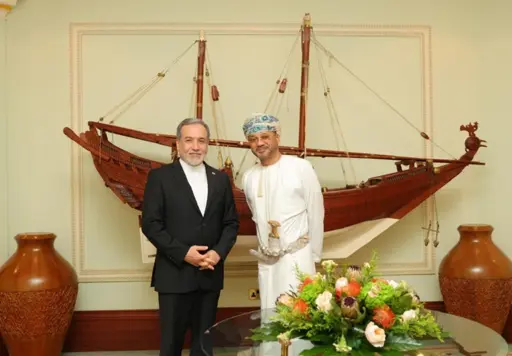
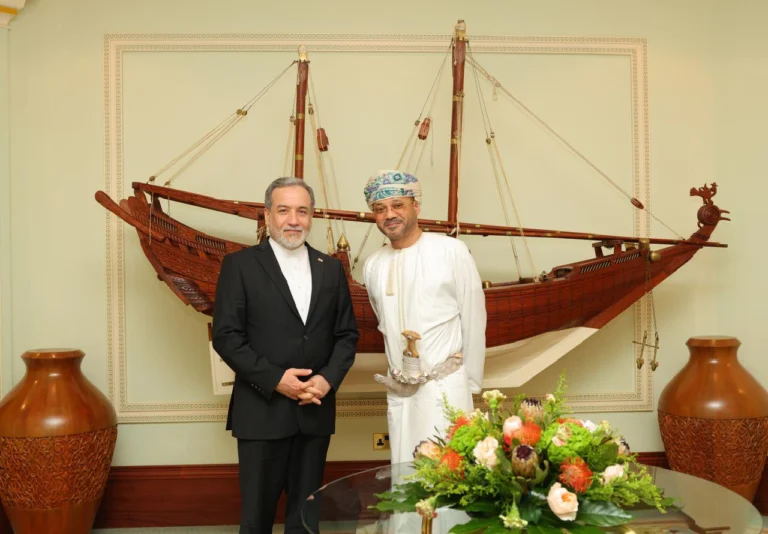
Strait of Hormuz management has moved to the center of regional diplomacy as Iran and Oman intensify coordination to guarantee safe navigation and protect sovereign rights in one of the world’s most critical maritime corridors. Iranian Foreign Minister Abbas Araghchi arrived in Muscat on Saturday, July 11, to review joint mechanisms for managing the strait and to advance security arrangements born from the Islamabad Memorandum.
Strait of Hormuz management talks between Iran and Oman
According to Iranian sources, Abbas Araghchi’s visit to Muscat is aimed at evaluating with Omani authorities how the Strait of Hormuz should be jointly managed in the current climate of heightened tension. The bilateral consultations seek to strengthen security across this strategic waterway, which is vital for global energy supplies and has been repeatedly affected by external military pressure.
Iranian Foreign Ministry spokesperson Esmail Baghaei explained that Strait of Hormuz management is a central component of a memorandum of understanding reached with the United States under the mediation of Pakistan and Qatar. That memorandum, however, was revoked following recent attacks carried out by Washington, which Tehran views as a clear violation of the agreed framework.
Baghaei recalled that the international agreement included the immediate lifting of the U.S. naval blockade imposed on Iran, a measure that had restricted commercial traffic and added friction to regional maritime routes. Strait of Hormuz management, in this context, is not only about technical navigation rules but also about undoing unilateral coercive steps that disrupt trade and security.
Iran’s delegation stressed that previous commercial restrictions imposed by the White House caused a sharp rise in crude oil and gas prices, worsening global inflation. From Tehran’s perspective, this proves that efforts to politicize energy routes have direct consequences for the world economy. For Iran and Oman, rigorously coordinated vessel transit that respects the sovereign rights of coastal states is now a historical necessity.
Technical commissions from both countries held detailed discussions on Article 5 of the Islamabad Memorandum, which is oriented toward neutralizing hostilities and ensuring free trade. These earlier meetings, conducted by high‑level diplomatic representatives, seek to build a model of mutual cooperation aligned with international law and with the principle of non‑interference in regional maritime governance.
- Iran Ministry of Foreign Affairs
- Oman Ministry of Foreign Affairs
- International Maritime Organization
Strait of Hormuz management, U.S. pressure and new cooperation mechanisms
Official sources report that Washington attempted to condition the pact by demanding unilateral public commitments from the Islamic Republic on maritime security, effectively seeking to turn the agreement into a one‑sided declaration rather than a balanced understanding. In the face of this pressure, Tehran has maintained a sovereign stance, insisting that the passage of foreign vessels must be subject to joint supervision plans with Omani authorities.
This position reflects Iran’s view that Strait of Hormuz management cannot be framed solely around external military priorities, but must be rooted in the rights and responsibilities of the states that actually share the strait’s coasts. By strengthening coordination with Oman, Tehran aims to build a security architecture that reduces the space for foreign interference while keeping commercial lanes open.
As part of this effort, the two sides agreed to create permanent working groups devoted to the technical development of maritime and port services in their shared area of influence. These mesas de trabajo are expected to focus on practical issues such as traffic monitoring, emergency response, pilotage standards and communication protocols between navies and civilian authorities. Strait of Hormuz management thus moves beyond diplomatic statements into operational planning.
Iranian diplomats argue that this high‑level rapprochement allows their foreign policy to advance regional geopolitical stabilization, by promoting peace in the Gulf and the reactivation of economic flows that depend on reliable maritime security. Oman, traditionally a bridge‑builder in Gulf politics, plays a key role in this design as a partner accepted by multiple sides and trusted for its neutral mediation.
Through these measures, both countries hope to lower the risk of incidents involving foreign warships, private security contractors or commercial tankers, which in the past have triggered crises and sanctions. Strait of Hormuz management based on shared rules and transparent communication is presented as the best way to avoid miscalculations that could escalate into broader confrontations.
Geopolitical context
Strait of Hormuz management is not only a regional technical issue; it carries global geopolitical implications. Around a significant portion of the world’s oil and gas exports transit through this narrow passage, meaning that any disruption—from blockades and sanctions to military tensions—contributes directly to price spikes, supply uncertainties and economic stress in importing countries.
By anchoring navigation rules in Iran–Oman cooperation rather than in unilateral external demands, the current talks signal a push for regional ownership of security in the Gulf. This reflects a broader trend in which local states seek to reclaim control over key chokepoints, arguing that stability is better served by agreements among neighbours than by distant power projection. Strait of Hormuz management becomes a test case for this vision.
At the same time, the revoked Islamabad Memorandum and the reported U.S. attacks show how fragile such arrangements can be when geopolitical rivalry intensifies. If maritime agreements are repeatedly undermined, energy markets will continue to experience volatility, and coastal states will face ongoing pressure to choose sides. In that context, Iran and Oman’s decision to deepen coordination may influence how other regional actors—such as Qatar, the UAE or Saudi Arabia—approach their own security planning.
Iran has so far kept its word, unlike the so-called U.S. Treasury Secretary who is violating Para 9 of the MoU.
That violation follows other violations and missteps by the United States.
Reality check: There can only be mutual compliance.
— Seyed Abbas Araghchi (@araghchi) July 11, 2026
Ultimately, the way Strait of Hormuz management evolves will shape not just local navigation rules, but also the balance between coercive sanctions and cooperative trade routes in the wider Middle East. If joint supervision and respect for sovereign rights prevail, the strait could remain a stable artery for global energy; if external interference dominates, it risks becoming a recurring flashpoint in international politics.
From teleSUR English via This RSS Feed.