

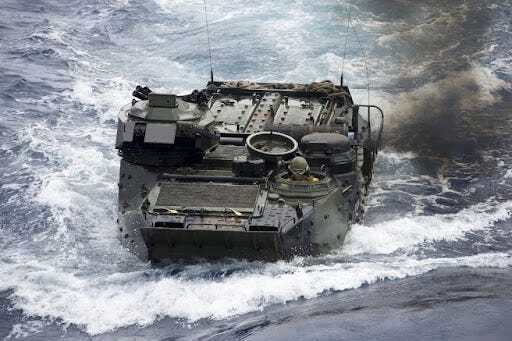
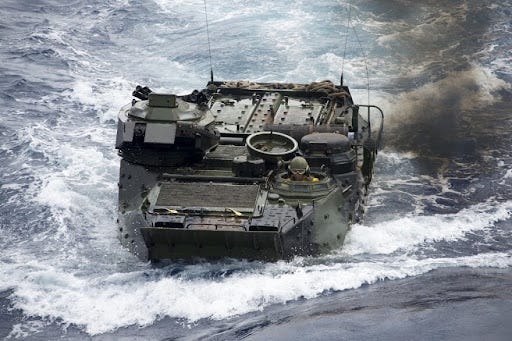
June 24 marked the start of the biennial Rim of the Pacific (RIMPAC) exercises, the world’s largest international naval war games. Led by the U.S., the military exercises bring together 31 countries and include more than 25,000 personnel, 40 surface ships, 5 submarines, and 140 aircraft. The event, which will run until July 31, marks the newest escalation of U.S. preparations for war on China, further militarizing the Pacific and normalizing the prospect of conflict through increasingly large-scale exercises and an ever-expanding web of alliances and military bases.
At the same time, the U.S. and partner nations kicked off the ten-day Valiant Shield 2026 exercises across Guam, the Northern Mariana Islands, Japan, and surrounding seas, submerging the entire Pacific into an intensive military operation zone.
At a moment of intensifying climate disasters and growing economic insecurity, the message from Washington is clear: there is always more money for war. RIMPAC comes as Congress is attempting to approve a staggering $1.5 trillion war budget, even as communities across the world are facing deadly heat waves, floods, and other climate-fueled disasters.
This past week, while U.S. military vessels practiced war off their coasts, super typhoon Bavi pummeled Guam and the Northern Mariana Islands. Only a week into the typical typhoon season, this is already the second major typhoon to hit the islands. Many locals were still without power from the last super typhoon Sinlaku, which killed 17 people and caused over $1.5 billion in damages.
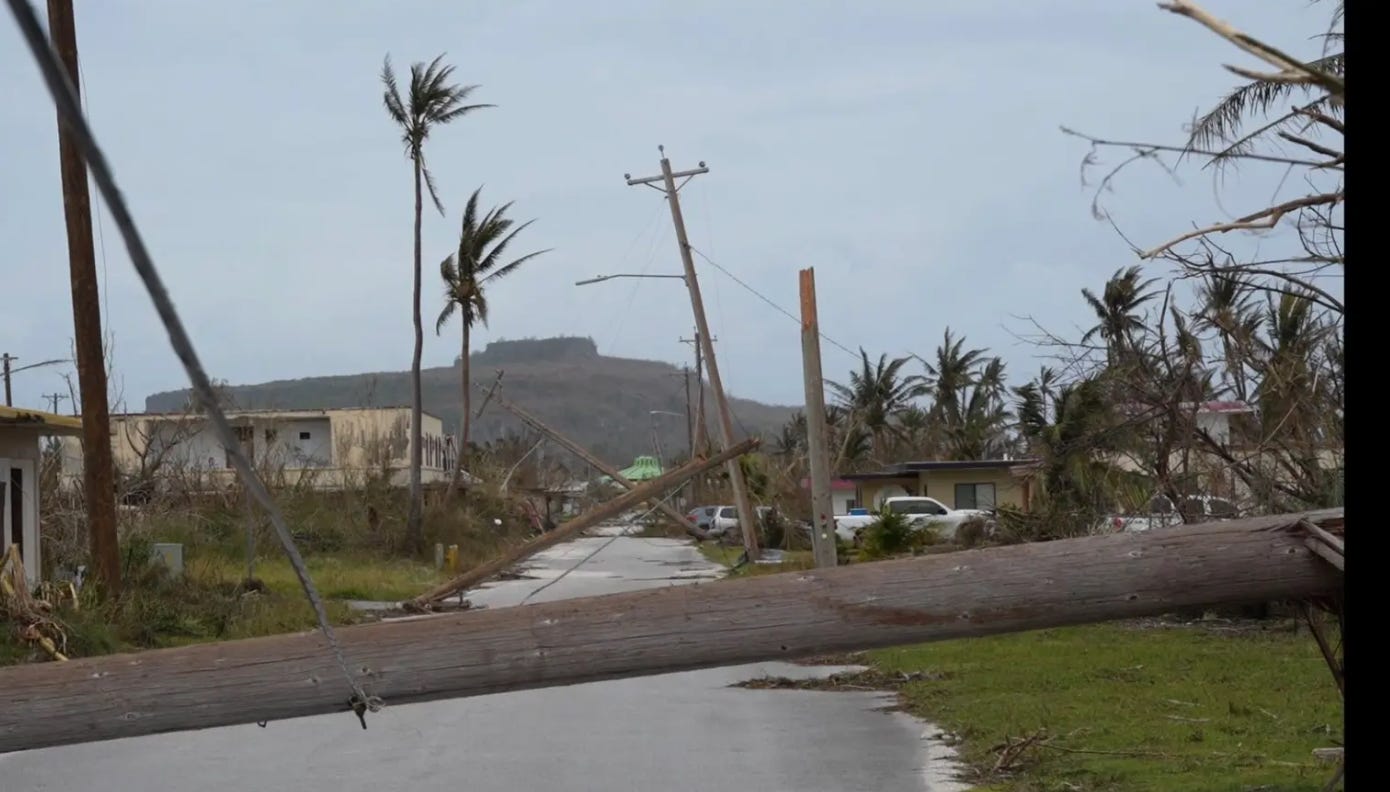
Climate scientist Kristina Dahl remarked, “In both of these cases we can see the fingerprint of climate change on the storms and that has really devastating consequences for the people who are repeatedly in their paths.”
These overlapping crises reveal a profound imbalance in priorities. As Pacific communities contend with increasingly severe climate disasters, the United States continues to invest staggering sums in military expansion and war preparations. The irony is especially stark given that the U.S. military is the world’s largest institutional consumer of fossil fuels and one of the largest institutional greenhouse gas emitters, while decades of U.S. military activity has caused lasting environmental and human harm across Pacific Island communities.
Instead of pouring resources into preventing climate change and protecting people on the frontlines of the climate crisis, the U.S. continues to pump money into its bloated war budget. In the Pacific, military expansion is justified by the increasing push toward war on China. The 2026 National Defense Strategy committed to “deterring China in the Indo-Pacific through strength” by “erect(ing) a strong denial defense along the First Island Chain” so that “Joint Force always has the ability to conduct devastating strikes and operations against targets.”
The U.S. conception of “deterrence” is both illogical and hypocritical in nature. In the name of “protecting” the Pacific from a future imaginary threat, the United States is harming the very communities it claims to defend through military buildup, environmental degradation, and the transformation of islands into staging grounds for war. The narrative of an imminent Chinese takeover of the Pacific is often treated as a foregone conclusion despite there being no evidence that China seeks to invade or occupy Pacific nations. Rather than making the region safer, the pursuit of “deterrence” risks turning the Pacific into a battlefield while diverting resources away from the urgent challenges that communities are actually facing today.
A recent report by the Institute for Policy Studies found that the U.S. military’s economic benefits to Hawaiʻi have been significantly overstated and that local communities bear enormous hidden costs from its presence. The report estimates that military demand for housing drove Oʻahu rents up by 7.1 percent in 2024 alone, costing non-military renters an additional $234.8 million. It also found that cleaning up PFAS contamination at just three military installations could cost at least $493 million, with broader health and environmental damages potentially reaching into the billions. Meanwhile, the Pentagon has leased more than 46,000 acres of Hawaiian land for just $1 leases, despite the land’s estimated fair market value reaching as high as $133.7 billion. Far from protecting Pacific communities, the U.S. military buildup has contributed to housing insecurity, environmental contamination, and the dispossession of Indigenous lands.
Similarly, U.S. militarization of Guam has severely impacted local communities. The U.S. military controls roughly 27 percent of the island’s land, while decades of military activity have left behind contaminated groundwater, hazardous waste, and damaged ecosystems. PFAS “forever chemicals” linked to military firefighting foam have been detected in Guam’s drinking water wells, threatening the island’s primary freshwater source. Military expansion has also endangered coral reefs, sensitive coastal habitats, and wildlife.
These events, which are just a few of many examples of the environmental and human costs of militarization, reveal the deep hypocrisy of the U.S. strategy of “peace through strength.” Rather than protecting local communities, militarization leaves them more vulnerable. All the while, massive military spending diverts resources away from urgent needs such as climate relief.
The proposed $1.5 trillion war budget will only deepen these harmful priorities, while large-scale military exercises like RIMPAC intensify U.S.-China tensions, heighten the risk of dangerous encounters at sea, and increase the possibility of pulling the Pacific into a devastating war.
We need an investment in the people—not profit. What would you fund instead of war? Take our poll now!
Megan Russell is CODEPINK’s China Campaign Coordinator.
Megan graduated from the London School of Economics with a Master’s Degree in Conflict Studies. Prior to that, she attended NYU where she studied Conflict, Culture, and International Law. Megan spent one year studying in Shanghai, and over eight years studying Chinese Mandarin. Her research focuses on the intersection between US-China affairs, peacebuilding, and international development.
From CODEPINK Substack via This RSS Feed.