

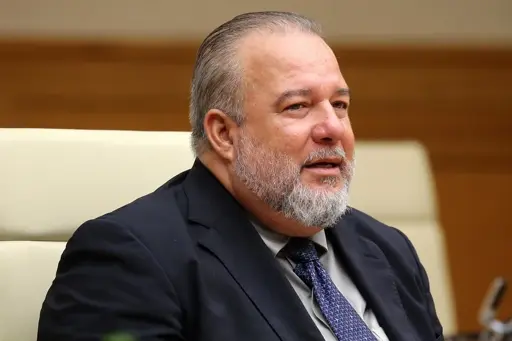
Cuban Prime Minister Manuel Marrero Cruz confirmed on Thursday that his government has engaged in conversations with representatives of the United States, pursuing solutions to bilateral differences through dialogue.
Marrero Cruz characterized the process as sensitive in nature, explaining that the country’s leadership typically refrains from addressing speculative campaigns. He assured that the designated work team operates with the backing, trust, and mandate of Army General Raúl Castro and President Miguel Díaz-Canel Bermúdez.
RELATED: Cuba Initiates Recovery Protocols After Second Electrical System Disconnection of Week
The prime minister warned of existing manipulations, calls for internal fracture, and attacks on the reputation of the national leadership, which he described as part of a plan aimed at sowing uncertainty and distrust among the population. He emphasized that every step taken at this decisive historical moment is in defense of the Revolution and national sovereignty.
Como ha expresado el Presidente @DiazCanelB, en correspondencia con la consistente política de la Revolución se han sostenido conversaciones con representantes del gobierno de EEUU, orientadas a buscar soluciones, por la vía del diálogo, a las diferencias bilaterales.
— Manuel Marrero Cruz (@MMarreroCruz) July 10, 2026
The confirmed conversations take place against a backdrop of elevated bilateral tensions, marked by intensified pressures from Washington and the hostile rhetoric of President Donald Trump, whose Administration has imposed an oil blockade on the island. Cuba recently denounced these measures before the United Nations General Assembly, describing the blockade as an act of genocide and collective punishment that has nearly paralyzed the economy and generated a humanitarian crisis.
Only one oil tanker, the Russian Anatoly Kolodkin, has arrived in Cuba so far this year, docking in March. This is attributed to the executive order signed by Trump on January 29, which threatens tariffs on goods from countries supplying oil to the island. The resulting fuel shortage has impacted essential sectors including health, education, water supply, electricity generation, production, and transportation.
These widespread afflictions were denounced by the international community at the United Nations General Assembly on July 7.
From teleSUR English via This RSS Feed.