

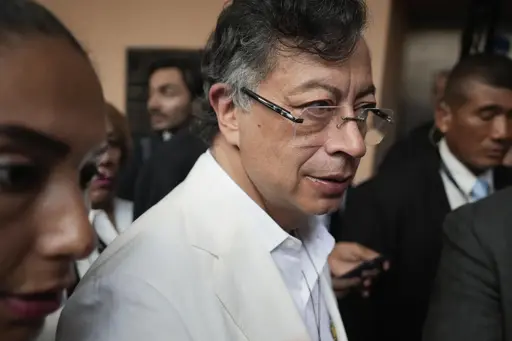
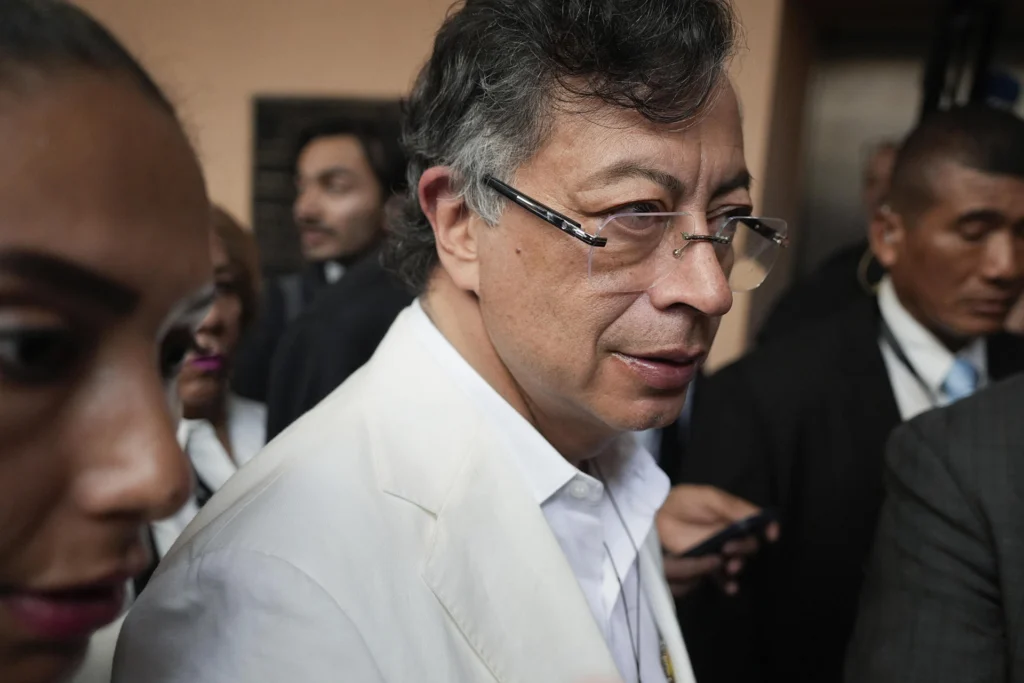
Colombia´s President Gustavo Petro denounced this Friday a massive electoral fraud affecting the overseas vote during the recent presidential elections, demanding a complete judicial investigation into the irregularities.
The President of Colombia revealed systemic irregularities in the overseas voting process, asserting that half of the election fraud took place in foreign tables, including signatures of deceased individuals acting as voting jurors.
Gustavo Petro stated through his social media account on X that the National Electoral Council has not finalized the official scrutiny of the presidential elections.
RELATED: Iván Cepeda Warns of a Paramilitary Government in Colombia
According to the Colombian head of State, this delay stemmed from the omission of the votes cast abroad, which have not been fully counted. A thorough Government investigation revealed deep-seated anomalies in these external voting tables following the recent electoral process.
Petro explained that the National Electoral Council refused to carry out the necessary electoral scrutiny on the overseas sector, halting the final certification of the elections in Colombia. In this sense, Gustavo Petro pointed out that half of the fraud is concentrated in these international voting stations.
EL CNE no quzo hacer el escrutinio sobreos votos del sector del exterior y sin él no han terminado los escrutinios en Colombia
Nuestra investigación muestra que la mitad del fraude se localiza en las mesas del exterior y empiezan a aparecer personas que firman como jurados y ya… https://t.co/ix1NMDVHPQ
— Gustavo Petro (@petrogustavo) July 10, 2026
Text reads: “The National Electoral Council (CNE) did not want to count votes from the outside sector and without it, the polls in Colombia have not ended. Our investigation shows that half of the fraud is located at the tables abroad and people are starting to appear who sign as jurors and were already dead.”
Among the most alarming discoveries, the Petro revealed that deceased persons were registered as voting jurors and their signatures appeared on the official documents.
These major accusations follow a series of electoral warnings issued by the head of State prior to the first round of voting. The tension escalated after the far-right politician, Abelardo de la Espriella, was declared President-elect of the South American nation. The current President’s objections target several critical phases of the electoral system, including the technological transmission, the electoral census, the physical voting forms, and the security of the servers.
During the first electoral stage on May 31, Petro expressed strong reservations regarding the participation of private companies in processing voter data, warning of potential vulnerabilities within the election software. He demanded comprehensive audits and direct access to the source code. Following that round, the president reported anomalies in approximately 5,300 voting tables and an unexplained increase of nearly 800,000 citizens in the official electoral census right before the ballot.
Corporate Software Manipulation
During the presidential runoff, the Gustavo Petro warned that the National Registry was publishing E-14 forms without the required juror signatures, leading him to request the impugnation of those specific votes. Although subsequent checks showed that the signatures were printed on the second page of the documents, the controversy highlighted a severe lack of transparency in the digital communication of the results, as only the first page was widely circulated on social media networks.
Furthermore, Gustavo Petro denounced suspicious modifications in the IP addresses of key electoral servers and alleged software manipulation designed to alter the democratic will. Specifically, the President identified an external server located in Los Angeles, United States, which was reportedly linked to the brothers Felipe, Camilo and Fernando Bautista Palacio. According to the presidential denunciation, this infrastructure was actively used to modify the final voter registries.
The Palacio brothers are the main heirs and directors of Thomas Greg & Sons, a powerful private corporation that maintains major contracts with the Colombian state for security documents, passports, and electoral logistics. This company is integrated into the national process through the 2026 Temporary Electoral Logistics Integration Union, a private consortium hired by the National Registry to manage critical technological services, including the pre-count, document digitization, and overall computer infrastructure.
The Colombian President denounced that a specialized algorithm was deployed to artificially boost the votes for the far right-wing candidate Abelardo de la Espriella. This mechanism reportedly worked by substituting abstinent voters, creating fictitious records, or multiplying single votes. Petro attributed this highly sophisticated technology to the controversial Israeli firm Black Cube and announced that his administration will formally submit a detailed evidence report before the national judicial authorities to guarantee a transparent investigation.
From teleSUR English via This RSS Feed.