

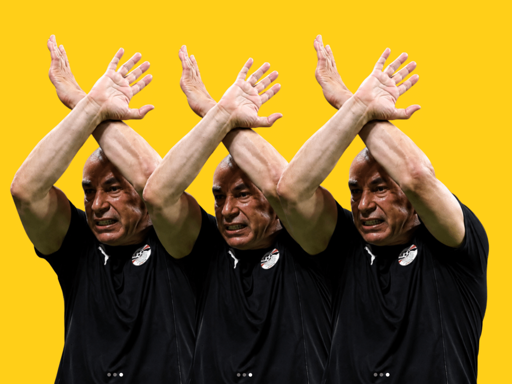
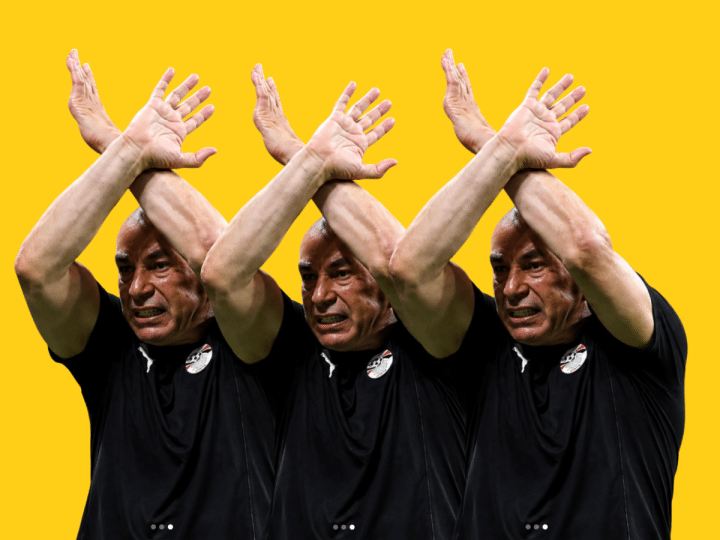
It took just seconds for a gesture from Hossam Hassan, manager of the Egyptian national team, to become one of the most debated moments of the 2026 World Cup.
After raising his arms to form an ‘X’ while protesting the decisions of French referee François Loutixier, Hassan’s gesture quickly came under international scrutiny. Some interpreted it as FIFA’s official anti-racism symbol. Meanwhile, others saw it as a familiar football protest against refereeing decisions.
The controversy was not just about the gesture itself, but the context around it. It came during a furious reaction to the referee’s decisions. As a result, it sparked a wider debate over what message Hassan was actually trying to send.
Misunderstood gesture
Since FIFA introduced its protocol to combat racism, forming an ‘X’ with the arms has become an official gesture. Players, coaches and referees can use it to report racist incidents during matches.
Because of that association, some international media outlets suggested Hassan may have been using the gesture as a signal of discrimination. However, there was no official confirmation that a racist incident had taken place. Moreover, Hassan himself did not say that this was the meaning behind his action.
Others interpreted Hassan’s action through a different lens: the long history of managers using gestures to protest refereeing decisions.
The most famous example came from José Mourinho, who used a similar gesture after a match to suggest that referees had “handcuffed” his team and prevented them from competing fairly. The incident became one of football’s most recognisable protests against officiating.
Seen in that context, Hassan’s gesture appeared to fit a familiar pattern. It came alongside his visible anger at the referee’s decisions and was followed by criticism of the official after the match.
A controversy without a clear answer
The reason Hassan’s gesture attracted so much attention is that it now carries two very different meanings.
For some, the ‘X’ represents FIFA’s fight against racism. For others, it remains linked to football’s long tradition of protesting refereeing decisions.
That overlap created a split in media coverage. Some focused on the gesture’s official meaning. In contrast, others looked at the circumstances in which it was made.
Despite the debate, no interpretation has been confirmed as the official one.
Hassan has not clarified what he meant, and FIFA has not announced that its anti-racism protocol was activated during the match.
A gesture lasting only seconds became an international talking point because it sat at the centre of two very different debates: one about tackling racism in football, and another about the sport’s long-running battles with refereeing decisions.
Featured image via the Canary
By Alaa Shamali
From Canary via This RSS Feed.