

This article by Anahí Del Ángel originally appeared in the July 8, 2026 edition of Contralínea, an independent Mexican investigative magazine.
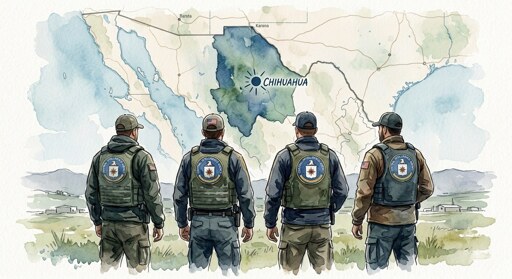
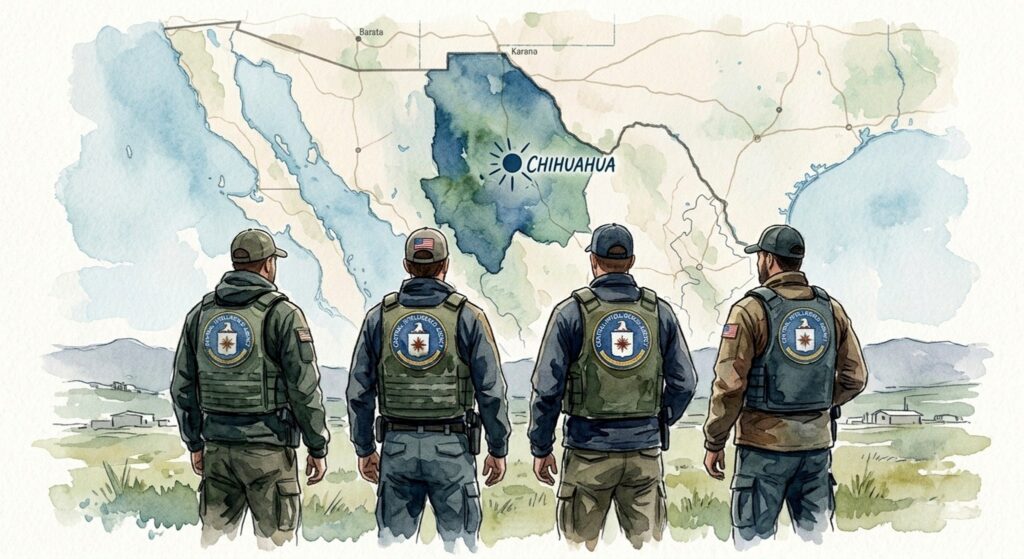
The clandestine operation of four CIA agents in Chihuahua reopened the debate over the reach of United States agencies in Mexico. Amid Washington’s growing pressures on security, the economy, and migration, specialists warn that the case makes it necessary to review the role these agencies have played in Latin America, imposing US interests and even promoting pliant governments. For this reason, the specialists suggest that the Mexican State must strengthen its own intelligence and national security capabilities; failing to do so, they warn, could unduly influence the 2030 presidential elections.
The clandestine operation of four US agents in Chihuahua not only exposed the illegal presence on national territory of intelligence personnel from the neighboring country, but also reopened the discussion about the reach of the northern neighbor, of the Central Intelligence Agency (CIA), as well as about the strength of the Mexican institutions in charge of national security and the real limits of sovereignty vis-à-vis the United States.
For Dr. Javier Oliva Posada, a specialist in national security matters, what happened in Chihuahua exposed a deeper institutional weakness. “The civilian intelligence and counterintelligence areas of the Mexican State are not receiving the support necessary to meet their objectives.”
In his view, national security constitutes one of the pillars on which the sovereignty of the Mexican State rests, and therefore must be reinforced. “A fundamental pillar of sovereignty is precisely the civilian institutions dedicated to national security and intelligence; the problem is that right now we do not have them.”
Public debate, argues the expert and UNAM academic, tends to reduce sovereignty to a political circumstance, when in reality it is a much broader concept linked to the State’s capacity to protect its strategic interests. “The relationship between national security and sovereignty is direct. The main objective of national security is precisely the preservation of the sovereignty and integrity of the nation.”
From that perspective, Dr. Oliva Posada considers that Mexico’s main problem does not lie solely in the presence of foreign agents, but in the weakening of the institutions responsible for generating strategic intelligence.
In this regard, he recalls that since 2019 the Bicameral National Security Commission stopped meeting, that the Special Program for National Security provided for in the Planning Law has not been issued, and that the National Security Council has not been installed either. “These are public facts; it would seem that national security, among the various dimensions of security, is not a priority.”
For his part, Dr. Nayar López Castellanos considers that Mexican intelligence apparatuses have remained focused on the issue of internal security, such as the search for important information. As an example, he cites that they seek to obtain information about politicians, officials at the three levels of government, and police or military personnel who collaborate with organized crime.
Photo: Cuartoscuro
The CIA’s Presence and Pressures on Sovereignty
In a car accident, still unexplained and involving a vehicle of the Chihuahua State Investigation Agency, on April 19, 2026 two US agents and two ministerial agents of that state died. This event exposed the clandestine and illegal presence of four CIA officials who were carrying out field operations, with the consent of the PAN government of Maru Campos, without informing the government of Mexico. This was in flagrant violation of national sovereignty, the Constitution, and the National Security Law.
Although at first the government of Maru Campos and the then state prosecutor, César Gustavo Jaurégui, tried to “justify” the presence of the foreign agents by claiming they were “instructors” from the United States Embassy teaching a drone-operation course, and that they did not take part in the visit to the drug laboratory, President Claudia Sheinbaum and the Attorney General’s Office refuted that narrative of the “lift” that the Americans supposedly asked the Chihuahua personnel for.
The federal government also confirmed that the CIA agents were actively participating in field intelligence work, without the endorsement of the federation, which is expressly prohibited by the Constitution and Mexican laws. Meanwhile, it was the FGR that dismantled the drug laboratory, so the PAN’s version that the Chihuahua government does fight drug trafficking also fell apart. The case currently remains under investigation by the Attorney General’s Office, although Maru Campos has refused to testify.
For the internationalist Nayar López, the debate cannot be limited to the Chihuahua episode, but must be broadened to the historical functioning of the United States intelligence apparatuses and their intervention in Latin America. For the UNAM academic, the CIA constitutes the central piece of a global architecture built since the Cold War to preserve US hegemony.
“The CIA is one of the main espionage apparatuses the United States has, designed to give shape, structure, and presence to this imperialist power for decades,” explains López Castellanos. He adds that the agency not only gathers information, but builds complete scenarios of political, economic, and social intervention.
“What it fundamentally does is detect who the leaders are, who the influential people are, who has a price, and who can collaborate directly with the CIA.” With that information, he adds, it produces “a human, political, economic, social, and cultural X-ray” of each country to use when US interests so require.
That structure goes far beyond undercover agents. “We should not only think of US agents as such; there is an impressive network of collaborators who work for the CIA in every sphere of society,” he states. Universities, political parties, governments, unions, non-governmental organizations, and even social movements can become, he assures, spaces for obtaining strategic information.
Dr. López Castellanos points out that this way of operating has accompanied much of US foreign policy in Latin America. He recalls that the CIA played a decisive role in various processes of intervention and interference during the 20th century, and mentions as examples: the coup d’état against Salvador Allende in Chile, the operations against the Cuban Revolution, and the actions of figures such as Luis Posada Carriles, a CIA agent.
On this last case, he recalls one of the phrases that marked the history of terrorism against Cuba. When questioned by the international press about the explosion of a Cubana de Aviación plane in 1976, Posada Carriles replied: “we planted the bomb, so what?” For the UNAM researcher, that statement reflects the degree of impunity with which various agents linked to the US intelligence apparatuses operated during the Cold War.
López Castellanos recalls that the CIA was a decisive actor in international conflicts such as the invasion of Iraq, where it had previously carried out intelligence work to identify political, military, and social leaderships. “The activity they carry out is the search for information that can be decisive for developing actions of any nature.” That information, he adds, can serve both for a military intervention and to facilitate economic interests, such as the installation of mining companies or the dismantling of social movements.
The CIA’s operational capacity cannot be understood without considering the extensive network of collaboration that the United States maintains throughout the world. In this regard, the academic from the National Autonomous University of Mexico indicates that, worldwide, “it is estimated that around 800,000, or even a million, people work directly or indirectly for the intelligence apparatuses of the United States.”
To the above is added a military infrastructure that, according to research by the anthropologist David Vine, comprises around 800 military bases distributed globally, between 80 and 100 of them located in Latin America and the Caribbean.
Dr. Nayar López warns that contemporary espionage no longer depends exclusively on infiltrated agents: foundations, international cooperation bodies, and organizations apparently dedicated to promoting democracy, human rights, or freedom of the press are also part of that strategy of influence. Among them he mentions the National Endowment for Democracy (NED), USAID, and other organizations that “perform functions that appear to legitimize what they claim to be, but many of those activities have political objectives; it is not only investigating or obtaining information, it is also running oppositions.”
As an example, he recalls that former Bolivian President Evo Morales expelled the DEA and USAID after denouncing that they financed opposition groups to generate political instability. He also mentions the exchange of agents between Cuba and the United States during the restoration of diplomatic relations promoted by Barack Obama and Raúl Castro as evidence that intelligence activity constitutes a permanent practice among States.
In that context, López Castellanos considers that Mexico continues to be a strategic space for Washington’s interests. He indicates that historically Mexican governments tolerated the presence of US agents due to the close political and economic relationship between the two countries. “Mexican security apparatuses were always designed to watch internally, not so much against external threats, because there was always a complicity with the United States and a tacit alliance with its national security logics.”
For this reason, he considers that the episode of the CIA agents in Chihuahua can hardly be understood as an isolated event. “They obviously knew who that agent was and were collaborating with that intelligence apparatus,” he maintains, referring to the presence of US elements alongside state police commanders.
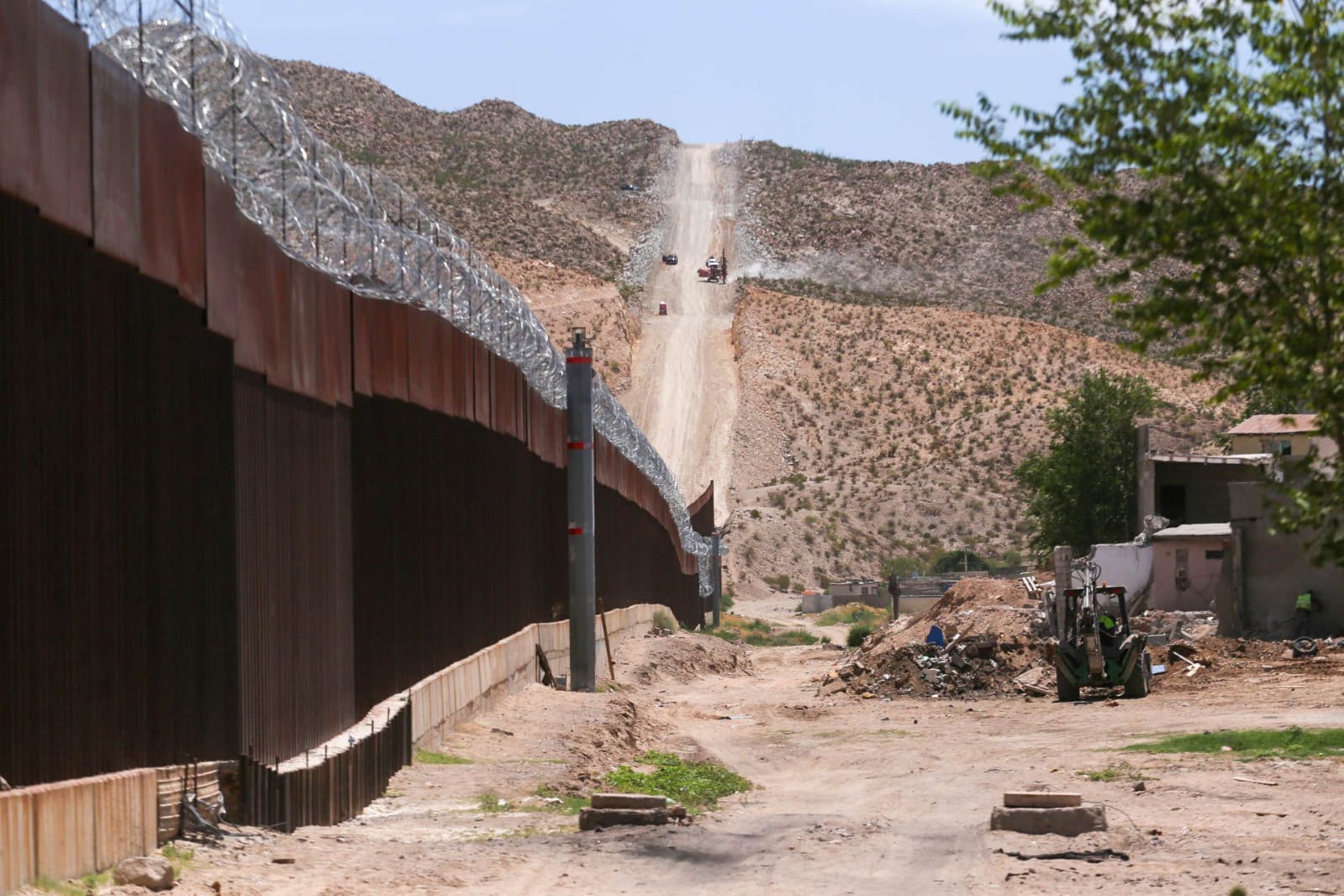
Photo: Cuartoscuro
Both specialists agree, however, that sovereignty cannot be understood solely as a legal or diplomatic concept. For Oliva, national security constitutes the instrument through which the State preserves its integrity and democratic stability. “To strengthen sovereignty we must strengthen national security.”
For Dr. Javier Oliva, civilian intelligence should not be understood exclusively as espionage, but as an indispensable instrument to anticipate risks and guarantee democratic stability. “Liberal democracies require the active, though discreet, participation of intelligence services for national security.”
The specialist adds that contemporary threats to Mexican sovereignty are much broader than drug trafficking. Among them he mentions organized crime, irregular migration, climate change, hydrometeorological phenomena, and other risks capable of affecting national stability. “The practical function of national security is to guarantee, under conditions of freedom and democracy, the stability of a society.”
Even so, Oliva Posada considers that Mexico can rethink the terms of bilateral cooperation on intelligence. Rather than canceling those mechanisms, he proposes strengthening them under criteria of reciprocity. “What the Mexican government could do would be to request that Mexican agents also have that capacity to carry out intelligence work in the United States, like the one US agents carry out in our country.”
However, López Castellanos maintains that Mexico’s vulnerability does not only run through the sphere of intelligence, but also through the growing media and cultural dispute. In his view, the media and digital platforms have become one of the main stages where the conditions to destabilize governments or influence electoral processes are built.
“Today the media is no longer the fourth power; it is the power,” he affirms. Through permanent campaigns, bots, and communication strategies, he explains, narratives are built capable of modifying social perceptions and electoral results. “Petro is a failure, Petro is a failure, the left, the communists, chaos, fear… all of that has an impact,” he illustrates, describing the systematic repetition of messages on social media.
In his view, that information war is part of the same web of power made up of intelligence agencies, economic corporations, big media, and political elites. “It is not only the CIA, it is not only the military bases; it is also the businessmen, the right wings, and big capital. That whole apparatus is focused on maintaining the privileges of a few minorities.”
Photo: Cuartoscuro
Under that logic, he warns that Mexican progressive forces cannot minimize the weight of the communications battle heading into the upcoming electoral processes. “If they don’t get their act together, if they don’t focus on what is fundamental, which is the media, on building an alternative proposal and a serious program, they will keep losing. The few progressive governments that remain, who knows whether they will win their elections again.”
He even warns that, if current conditions persist, intelligence operations, the media war, and influence campaigns could decisively affect the country’s political future. “Let us not be surprised if in the 2030 elections these forms of control, of operation, of espionage, of buying people, and of concrete actions begin to have an impact.”
Finally, López Castellanos warns that the scenario could intensify in the coming years. “Empires, when they are about to fall, become more violent,” he affirms. In that context, he considers that Latin America will once again become one of the main spaces of geopolitical dispute and that Mexico, due to its strategic position and its close relationship with the United States, will remain at the center of that silent confrontation.
-
US Agencies, Especially the CIA, Pressure Mexico’s Sovereignty
July 10, 2026July 10, 2026
Four US agents caught in Chihuahua exposed illegal intelligence on Mexican soil, reopening the debate over the CIA’s reach and Mexico’s sovereignty.
-
Rocha Moya: “Since May 1 I Have Remained at My Home in Culiacán”
July 9, 2026July 9, 2026
The Sinaloa governor on leave, accused by the U.S. of narco ties, says he gave up his immunity 69 days ago and has no federal protection.
-
A Very Strong El Niño Phenomenon Is Forecast for 2026-2027 in Mexico
July 9, 2026
El Niño, the cyclical Pacific warming that alters global weather, has a 97-100% chance of setting in over Mexico, peaking between November 2026 and January 2027.
The post US Agencies, Especially the CIA, Pressure Mexico’s Sovereignty appeared first on Mexico Solidarity Media.
From Mexico Solidarity Media via This RSS Feed.