

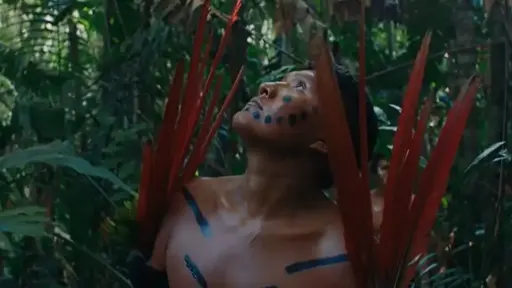
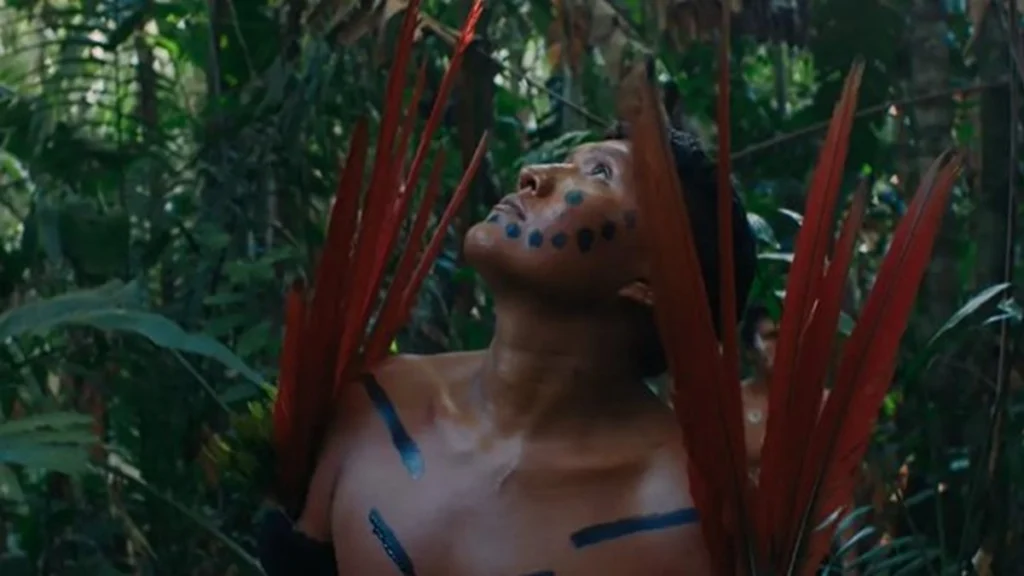
The Yanomami people have suffered environmental devastation and decades of violence linked to gold mining.
Spanish publisher Pepitas de Calabaza recently published “The Desire of the Others,” a book based on research by anthropologist Hanna Limulja, who denounces that former President Jair Bolsonaro deliberately encouraged mining on the lands of Brazil’s Indigenous peoples.
RELATED:
Indigenous Peoples Gather in Brasilia for ‘Free Land’ Camp
“Illegal miners caused environmental devastation and health and social disruption for the Yanomami people, creating a situation of severe malnutrition and high mortality rates, especially among children,” said the professor at the Inskiran Institute of Higher Indigenous Education at the Federal University of Roraima.
Through her book, Limulja seeks to introduce the world to “other ways of dreaming, thinking and being,” which she believes broadens the “limited vision that the West has of Indigenous peoples from other continents.”
Tradición Yanomami: Comer las cenizas de los seres queridos
En la tribu Yanomami (Brasil y Venezuela), cuando una persona muere, su cuerpo es cremado.
Luego, las cenizas son mezcladas con plátano machacado y consumidas por sus familiares más cercanos.
Esta práctica tiene… pic.twitter.com/WQX1Uhvqra
— LUZ STELLA OBANDO ALZATE (@ObandoAlzate) June 4, 2026
The text reads, “Yanomami Tradition: Eating the Ashes of Loved Ones. In the Yanomami tribe (Brazil and Venezuela), when a person dies, their body is cremated. The ashes are then mixed with mashed banana and consumed by their closest relatives. This practice has a profound spiritual meaning: by ingesting the ashes, they believe the soul of the deceased remains within the tribe and is not lost in the forest. It is a way to keep their spirit alive among their people and honor their memory. This custom reflects the close connection this Amazonian culture has with life, death, and community. Total respect for ancestral traditions.”
One of the Greatest Tragedies of Our Time
Limulja writes in accessible language that allows her to reach new audiences more accustomed to social media than to reading because her goal is to spread awareness of the Yanomami reality, which she describes as “one of the greatest tragedies of our time.”
“It is important to remember that exactly 33 years ago the first case of genocide recognized by the Brazilian justice system took place among the Yanomami and became known as the Haximu Massacre,” she said.
She recounts that episode by saying that “a group of gold miners exterminated a group of Yanomami, including children and elderly people,” during the first gold rush driven by high international gold prices in the late 1980s and 1990s.
The world became aware of the tragedy after a campaign led by shaman and Yanomami leader Davi Kopenawa, which led to pressure on the government to expel the miners from the territory, a measure that was carried out in 1992.
#Gold #mining kills #indigenous peoples
forcing women and children into sex #slavery! Help #Yanomami people forced violently from their #rainforest homes for the #greed of gold!
#BoycottGold #BoycottGold4Yanomami
@BarbaraNavarro @palmoildetect pic.twitter.com/tbzGmLmzQt
— Palm Oil Detectives #BoycottPalmOil (@PalmOilDetect) May 7, 2026


Gold as a Symbol of Greed
“Gold represents Western greed,” Limulja said, describing it as a symbol of exploitation in the pursuit of wealth regardless of limits.
Her goal is to raise awareness so that people realize the ring they wear on their ring finger “often comes from illegal mining in the middle of the Amazon rainforest, directly affecting the lives of the Yanomami people.”
After centuries of extermination and genocide, the Yanomami managed to remain outside development projects promoted by the Western idea of progress, at least until the mid-20th century, making them the focus of broad public interest.
The Yanomami’s Dreams
In her book, the Brazilian anthropologist explores the dreams of the Yanomami, which they understand as “a way of knowing the world and the other beings that inhabit it.”
“The Yanomami dream is different because it is caused by another person’s feeling or desire, someone who comes from outside. So, if I dream about a relative, it is that relative who is thinking about me and making me dream about them,” she said, distinguishing this interpretation from the Freudian one.
Members of this Indigenous people, who live across Venezuela and Brazil, erase all memory of their dead and keep them alive only through dreams.
teleSUR/ JF
Source: EFE
From teleSUR English via This RSS Feed.
Same ol’Brazil. Can’t decide if it going to destroy the Amazon Forest in name of progress, or if it’ll hold
