

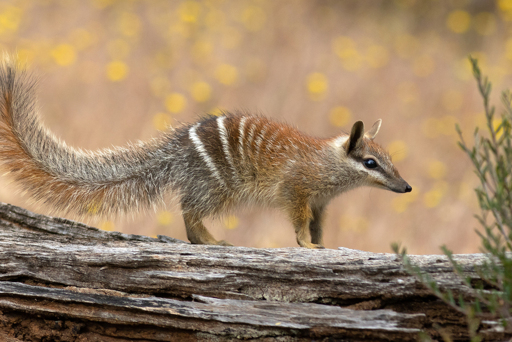
The animal emblem of Western Australia, the numbat, is recovering after decades of conservation efforts, according to the IUCN, the global wildlife conservation authority. For decades, the numbat or banded anteater (Myrmecobius fasciatus) was listed as endangered on the IUCN Red List. It has now been moved to the lower threat category of near threatened. “The ‘downlisting’ of the numbat on the IUCN Red List from Endangered to Near Threatened is what we have been working for over the last 40 years!” Tony Friend, research associate at the Western Australian department of biodiversity, conservation and attractions (DBCA), told Mongabay via email. “Consequently, I feel very elated that the more secure status we’ve been able to achieve with the numbat has been recognised by IUCN.” The striped, ant-and-termite-eating marsupial with reddish-brown fur was once on the verge of extinction. By the late 1970s, around just 300 individuals remained. Their decline was primarily driven by the introduction of predators, such as the red fox (Vulpes vulpes) and domestic cats (Felis catus), alongside threats including habitat destruction and changes in the intensity and frequency of fires. In 2026, numbat numbers have grown to about 2,000-3,000 individuals thanks to more than 40 years of conservation actions taken by wildlife scientists, the DBCA, Perth Zoo, conservation organizations and community volunteers. Conservationists have, for example, baited and removed foxes and cats from certain areas. This has “caused spectacular increases in numbat numbers in the two original populations, both located in Western Australia: one of these has…This article was originally published on Mongabay
From Conservation news via This RSS Feed.