

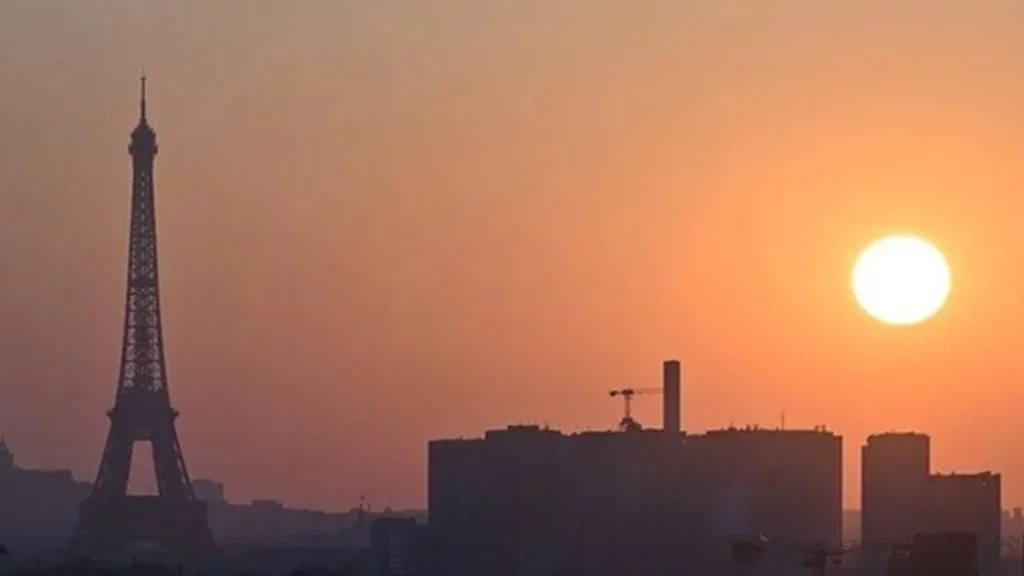
France wildfires double as heat wave raises risk across country.
On Thursday, the U.S. National Oceanic and Atmospheric Administration (NOAA) informed that the globe experienced its second-warmest June on record in 2026, while the global ocean surface temperature reached a record high for the month.
RELATED:
Extinction of Indigenous Languages and Climate Change Threaten the Amazon
The report, issued by NOAA’s National Centers for Environmental Information (NCEI), found that both the Arctic and Antarctic recorded June sea ice extents ranking among their respective 10 lowest on record, while global tropical cyclone activity was above average.
Global surface temperatures in June were 1.09 degrees Celsius above the 20th-century average, making it the second-warmest June on record, trailing only 2024.
Warmer-than-average conditions prevailed across much of the world during the month, with several continents and regions recording one of their 10 warmest Junes on record.
Global sea ice extent was the fourth smallest for June in the 48-year satellite record, covering 22.7 million square km, or about 2.02 million square kilometers less than the 1991-2020 average.
Looking at the year to date, the January-June global surface temperature was the third-highest on record. According to NCEI’s Global Annual Temperature Outlook, it is very likely that 2026 will rank among the five-warmest years on record.
June 2026 was the second-warmest June ever recorded globally, while Western Europe saw its hottest June on record, Copernicus says.
Global sea surface temperatures outside the polar regions also hit a new June high, as repeated heatwaves, dry conditions and wildfire risks signal… pic.twitter.com/o23BXeS71u
— Down To Earth (@down2earthindia) July 9, 2026
France Wildfires Double as Heat Wave Raises Risk Across Country
On Friday, Julien Marion, the director of Civil Security and Crisis Management, confirmed that more than 25,000 hectares have burned so far this year in France, twice as many as during the same period in 2025, as the country faces its third heat wave in less than two months.
With wildfires expected to increase, the Civil Security agency could, for the first time, deploy the military A400M aircraft, assembled at Airbus’ factory in Seville, Spain, to help fight the blazes.
“This is the beginning of an exceptionally intense summer,” Marion said after an interministerial meeting chaired by French Prime Minister Sebastien Lecornu.
At least 8,000 fire outbreaks have been recorded since the beginning of the year, burning at least 25,000 hectares. The most severe fires have occurred in recent days, affecting about 5,000 hectares in the massif near Perpignan, about 3,700 hectares in the Drôme department and 900 hectares in the Indre department.
With wildfires expected to increase because of dry ground caused by the heat and winds, authorities could deploy the Airbus A400M military transport aircraft within 15 days. The aircraft can carry up to 20 metric tons of water, “roughly three times as much as the Canadairs.”
The current red alert for extreme heat, which has affected northwestern France since Friday, will spread inland and reach Paris and its surrounding areas beginning Saturday.
“All departments in the Île-de-France and Centre-Val de Loire regions, as well as the Orne department, will move to a red heat wave alert at noon Saturday,” the latest Meteo-France bulletin said.
The new heat wave, which is expected to persist at least until July 14, France’s National Day, is being driven by “a very warm air mass remaining stalled over the country for several days, causing a prolonged heat wave.”
A similar weather pattern brought two episodes of extraordinarily high temperatures to France in late May and June.
The heat wave just two weeks ago — the most severe since records began — left at least 2,000 people dead and caused major disruptions to public services, including rail transportation and schools.
teleSUR/ JF
Sources: Xinhua – EFE
From teleSUR English via This RSS Feed.
Only second-warmest? Then it can’t be that bad. Carry on, boys, finish that data center.
