

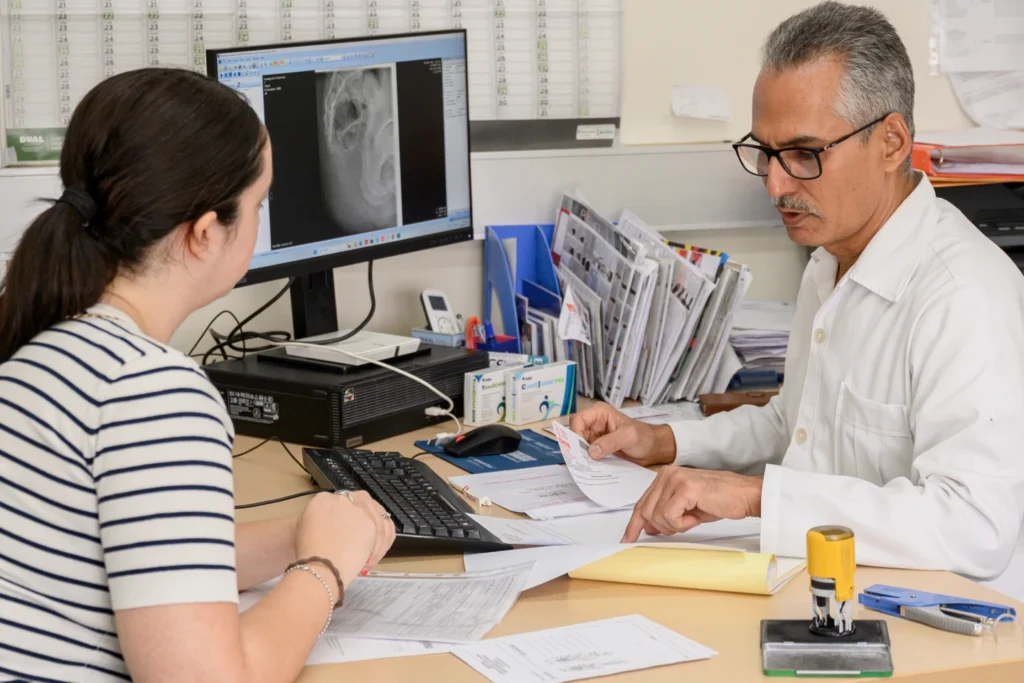
Italian region says Cuban medical mission is essential to keeping hospitals operating.
Italy’s southern Calabria region has reaffirmed its commitment to keeping Cuban doctors in its public hospitals despite U.S. pressure to replace the long-running medical cooperation program with alternative sources of foreign healthcare personnel.
RELATED: Cuba Denounces U.S. Blockade Damages to UN Chief Guterres
The decision comes as several Latin American and Caribbean governments have ended medical cooperation agreements with Cuba in recent months following diplomatic efforts by Washington.
According to Calabria Governor Roberto Occhiuto, U.S. Chargé d’Affaires to Cuba Mike Hammer and the U.S. Consul General in Naples visited him in February to discuss the issue. Occhiuto said the meeting was cordial but that Hammer made clear the United States would welcome alternative international medical staffing.
Text Reads: Even Berlusconi was curious about Cuban doctors. He kept calling me to ask how things were going, and one day he even made this video.
“I also faced some pressure during the Biden administration. But the pressure increased under Trump,” Occhiuto told the Associated Press.
The governor said he explained that his administration is working to encourage Calabrian doctors to return to the region, but that the immediate priority is maintaining healthcare services.
“But, at the same time, I reiterated that I need to keep hospitals open and that I intend to keep the Cuban doctors currently working in Italy in their positions,” he said.
Occhiuto also told reporters he would like to increase the number of Cuban physicians in Calabria to about 1,000, although he has refrained from doing so to avoid escalating tensions with Washington.
Six Decades of Medical Cooperation
Calabria, Italy’s poorest region, is among the 165 countries and territories that have received Cuban medical cooperation since the program began in the 1960s. According to the information provided, Cuba has deployed more than 605,000 healthcare professionals—including physicians, specialists and technical staff—around the world over the past six decades.
During the same period, Cuba also trained more than 87,900 medical students from 150 countries, both on and off the island. More than 31,200 graduated from the Latin American School of Medicine (ELAM) in western Havana.
The report states that income generated through some medical cooperation programs has been used to support Cuba’s healthcare sector and provide the foreign currency required to sustain the country’s universal public health system.
During the COVID-19 pandemic, Cuba sent thousands of doctors and nurses to about 50 countries, including the Italian regions of Lombardy and Calabria. Calabria retained the Cuban medical teams after the public health emergency ended.
Regional Responses
The report says the United States has intensified its campaign against Cuba’s overseas medical cooperation programs, prompting several governments to terminate their agreements.
Jamaica ended its 50-year medical cooperation agreement with Cuba in March. Honduras and Guatemala also discontinued their programs, with Guatemala’s foreign minister acknowledging pressure from Washington.
Mexico, however, has maintained the agreement. President Claudia Sheinbaum said Cuban doctors provide essential healthcare to underserved communities and that the bilateral program remains beneficial for the country.
According to Occhiuto, Cuban doctors in Calabria are employed through individual contracts and receive their salaries in Italian bank accounts. The professionals said they voluntarily send part of their earnings to Cuba, which is facing economic, energy and humanitarian difficulties under the U.S. blockade.
“It is a voluntary contribution because Cuba trained us, educated us and made us doctors,” an emergency physician told the Associated Press.
From teleSUR English via This RSS Feed.