

Regional tensions intensified this Thursday after Israeli Defense Minister Israel Katz declared that Israel is prepared to launch new military operations against Iran “with even greater force” if necessary.
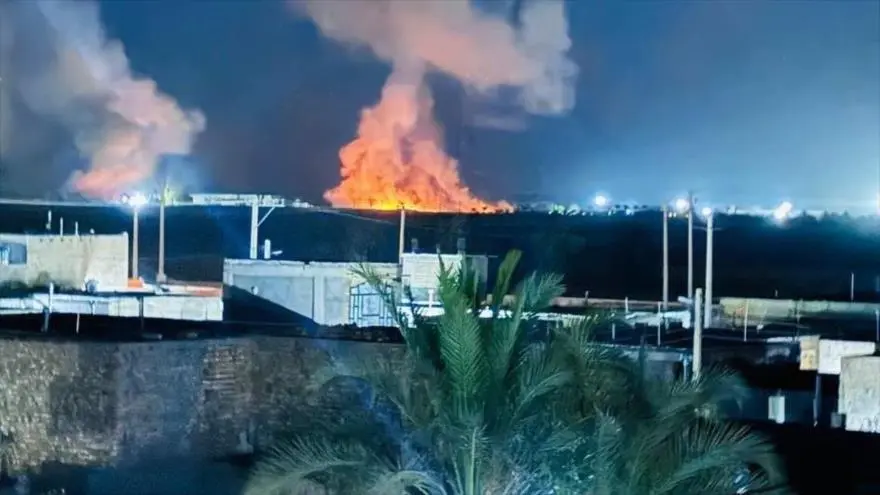
Several explosions were reported in southern Iranian areas this Thursday evening in the cities of Bushehr and Choghadak, the latter in Sistan-Baluchistan province, which hosts a strategic port on the other side of the Gulf of Oman.
Hours after the Islamic Revolutionary Guard Corps (IRGC) attacked early morning U.S. bases and strategic centers in Bahrain, Kuwait and Qatar after the second consecutive night of U.S. bombing against southern Iranian cities.
RELATED: War on Iran Is Not Over: Israeli PM Netanyahu
The warning comes amid renewed concerns over the fragile ceasefire between Tehran and Washington, mounting international calls for restraint, and growing disruptions to commercial shipping through the Strait of Hormuz, one of the world’s most strategically important maritime trade routes.
Speaking during a military ceremony at Hatzerim Air Base, Defense Minister Israel Katz stated that the Israel Defense Forces remain fully prepared to resume combat operations against Iran should the security situation deteriorate.
According to Katz, Israel has maintained a high level of military readiness following the recent confrontation with Tehran and is prepared to conduct additional operations if it considers new threats to be emerging.
Iran has reported multiple explosions in the country’s south, as a US official told Al Jazeera that its military was not behind the latest strikes on Iran and remains committed to negotiations with Tehran.
Follow our LIVE coverage: https://t.co/JntQpIvLBg pic.twitter.com/H8zXvyEvpm
— Al Jazeera English (@AJEnglish) July 10, 2026
Earlier the same day, Israeli Chief of Staff Lt. Gen. Eyal Zamir also stressed that the country’s armed forces remain on maximum alert. He said military commanders continue to closely monitor developments not only in Iran but also in neighboring Lebanon. “Even at this moment, we are closely watching what is happening in Iran and Lebanon, and we are prepared to act immediately”, Zamir stated.
Regional Security Violations
The IRGC Navy issued its warning after the United States attempted in recent days to establish an alternative shipping route along the southern edge of the Strait of Hormuz, escorting commercial vessels independently from the security arrangements led by Iran. Teherán has formally characterized these actions as a direct violation of regional understandings.
A recently published report alleged that the Pentagon ignored warnings regarding outdated intelligence while selecting missile targets during attacks inside Iran, raising new questions about the planning and execution of military operations carried out during the conflict.
Amid the ongoing ceasefire, the U.S. carried out a round of 90 attacks in which it bombed civilian targets such as airports, logistical networks and a strategic rail bridge in the north of the Persian nation, which connects with China and Russia, according to Iranian news agency Fars. The Islamic Republic argued that such unilateral maneuvers breach the Islamabad Memorandum of Understanding, a diplomatic agreement signed on June 17 between Iran and the United States.
The memorandum, mediated by Pakistan, was intended to serve as a foundation for mutual respect and shared regional prosperity. However, the United States unilaterally terminated the agreement on Wednesday, July 8, citing alleged violations by Iranian forces. Teherán responded by declaring the memorandum nullified, pointing to continuous U.S. airstrikes against civilian infrastructure on Iranian soil.
Iranian officials have also accused several European countries of participating in or facilitating U.S. military actions against the country, allegations that have further complicated diplomatic efforts aimed at preserving regional stability.
Traffic through the Strait of Hormuz has fallen sharply following the latest escalation between the US and Iran, with traceable vessel transits through the US-coordinated Omani lane effectively grinding to a halt pic.twitter.com/Z1lSaaAilx
— Lloyd’s List (@LloydsList) July 9, 2026
Pakistan Calls for Containment
While political and military rhetoric continues to escalate, the consequences are increasingly being felt across one of the world’s most critical energy corridors.
The latest exchanges of attacks between Iran and the United States have significantly disrupted maritime traffic through the Strait of Hormuz, a narrow waterway through which approximately 20% of global oil shipments and a substantial share of liquefied natural gas exports passed before the conflict. The strait also handles roughly 30% of global maritime fertilizer trade, making any disruption a matter of international economic concern.
Pakistan’s Foreign Ministry warned that renewed hostilities would benefit no one and called on all sides to honor their commitments in order to preserve the ceasefire framework established under the Islamabad Memorandum of Understanding, an essential foundation for regional stability, mutual respect and long-term prosperity.
As military rhetoric hardens and commercial shipping continues to decline, the Middle East faces growing uncertainty, with diplomatic efforts struggling to prevent another escalation that could have significant geopolitical and economic consequences well beyond the region.
From teleSUR English via This RSS Feed.