

Photo Credit: U.S. Navy. Alex Millar
With the 32 North ATLANTIC Treaty Organization (NATO) member countries in Ankara, Turkey, for their annual meeting this week, July 7 and 8, many of the militaries of NATO countries are halfway around the world in the PACIFIC ocean in war preparation maneuvers.
Ten NATO countries, almost one-third of all NATO countries, have sent military forces, land, air, and sea, to Hawaii to participate in the Rim of the Pacific (RIMPAC), a 38-day (June 24-July 31, 2026) war drill.
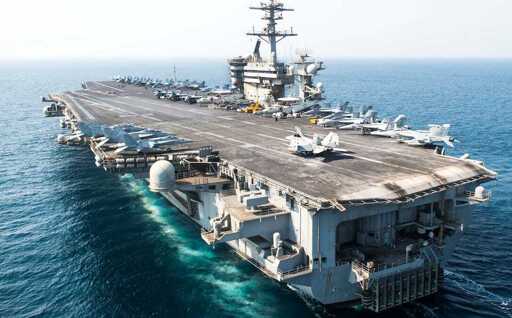
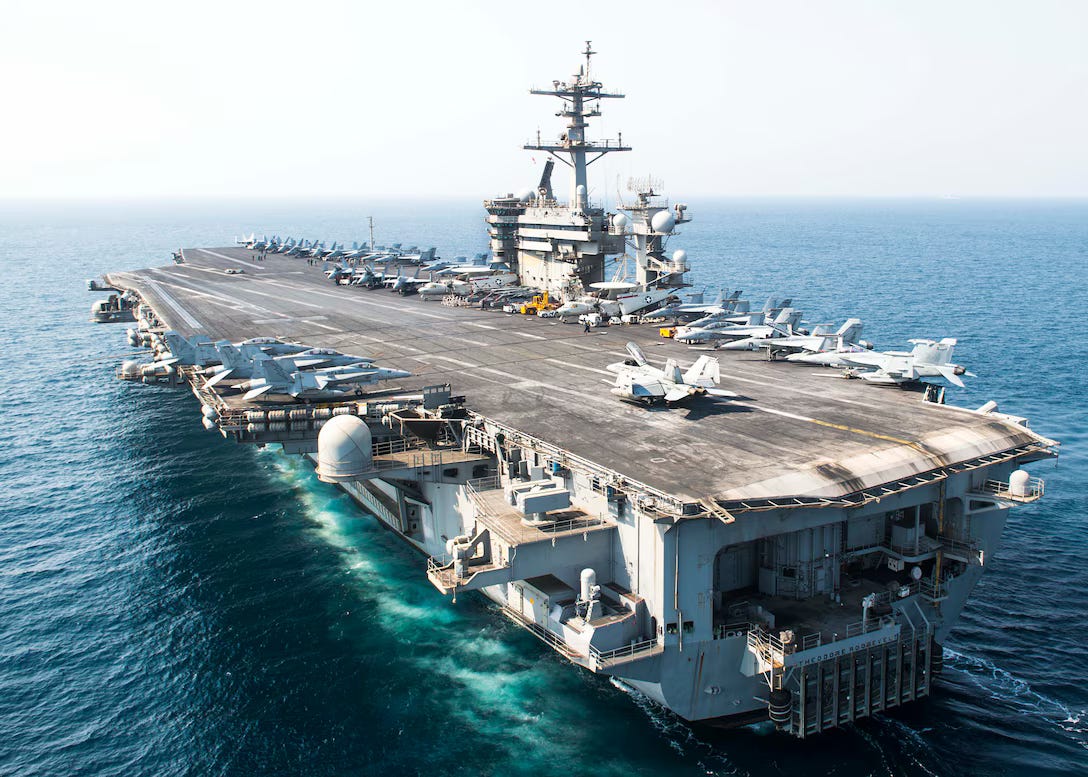
Forty naval vessels, headed by the U.S. aircraft carrier Theodore Roosevelt, 5 submarines, 206 aircraft, land forces from 15 nations, and over 30,000 military personnel.
These war drills are specifically directed toward the propagandized military threat of China, when China’s main “threat” is its economic challenge to the “West,” not military confrontation.
Thirty countries are spending lots of their national budgets to send some of their military forces to one of the most isolated island archipelagos in the world, the Hawaiian Islands.
Of the 10 countries from NATO countries, only two have shores on the Pacific Ocean- the United States and Canada.
The other eight NATO countries in RIMPAC are sending vessels and military forces all the way from Europe: Denmark, Germany, Greece, Italy, the Netherlands, Poland, Spain, and the United Kingdom. Additionally, there are 5 NATO “partners” sending aircraft, ships, and land forces to Hawaii that have Pacific Ocean coasts: Australia, Japan, New Zealand, Korea, and Colombia, the only country in Latin America to be a “partner” in NATO.
The other 14 countries with shores on the Pacific or Indian oceans that are sending military forces to Hawaii for RIMPAC 2026 are: Brunei, Chile, Fiji, Guatemala, India, Indonesia, Malaysia, Mexico, Peru, Philippines, Singapore, Sri Lanka, Thailand and Tonga.
The 6th NATO “partner” in RIMPAC 2026 is Israel. Israel has an office in NATO headquarters in Brussels, Belgium, and is well integrated into NATO operations through its deep association with the United States military. Israel brings to NATO first-Hand experience in the assassination of national leaders, journalists, ordinary citizens, and in the AI development of targeting infrastructure and surveillance around the World
Israel is the U.S. partner in the genocide of Palestinians in Gaza and tragically brings the most recent combat experience among RIMPAC militaries with land, air, and sea combat operations in Gaza, the West Bank, southern Lebanon, and Iran.
Israel is the first country from the Middle East to send military to RIMPAC, providing first-hand experience not only in conducting a genocide of Palestinians in Gaza with the weapons provided by the United States, but also offering the latest artificial intelligence programs for the assassination of national leaders, journalists, and ordinary citizens, targeting of infrastructure and surveillance of areas anywhere in the world to the NATO war machine.
RIMPAC Is Not the Only Big Naval War Practice in the Pacific
While RIMPAC is one of the largest war practices, each year the US Pacific Command, by its own count, sponsors over 1,500 war practice maneuvers and other engagement activities with military forces from other countries in Asia and the Pacific.
In fact, the week of June 22-July 1, 2026, as RIMPAC began in Hawaii, the war practice Valiant Shield ended in the front yard of China near Guam, the Northern Marianas, and Okinawa. Valient Shield is held every two years, just as RIMPAC is. The U.S., Japan, Australia, Canada, and New Zealand participated in Valiant Shield, only the second time Japan has sent military forces since Valiant Shield began in 2006.
The Navy described Valiant Shield as an anti-submarine warfare exercise, high-altitude balloon launch, MQ-28 Ghost Bat drone surveillance flight, bilateral medical operations, bilateral resupply and cross-decking, and a live fire of the medium-range intercept capability.
The United States sent the aircraft carrier, Nimitz-class aircraft carrier USS George Washington (CVN 73), the guided-missile cruiser USS Robert Smalls (CG 62), the guided-missile destroyers USS Shoup (DDG 86) and USS Benfold (DDG 65), and Virginia-class fast-attack submarine USS Minnesota (SSN 783) to Valiant Shield.
The Japanese ships included the helicopter destroyer Kaga, the guided-missile destroyer Fuyuzuki, and the attack submarine JS Jingei.
Japanese air and ground Self-Defense Forces also participated in Valient Shield 2026, with 4,100 Japanese ground forces, 150 vehicles, and 60 aircraft involved in the war maneuvers.
The Royal Canadian Navy frigate HMCS Charlottetown (FFH339) and a P-8A Poseidon MPA from the Royal New Zealand Air Force and Royal Australian Air Force also participated in Valiant Shield 2026
The story of the 2026 Valient Shield sinking of the current USS Juneau by a Japanese torpedo a strange chapter in military history. It’s the Second Time a Japanese submarine sank ships named the USS Juneau!
A Navy press release about Valiant Shield enthusiastically read that “The pinnacle event was the sinking exercise (SINKEX) of the decommissioned Austin-class amphibious transport dock USS Juneau (LPD 10) in the Philippine Sea, June 27. The SINKEX brought together air, surface, and subsurface assets in coordinated strikes, allowing crews to sharpen critical skills in weapons employment and target engagement under realistic conditions that no simulator can fully replicate.”
The amphibious transport dock USS Juneau (LPD 10) entered service in 1969 and saw action in the Vietnam War and Operation Desert Storm before being decommissioned in 2008 and being made ready to be sunk as part of military war practice, 18 years later, in 2026.
June 2026 U.S. Navy images show that aircraft dropped bombs on the USS Juneau. But, according to the U.S. Navy, the final hit that sank the USS Juneau was a torpedo strike from a Japanese Maritime Self-Defense Force submarine.
The Captain of the Japanese submarine JS Jingei, whose torpedo finally sank the USS Juneau in Valiant Shield 2026, perhaps did not know the history of the ships that have carried the name USS Juneau, or he might have passed up the opportunity to give the final blow to this USS Juneau in June 2026.
Japanese submarine sank the USS Juneau in 1942 during World War II, killing 600 sailors
In 1942, during World War II, the namesake of the 2026 Valiant Shield, USS Juneau, was sunk near the Solomon Islands when torpedoes from a Japanese submarine split the light cruiser in half, sinking it almost immediately. More than 600 sailors died that day, including perhaps the most well-known case of brothers killed during the war.
The Sullivan brothers, five brothers from Waterloo, Iowa—Albert, Francis, George, Joseph, and Madison Sullivan—all served as shipmates on the USS Juneau. Normal protocol during wartime required siblings to be assigned to different units to prevent one family from having to endure such a hardship should tragedy strike. But the Sullivans insisted that they serve together and requested special permission to do so from the Secretary of the Navy.
Tragically, all five brothers were killed in action when their ship, the USS Juneau, was sunk on November 13, 1942, by Japanese submarine torpedoes.
Reminder that the “Killer US Submarine” USS Charlotte is operating in RIMPAC 2026
In RIMPAC 2026, the notorious USS Charlotte, a U.S. nuclear attack submarine, torpedoed and sank in March 2026 the Dena, an Iranian naval frigate, 2,000 miles from Iran as it was leaving a regional military exercise in the Indian Ocean, killing 87 Iranian sailors.
Ann Wright served 29 years in the U.S. Army/Army Reserves and retired as a Colonel. She was also a U.S. diplomat for 16 years but resigned 23 years ago in March 2003, in opposition to the U.S. war on Iraq. She is a member of Veterans For Peace, World Beyond War, International Peace Bureau, CODEPINK: Women for Peace, and Hawaii Peace and Justice. She lives in Honolulu, Hawaii. She is the co-author of “Dissent: Voices of Conscience.”
CODEPINK Substack is a reader-supported publication. To receive new posts and support our work, consider becoming a free or paid subscriber.
From CODEPINK Substack via This RSS Feed.