

Israeli Prime Minister Benjamin Netanyahu warned on Thursday that the war against Iran “is not yet over” and reiterated that the military will continue its attacks on Iran under any circumstances, during the graduation of 40 new military pilots.
RELATED:
From Ceasefire to Crossfire: How U.S.-Iran Tensions Spiral in 48 Hours?
Meanwhile, the United States has been attacking the Islamic Republic for two days in operations that Washington says are aimed at imposing significant costs for what it considers ceasefire violations following Iranian attacks on three merchant ships in the Strait of Hormuz.
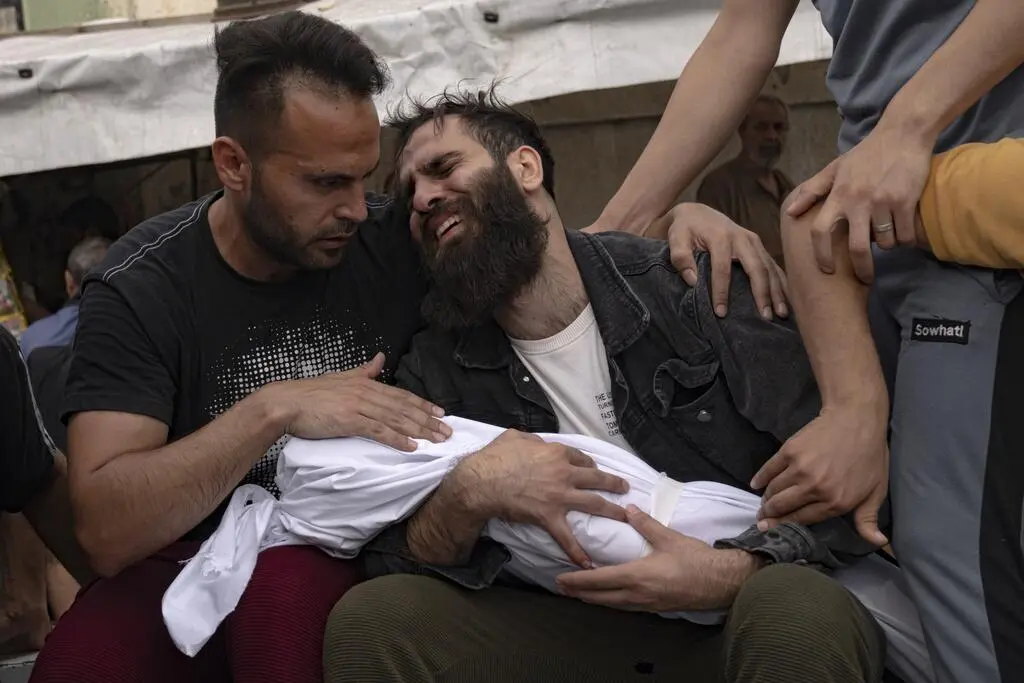
These attacks have caused at least 14 deaths and 78 injuries in the last two days.
Last night, U.S. forces bombed some 90 Iranian military targets, including air defense systems, missile depots, and drones, the U.S. Central Command (CENTCOM) reported.
Iran responded by attacking the U.S. bases at Arifjan and Ali Al Salem in Kuwait, and the bases at Juffair and Sheikh Isa in Bahrain, according to the Iranian Revolutionary Guard. Tehran’s wave of retaliation comes after a second wave of U.S. airstrikes against southern Iran on Wednesday, a day on which President Donald Trump reiterated his bellicose rhetoric, terminated the memorandum of understanding signed on June 17, and issued offensive remarks against the Iranian leadership.
Following the U.S. attacks, which represented another blow in less than 24 hours, Ebrahim Rezaei, spokesman for the National Security Committee of Iran’s parliament, stated that the country’s Supreme Leader has taught Iranians not to fear the United States and warned of a response to the ongoing attacks, saying in a post on X: “Expect the hard slap from the Iranians.”
BREAKING:
Trump is dropping bombs on Iran for the second consecutive night.
There is no “peace.”
There is no “ceasefire.”Just U.S. bombs falling on a sovereign country thousands of miles away in the middle of the night. pic.twitter.com/n33oOKClQZ
— sarah (@sahouraxo) July 8, 2026
Presence in Lebanon
The Lebanese Ministry of Health confirmed the deaths of 15 people in the last 24 hours as a result of Israeli airstrikes. This brings the total death toll to 4,319 since the start of the offensive on March 2, 2016, while the number of wounded has reached 12,203.
The ceasefire agreement process lacks a clear timeline and conditions its conclusion on the Lebanese army assuming security in the evacuated areas and the disarmament of non-state armed groups, a clear reference to the Lebanese resistance movement Hezbollah.
The offensive continues, with Israeli troops advancing more than 10 kilometers into Lebanese territory. Tel Aviv maintains its occupation of areas in the south of the country, some for decades and others since the 2013-2014 war.
The country’s president, Joseph Aoun, called on the international community to pressure Israel to withdraw its troops from the occupied territories in the south. “Pressure must be exerted on Israel to withdraw from the regions it occupies in Lebanon.
This occupation undermines the legitimacy of the state and prevents the deployment of the army and the achievement of a just and lasting peace,” declared the Lebanese head of state, who described the Lebanese army and security forces as the “cornerstone” of stability and security in the south of the country, areas that remain under Israeli military presence despite ceasefire agreements.
From teleSUR English via This RSS Feed.