

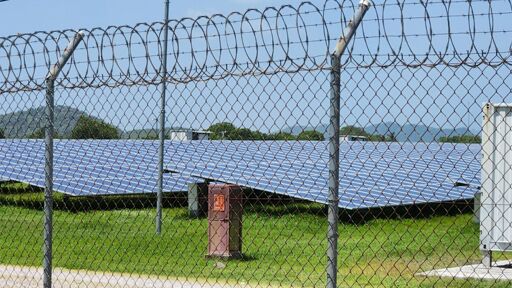
In 2013, officials in Honduras made renewable energy development a “national priority,” with a special interest in attracting foreign investment in new solar power technology. Over the last 20 years, the government has introduced tax cuts and other economic benefits to accelerate the creation of solar projects, in one case approving 23 solar parks in an overnight legislative session. But the speed of approval for those projects has drawn criticism from human rights and conservation groups that say the state awarded contracts that avoided more rigorous environmental oversight. At the same time, the energy companies continue to see disproportionate profits compared to local communities living near the projects, often without access to electricity themselves. According to a new report from the Institute for Policy Studies, solar projects throughout southern Honduras have negatively impacted the local economy and health of surrounding communities. The projects have also done little to transition the country away from fossil fuels, raising questions about who truly benefits, according to the report. “About a decade ago, gleaming mosaic of solar parks was installed in southern Honduras, accompanied by promises of a transition to green energy that would bring about jobs, abundant cheap energy, and community development,” said the report, which was also published by the Transnational Institute, TerraJusta and Honduras Solidarity Network, among other environmental and human rights groups. “But the impact so far is eerily similar to the prevailing development model in Honduras, which concentrates benefits on the rich and externalizes impacts on the poor.” Residents…This article was originally published on Mongabay
From Conservation news via This RSS Feed.
Sounds like it wasn’t the renewable energy that failed, but the human component.