

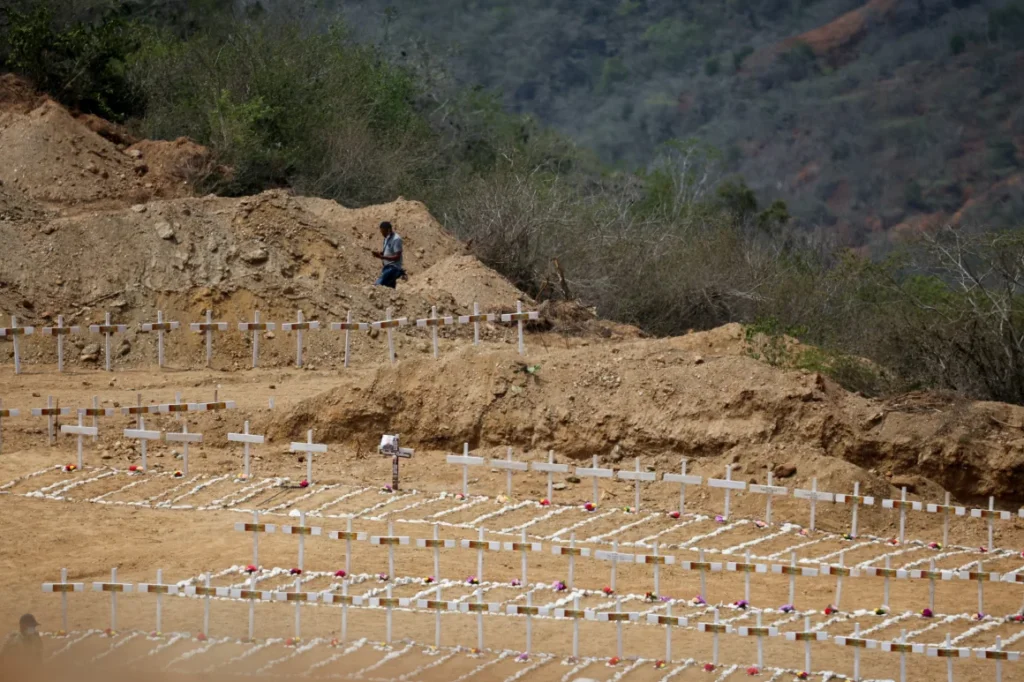
Authorities provide individualized burials and forensic identification for victims of the June 24 earthquakes.
Venezuelan authorities have designated La Esperanza Cemetery in La Guaira state as the burial site for victims of the twin earthquakes that struck the country on June 24, launching a special operation to ensure individualized burials and forensic identification for every victim.
RELATED: 170 UN Member States Express Solidarity With Venezuela
The operation is being coordinated by the National Service of Forensic Medicine and Science, with support from authorities in Vargas municipality. Officials said the cemetery was selected to guarantee that burials comply with international forensic and public health protocols while preserving the identity of each deceased person.
Individualized burial and identification
Vargas Mayor Colonel José Manuel Suárez Maldonado said the government activated humanitarian response mechanisms immediately after the earthquakes to assist affected families, including the recovery, identification and burial of the victims.
Each coffin is placed in an individual grave separated by clearly marked plots. Every burial site is identified with a white cross and a plaque bearing an alphanumeric code, the inscription “Special Identification,” and the date of death, June 24, 2026. Authorities said the code currently serves as the primary identifier for hundreds of victims whose relatives are still searching for them.
#Gobierno || Cuerpos sin identificar serán inhumados en el Cementerio La Esperanza
Los cuerpos en avanzado estado de descomposición, pendientes de reclamación por sus familiares luego del doble terremoto, serán enterrados de manera individual en el Cementerio de la Esperanza,… pic.twitter.com/oiyj7xxKm1
— Agencia Venezolana de Noticias (@avnve) July 7, 2026
Text Reads: Unidentified bodies to be buried at La Esperanza Cemetery
Bodies in an advanced state of decomposition—which remain unclaimed by relatives following the double earthquake—will be buried individually at La Esperanza Cemetery in accordance with international protocols and under the supervision of the Red Cross, announced José Alejandro Terán, Governor of La Guaira state.
Before burial, forensic teams photograph and document each body and record its exact location within the cemetery. Officials said these records will allow authorities to locate every victim if relatives later provide additional information or genetic evidence for identification.
“We are maintaining a record identifying the location where the remains of each deceased person are resting so that their relatives can identify them correctly,” Suárez Maldonado said.
International protocols and humanitarian response
Authorities said the burial procedures follow international protocols for managing fatalities during large-scale disasters.
While those protocols recognize the use of mass graves as an emergency measure when fatalities overwhelm available resources or create imminent public health risks, Venezuelan authorities said they decided to adopt individualized burials with prior forensic documentation and traceable identification records.
Officials also established a dedicated space inside La Esperanza Cemetery to provide spiritual support for grieving families. Catholic priests and pastors are available to accompany relatives during funeral ceremonies, and supplies have been made available for religious observances.
“The State has worked to ensure the cemetery where the souls of the victims of this tragedy will rest,” the mayor said.


Photo: Chelo Camacho
Search and rescue teams continue operating in the areas hardest hit by the twin earthquakes. Authorities have also called on anyone with information about missing persons to visit designated assistance centers to help advance the identification process.
According to the latest official figures, the earthquakes left 3,811 people dead, 1,674 injured, 462 people rescued alive from the rubble, and 17,907 others homeless or with severe damage to their homes.
The individualized burial policy differs from the handling of fatalities during the 1989 Caracazo, when hundreds of victims were buried without prior identification in a mass grave known as “La Peste” at Caracas’ General del Sur Cemetery. Authorities said the current procedures seek to preserve the identity of each victim and allow families to determine the final resting place of their relatives.
From teleSUR English via This RSS Feed.