

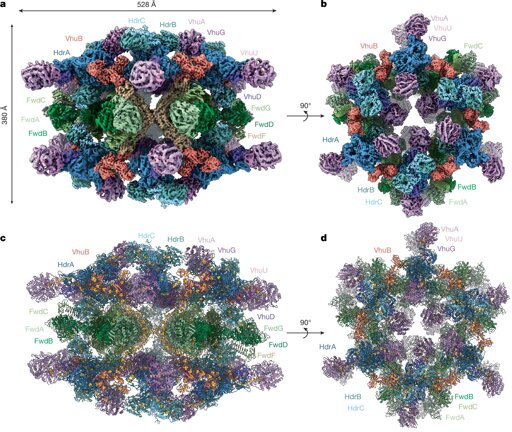
A research team at Marburg University has investigated one of the largest enzyme complexes found in nature to date and deciphered its remarkable structure. Under the supervision of Dr. Jan Schuller, Ph.D. student Sophia Paul from the Center for Synthetic Microbiology (SYNMIKRO) was able to characterize the so-called heterodisulfide reductase super-assembly in detail. The results of the study are now published in the journal Nature. They show how a molecular “giant” comprising hundreds of building blocks enables energy production in microorganisms.
From Biology News - Evolution, Cell theory, Gene theory, Microbiology, Biotechnology via This RSS Feed.
You must log in or # to comment.