

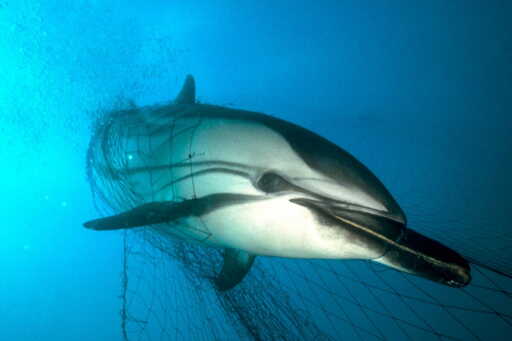
Driftnets, vertically hanging nets that drift with ocean currents and can stretch for kilometers, are used to catch large pelagic species such as swordfish and tuna. However, they have long drawn criticism from conservationists as they also capture and kill sharks, turtles, dolphins and other marine wildlife. For decades, debate has raged about use of the large nets. It’s a particularly contentious issue in the Mediterranean Sea, an important migration corridor that faces considerable pressure from overfishing, pollution and climate change. Now, international efforts to tighten legislation on driftnets in the Mediterranean have gained new momentum as member states of the International Commission for the Conservation of Atlantic Tunas (ICCAT) consider a proposal aimed at closing loopholes in existing rules. ICCAT is the world’s largest regional fisheries management organization, managing the stocks of highly migratory species, including tuna, swordfish (Xiphias gladius) and some shark species across the Atlantic Ocean and adjacent seas. At ICCAT’s technical meetings held in Brussels in June, the European Union presented a proposal (see IMM_09_ENG.docx in link) that seeks to strengthen current driftnet rules. Fishers haul an illegal driftnet in international waters west of Marettimo Island, near Sicily. Image © Gavin Parsons/Greenpeace. The EU proposal would establish clearer definitions for driftnets, prohibit their possession on vessels that target certain species, and extend restrictions beyond the Mediterranean to parts of the Atlantic Ocean. “The EU has the clear ambition to push for the adoption of this measure at this year’s annual meeting of ICCAT (in November),” an…This article was originally published on Mongabay
From Conservation news via This RSS Feed.