

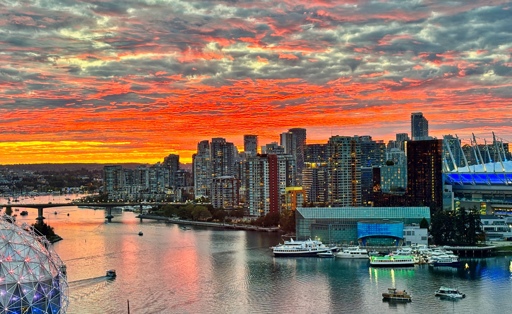
VANCOUVER — Two hundred years ago, Talaysay Campo’s ancestors harvested clams and cockles along the shore of Vancouver’s False Creek. “It was a huge aquaculture site,” Campo, a member of the Squamish First Nation and operations manager of Talaysay Tours, a company dedicated to sharing the history of Indigenous peoples, tells Mongabay. Today, little remains of the abundance Campo describes. Even the name False Creek obscures the ecological richness that once defined the waterbody. This narrow, 3-kilometer (almost 2-mile) long waterway traversing the heart of Vancouver is not a freshwater creek as the name implies, but a saltwater tidal inlet. It received its name in 1859 from a British sea captain who discovered he’d been mistaken in believing he’d been traveling through a creek and called it False Creek as a warning to other mariners. As European settlement expanded across the region, mandates from newly formed colonial governments permitted the destruction of Indigenous villages along the shoreline of False Creek, forcing First Nations people onto government reserves. The inlet became a mecca for industry. Sawmills, manufacturing plants, railyards and warehouses replaced the sea gardens rimmed with rocks and home to octopus and sea cucumber. Relics of Science World from the World Expo of 1986 on False Creek, Vancouver. Image by Jennifer Cole for Mongabay. In 1986, the World Expo on transportation and communication turned the industrial wasteland on shore into 70 hectares (173 acres) of futuristic pavilions and temporary event space. In the decades since, the pavilions have given way…This article was originally published on Mongabay
From Conservation news via This RSS Feed.