

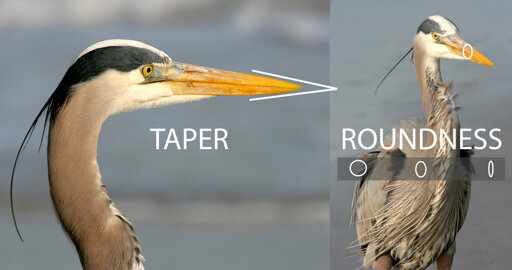
Nature has invented countless types of pointy appendages, and scientists have long sought to explain what makes these structures so effective at puncturing other things. A new study models the key physical characteristics of puncturing tools to reflect their diversity in nature, finding that the shape of a biological tool is driven in part by trade-offs between its puncture efficiency and its ability to resist bending or buckling. The findings are described in the journal Science Advances.
From Biology News - Evolution, Cell theory, Gene theory, Microbiology, Biotechnology via This RSS Feed.
You must log in or # to comment.