

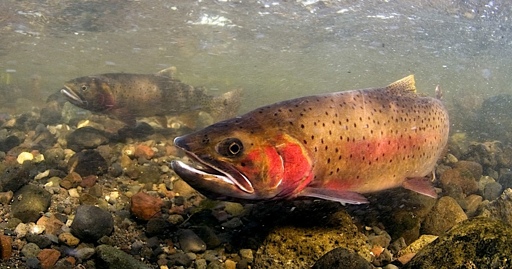
Yellowstone National Park is often told as a story of recovery. Wolves returned and then elk changed their behavior. Willows and aspens then rebounded and rivers, it is said, changed course. The reintroduction of wolves in 1995 is one of the most familiar ecological narratives in the world. But the Yellowstone ecosystem was not waiting in a stable state for wolves to return, it had already been reorganizing for centuries. Beavers declined following widespread trapping, altering vegetation and hydrology. Grizzly bears were heavily persecuted across the region, reducing another major connector between aquatic and terrestrial systems. Bison were reduced to near extinction in the late 19th century and later rebuilt under protection. Large predators were removed in the early 20th century, and elk populations expanded in their absence. Each of these changes altered how nutrients moved and how water, plants, and animals interacted. Wolf reintroduction did not occur in isolation; it entered a system already in motion. At almost the same time, something else was happening. It did not involve a visible predator and did not occur in valleys or along rivers. It did not lend itself to photography or documentary. It happened beneath the surface of Yellowstone Lake. Yellowstone Lake. Image courtesy of Neal Herbert / National Park Service. For many people, the idea of a non-native predator reshaping an ecosystem is not abstract. The Burmese python in the Florida Everglades provides a clear example, with an introduced predator reducing prey populations and altering how energy moves through the…This article was originally published on Mongabay
From Conservation news via This RSS Feed.