

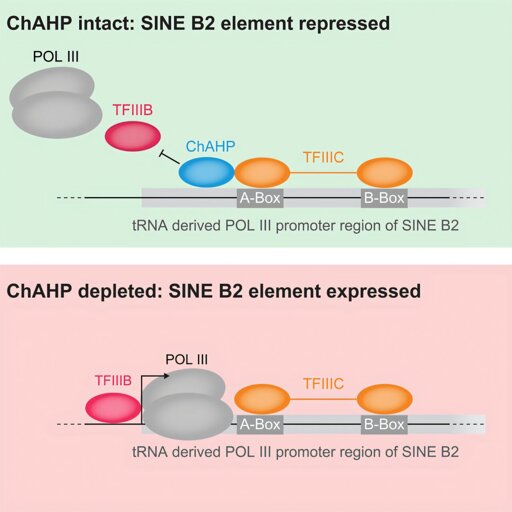
Much of the genome is made up of repetitive DNA sequences that trace back to ancient mobile elements, many of which have lost their ability to copy themselves into new locations but can still cause problems if they become active again at the wrong time. Now, two studies published in Molecular Cell from FMI scientists reveal how cells keep these potentially disruptive genetic elements under control. The researchers found that a protein complex called ChAHP acts as a targeted genome-defense system, preventing the transcription machinery from switching on these elements in mouse cells. The findings offer insight into how cells manage repetitive sequences while protecting genome stability.
From Biology News - Evolution, Cell theory, Gene theory, Microbiology, Biotechnology via This RSS Feed.