

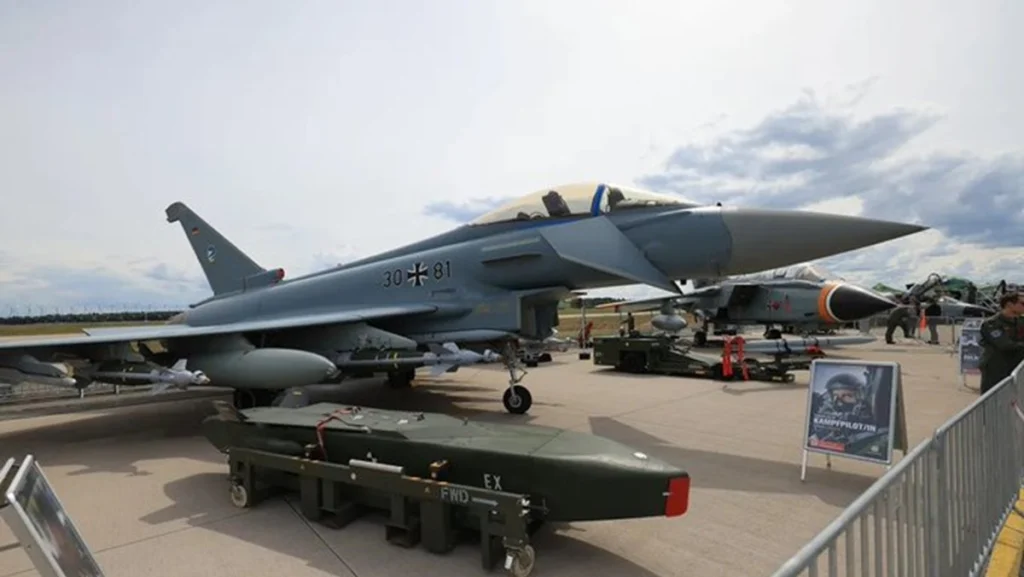
The DPS initiative seeks to accelerate development and procurement through greater allied cooperation.
On Wednesday, 12 European countries committed to invest $50.6 billion over the next decade in long-range missiles to strengthen the defense and deterrence capabilities of the North Atlantic Treaty Organization (NATO).
RELATED:
NATO Summit: Trump Orders Cutoff of U.S. Trade With Spain
The initiative, known as Deep Precision Strike (DPS), aims to accelerate the procurement and development of these systems through greater cooperation among NATO members.
In a joint statement, Denmark, Estonia, Finland, France, Germany, the Netherlands, Norway, Romania, Spain, Sweden, Turkey and the United Kingdom said the missiles are an integral part of NATO’s defense plans and are needed to “demonstrate strength through credible capabilities.”
They also highlighted the need for Europe to assume “a stronger role” within the Atlantic Alliance and “greater responsibility for shared transatlantic security.” These capabilities will make it possible to “defend and deny an adversary a military advantage,” while multinational coordination will help “accelerate procurement and delivery.”
This is just embarrassing at this point.
The President of the United States flew all the way to a NATO summit and the first thing out of his mouth was that we should take Greenland from Denmark.
Folks, this is not complicated.
Denmark is a NATO ally. Article 5 means an…
— Mike Levin (@MikeLevin) July 8, 2026
According to the British government, the DPS program will enable the sharing of expertise, technological advances and industrial cooperation to promote precision weapons capable of striking targets more than 300 kilometers (186 miles) away and, in some cases, up to 2,000 kilometers (1,243 miles).
Currently, the UK and Germany are developing stealth and hypersonic missiles with a range exceeding 2,000 kilometers (1,243 miles), with entry into service expected in the 2030s. The UK, France and Italy are also developing the next generation of missiles that will replace the current Storm Shadow.
“The UK is already working with its partners to develop advanced systems that will give our Armed Forces the ability to defend and deter thousands of kilometers from the front line, but this initiative that we are leading will strengthen cooperation by bringing together our European allies to ensure that NATO remains secure in the years ahead,” British Prime Minister Keir Starmer said.
teleSUR/ JF
Source: EFE
From teleSUR English via This RSS Feed.