

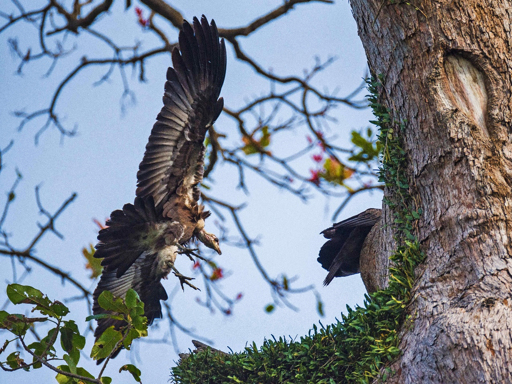
Known for their unique ability to polish off animal carcasses and minimize the potential for disease outbreaks, vultures are one of the most endangered bird groups on the planet today. Around many parts of West Africa, especially Nigeria, their populations have plummeted, thanks largely to commercial poaching and traditional beliefs that prize vulture parts as vital ingredients for traditional medicine. Most of the historic resident species have been locally extirpated — and those remaining are declining sharply too. Ornithologist Michael Manja Williams is no stranger to this decline in Nigeria’s wild vulture population. Growing up in Plateau State, Middle Belt Nigeria, Williams typically saw committees of vultures perched on rooftops in his community. “All of a sudden, we no longer saw them again,” he said. This disappearance would pique his curiosity, leading him on to many different research surveys across Nigerian states and eventually inspiring a lifelong career in vulture conservation. A Ph.D. student at Nigeria’s Joseph Sarwuan Tarka University, Williams is currently the coordinator for endangered species conservation at Biota Conservation Hub Foundation, a nonprofit where he leads research on endangered bird species and wildlife animals. In a recent Zoom interview with Mongabay, Williams shared insights from his countrywide field studies, the present shift in the perception of vultures among younger generations, and why policy reforms and community-based conservation are essential in offsetting Nigeria’s diminished vulture numbers. Michael Manja Williams looking through his camera on a field trip. Image courtesy of Michael Manja Williams. This interview has been lightly…This article was originally published on Mongabay
From Conservation news via This RSS Feed.