

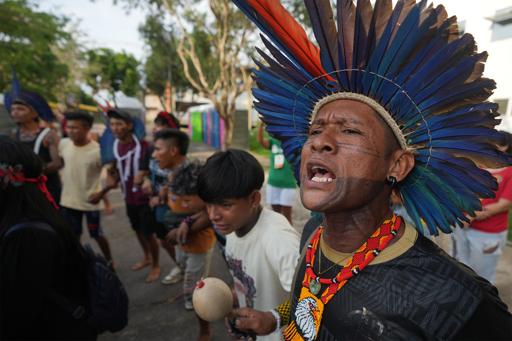
The Amazon is the largest rainforest on Earth, with many funders making financial commitments to conserve this crucial ecosystem. Yet, when the declarations are traced to the ground, the capital is rarely there. This is especially true for Indigenous and local communities that steward and depend on this ecosystem but remain severely under-resourced and overlooked. Carolina Suárez Visbal and Juan David Ferreira know this pattern well. As CEO and project director of Latimpacto — a Colombia-based network dedicated to mobilizing philanthropic and impact capital across Latin America, they have spent years navigating the gap between what the world promises the Amazon and what actually reaches the communities living within it. “One thing that worries us at Latimpacto about capital deployment is that people keep announcing funds and initiatives, but when you trace the record, this capital turns out to be very difficult to actually mobilize,” Ferreira told Mongabay at the 2026 Asia Philanthropy Summit in Singapore. “The investment thesis or the objectives of the fund do not align with the realities and the territories.” Latimpacto’s response has been to create infrastructure to build capacity for regional environmental funding. The organization’s Pan-Amazon Fellowship reshapes how capital is structured and deployed in the ecosystem by training funders to understand the Amazon not as a monolithic rainforest but as a heterogeneous and dynamic place with nine distinct national contexts, and both isolated Indigenous communities and cities of over 2 million people. Latimpacto’s initiative InNature Lab redefines what innovation means in an Amazonian context.…This article was originally published on Mongabay
From Conservation news via This RSS Feed.