



Illustration: Jarett Sitter / The Narwhal
Table of Contents
- Fast-tracking development: how Ontario is changing the rules for development through Bill 5
- Climate action is no longer at the centre of Ontario’s environmental agenda
- Drivers continue to see cost reductions in Ford’s Ontario
- Water protections and wetlands face new pressures in Ontario
- Why Ontario municipalities are losing environmental powers
- The next chapter in Ontario’s battle over conservation and protected lands
- Ontario is betting big on critical minerals and energy growth
- Carbon capture and storage is also on Ontario’s agenda
- Transparency and public oversight are disappearing
In the summer of 2025, wildfires burned nearly 600,000 hectares across Ontario — an area more than twice the size of Ottawa. Thousands of people were displaced. This summer’s wildfire evacuations have already begun in the northern part of the province, while intense heat waves blanket southern Ontario, with temperatures reaching above 40 C at times.
These extreme weather events are made more likely because of human influence on the climate, according to federal scientists. Yet as Ontario faces the growing effects of climate change, the Doug Ford government appears to be largely moving away from mitigation and adaptation in its most recent term, focusing on economic growth over environmental safeguards.
The Ford government expanded parks, invested in electricity generation, funded Indigenous participation in mining reviews and created Ontario’s first standalone Ministry of Emergency Preparedness and Response.
But many critics, and lawsuits, still make the case that the environment is being sidelined in a bid to build.
Most notable was a proposal buried within the province’s 2025 fall economic statement to eliminate legal requirements for Ontario to maintain a climate plan and publicly report on its progress. Across Queen’s Park, ministers were advancing changes affecting everything from environmental assessments to municipal green building standards to conservation authorities.
These changes followed Premier Ford’s third consecutive majority victory on Feb. 27, 2025, after a snap winter election dominated by concerns about affordability, economic uncertainty and the threat of U.S. tariffs.

Doug Ford and supporters on election night. Ford’s Progressive Conservative party won a second term in June 2022 as Ontario’s government. Photo: Doug Ford / X
Since returning to office, Ford’s government has increasingly argued Ontario must move faster, building more homes, approving more mines, generating more electricity and cutting what it sees as unnecessary barriers to economic growth.
More than a year after Ford’s re-election and Bill 5’s march through the legislature, the question is no longer whether the province’s environmental agenda is changing. It is what the changes will mean for the land, water and communities.
Fast-tracking development: how Ontario is changing the rules for development through Bill 5
When the Ford government introduced Bill 5 in April 2025, it pitched the legislation as a way to speed up development, cut red tape and strengthen Ontario’s economy. Called the Protect Ontario by Unleashing our Economy Act, Bill 5 received royal assent in June 2025.
Changes under the bill affect everything from who signs off on major developments to how a habitat is defined for endangered species and when the public gets a chance to weigh in.
At the centre of that shift is a belief repeatedly expressed by the government: Ontario’s approval system takes too long.
The legislation created a new system, called One Project, One Process, designed to move projects through approvals faster. It gave cabinet new powers to designate special economic zones, where certain provincial and municipal rules won’t apply to projects deemed strategically important to Ontario’s economy.
Under the One Project, One Process framework, the Ministry of Energy and Mines became the central coordinator for designated mining projects. The province says the approach will cut review timelines in half by creating a single approval pathway and reducing duplication between ministries.
Several mining projects have already been designated under the system, including the Crawford Nickel project near Timmins and Frontier Lithium’s project near Red Lake.
For some First Nations leaders, however, the question is whether consultation can keep pace with faster approvals.
The Chiefs of Ontario has warned that speeding up development should not come at the expense of Treaty Rights and consent processes. Similar concerns have surfaced around the government’s special economic zone framework.
The Ford government’s 2025 budget included a commitment of $70 million over four years for an Indigenous Participation Fund, intended to help communities and organizations in areas of significant mineral development engage in regulatory processes related to mineral exploration and mine development.
But the debate has already moved into the courts.
Environmental groups have launched a constitutional challenge against Ontario’s Special Economic Zones Act, arguing the legislation is undemocratic, putting unchecked power in the hands of the cabinet. Several First Nations have also joined legal efforts challenging the law, arguing it threatens Indigenous Rights and weakens environmental protections.
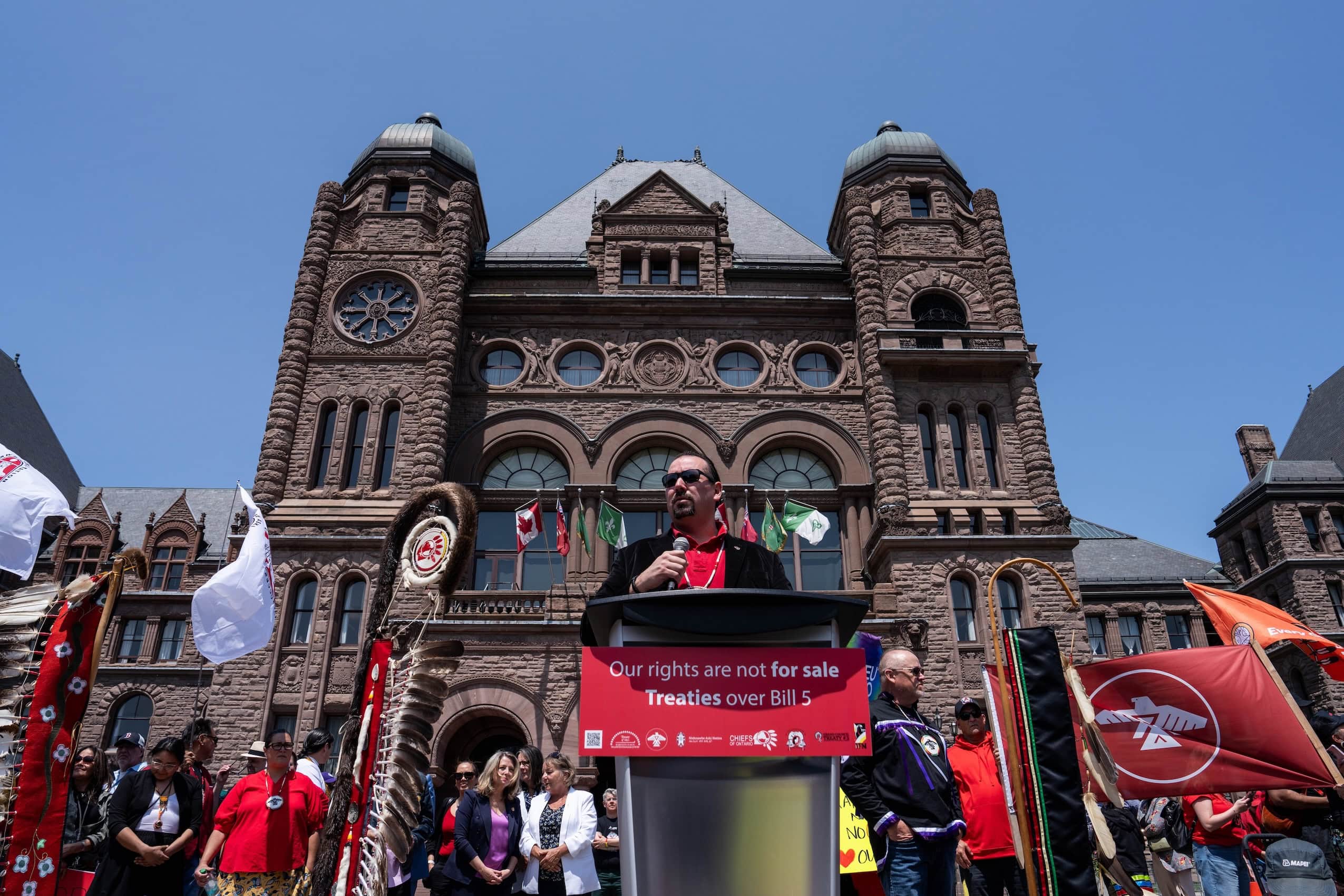
Ontario Regional Chief Abram Benedict speaks to a crowd at Queen’s Park in Toronto, on June 2, 2025, during a rally opposing Ontario’s Bill 5. Photo: Sid Naidu / The Narwhal
There is no hearing scheduled yet but the law firm representing the case, Woodward & Company LLP, told The Narwhal it hopes for one to be scheduled in early 2027.
One of the most consequential changes under Bill 5 involved Ontario’s approach to protecting species at risk.
For nearly two decades, the Endangered Species Act governed how threatened and endangered plants and animals were protected in the province. That changed with Bill 5, which proposed repealing and replacing the Endangered Species Act with the Species Conservation Act, a shift that happened on March 30, 2026, marking the most significant overhaul of Ontario’s species-at-risk framework in nearly two decades.

The Ontario government’s own research has confirmed 11 species at risk are living along the planned route of Highway 413. Clockwise, they are: butternut tree, bobolink, chimney swift, bank swallow, rapids clubtail, redside dace, western chorus frog, wood thrush, eastern meadowlark, barn swallow and olive-sided flycatcher. Illustration: Shawn Parkinson / The Narwhal
The new legislation narrows how a habitat is defined. Previously, habitat included the broader areas species relied on for feeding, migration and mating, among other things. The new definition focuses primarily on occupied dens, nests and similar dwelling places for animals, and immediately surroundings trees and plants.
The government says the changes will create a more efficient and predictable system for project proponents, while continuing to protect species. But the narrower definition could leave important parts of ecosystems without protection, particularly for wide-ranging species-at-risk such as woodland caribou that depend on large connected landscapes to survive.
Climate action is no longer at the centre of Ontario’s environmental agenda
Climate policy has not disappeared altogether, but several decisions made since the Ford government’s re-election suggest it is not a driving force behind many of the province’s major policy choices.
One of the clearest examples arrived with the province’s 2025 fall economic statement.
Buried within the omnibus budget bill was a proposal to repeal portions of Ontario’s Cap and Trade Cancellation Act, legislation introduced by the Ford government in 2018 to eliminate the provincial carbon pricing system. The act had required the government to prepare a climate plan and publicly report on its progress — a law that, by the beginning of Ford’s third term, was one of the province’s few remaining climate accountability mechanisms.
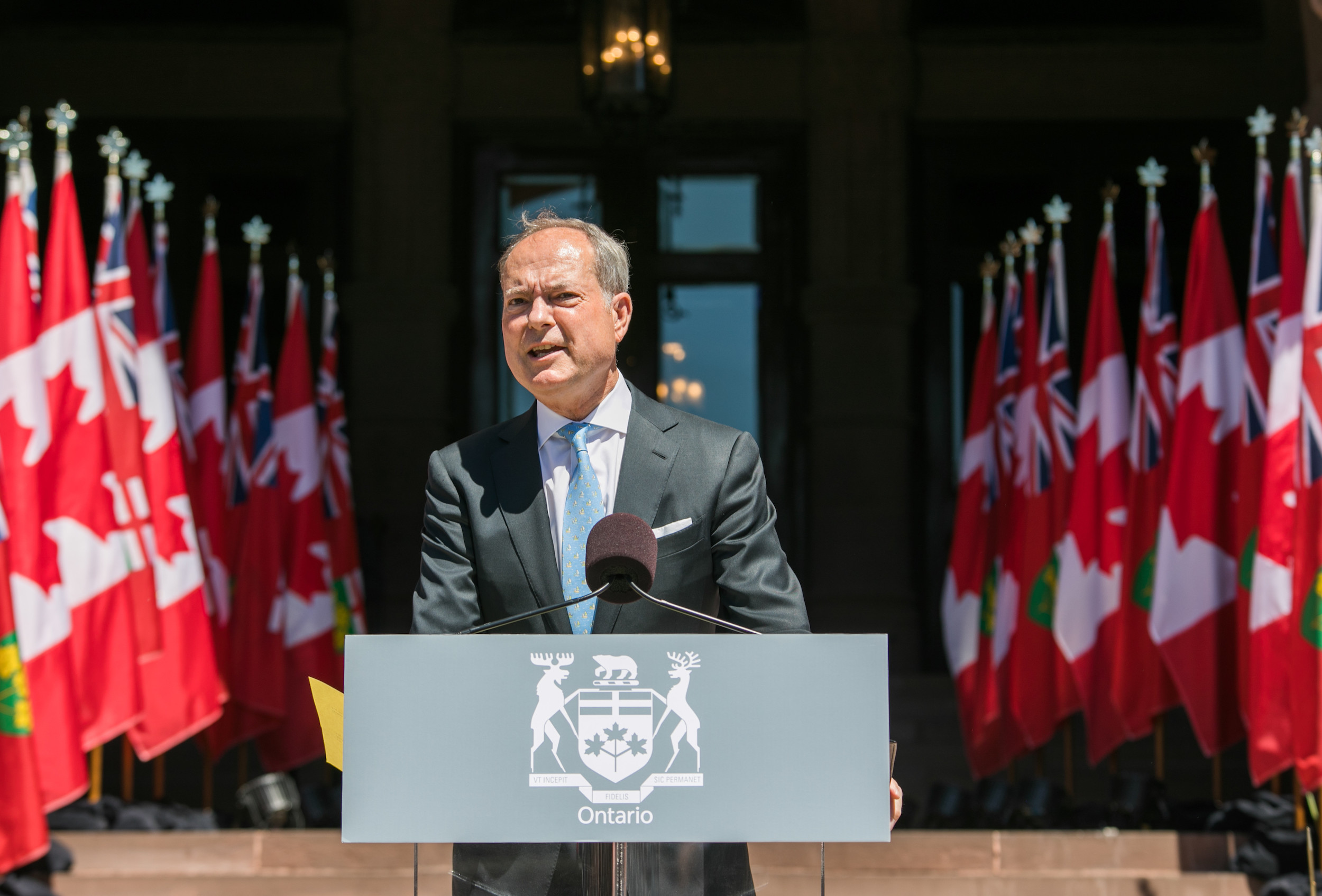
Finance Minister Peter Bethlenfalvy’s 2025 fall economic statement outlined a plan to protect Ontario’s economy from the impact of new U.S. tariffs. Photo: Government of Ontario / Flickr
The repeal came as Ontario and the rest of Canada continue to experience increasingly severe weather linked to climate change, including longer wildfire seasons, extreme heat and flooding. It also arrived at a time when national emissions reductions have largely stalled.
In its independent assessment released last year, the Canadian Climate Institute warned that Canada’s 2030 emissions-reduction target is now out of reach. While emissions have fallen since 2005, progress has slowed significantly in recent years.
Ontario’s decision to repeal climate accountability legislation was part of a weakening of climate policies across the country, the institute noted, which is one factor making national targets more difficult to meet.
Ontario did elevate climate risk to cabinet level following the 2025 election, by creating a standalone Ministry of Emergency Preparedness and Response. It comes as Ontario experiences increasingly severe wildfire seasons linked to hotter and drier conditions. Last year, 643 fires burned nearly 600,000 hectares across the province, prompting evacuations in several northern and First Nations communities.
It’s a necessary step, but questions remain about whether funding is keeping pace with growing climate risks. In March 2026, the government projected 2025 costs for the ministry to be $292 million, including emergency evacuations of Indigenous communities on behalf of Indigenous Services Canada. But the ministry’s operating budget was projected to rise to just $66.8 million in 2026, up $3.7 million from the previous year.
The Narwhal reached out to the Ministry of Emergency Preparedness and Response, but did not receive a response before publication.
Drivers continue to see cost reductions in Ford’s Ontario
Throughout his time in government, Ford’s Conservatives have regularly worked to reduce costs for motorists, including for fossil fuels like gasoline that emit heat-trapping gasses into the atmosphere. Transportation is the largest contributor to the province’s overall emissions.
The 2025 provincial budget permanently cut Ontario’s gasoline and diesel taxes to nine cents per litre, a move the government said would save households an average of $115 annually. The move made permanent gas tax cuts first introduced in 2022, which were extended four times. The province also permanently removed tolls on the publicly owned portion of Highway 407 East and introduced legislation preventing municipalities from implementing programs that disincentivize driving, such as road tolls or congestion pricing.
Ford’s Progressive Conservatives have consistently framed the measures as affordability initiatives, arguing they put money back into drivers’ pockets at a time of economic uncertainty.
All of this came after a previous term punctuated with battles over bike lanes.
Water protections and wetlands face new pressures in Ontario
Twenty-five years after a fatal tragedy in Walkerton, Ont., transformed how the province protects drinking water, the Ford government is once again rewriting some of the rules governing water oversight.
One of the most significant changes came through Bill 56, the Building a More Competitive Economy Act, which received royal assent in November 2025.
Among its many provisions are amendments to Ontario’s Clean Water Act, legislation introduced in response to the 2000 Walkerton tragedy, when E. coli contamination in a municipal water supply killed seven people and sickened more than 2,300 others. The public inquiry that followed led to a layered approach to drinking water protection, including locally developed source protection plans designed to identify and manage risks before they could affect municipal water supplies.
In amending the act, the Ford government said lengthy approval processes and overlapping consultations on development projects had become cumbersome.
Under the new framework, the province standardized some drinking water protection policies and introduced changes intended to speed up plan amendments to allow for development. Government documents say the reforms could shorten approval timelines by as much as six months while providing greater certainty for municipalities, regulators and project proponents. The province has also argued the changes would maintain key protections while making the system more efficient.
But some observers see the reforms differently.
Ontario Green Party Leader Mike Schreiner has argued the changes transfer authority away from independent experts and local source protection committees. Currently, there are 19 committees — made up of conservation authorities, municipal representatives, agricultural interests and community members — that oversee 38 drinking water protection plans across the province. Schreiner told The Narwhal the local knowledge embedded in those plans was one of the central lessons of Walkerton and worried greater ministerial control could weaken that approach.
The debate over water governance extends beyond drinking water protection.
Another source of controversy has been the Water and Wastewater Public Corporations Act, first introduced in late 2025.
The legislation would allow the province to restructure municipal water and wastewater services through newly created public corporations. The government has said the changes are intended to modernize service delivery and improve efficiency.
But the proposal has sparked concerns among environmental organizations, labour groups and some academics, who argue it could open the door to greater private-sector involvement in public water systems.
Some critics, like advocacy group Environmental Defence, have pointed to provisions that would allow water and wastewater services to be moved out of direct municipal control and governed through corporate structures, raising questions about accountability, transparency and public oversight.
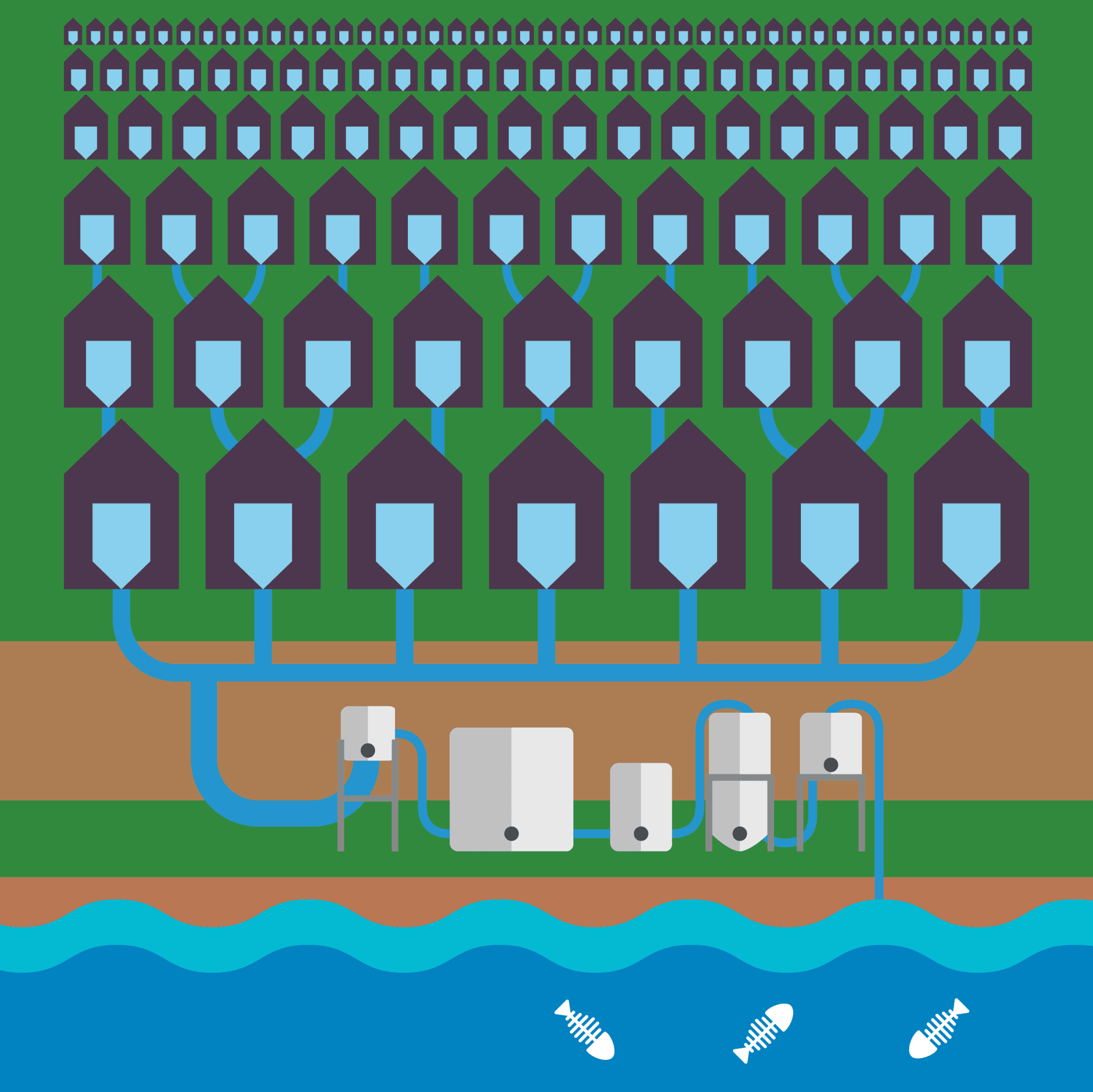
As part of Bill 98, the Ford government amended the Water and Wastewater Public Corporations Act. The changes clarify that water and wastewater corporations must remain publicly owned. Illustration: Shawn Parkinson / The Narwhal
The Ford government has rejected suggestions it intends to privatize water systems. After pushback, it introduced amendments to the act limiting ownership of the corporations to governments and government agencies. It says there are no plans to privatize water systems and emphasized that ownership of the proposed corporations would remain in public hands.
For many critics, the debate is informed by Ontario’s own history.
In 1994, the City of Hamilton transferred operation of its water and wastewater system to a private company as part of an effort to create what city leaders hoped would become a model for private water management.
Just over a year after the deal was signed, roughly 180 million litres of untreated sewage spilled into Hamilton Harbour and Lake Ontario. More than 100 homes and businesses were flooded. In the years that followed, experts pointed to staffing cuts, cost overruns and repeated changes in ownership as evidence that private management, with its focus on profit over service, had failed to deliver on its promises.
Why Ontario municipalities are losing environmental powers
For years, Ontario municipalities have tested environmental policies that go beyond provincial requirements. Cities encouraged electric vehicle infrastructure, required tree planting and experimented with ways to reduce emissions from new development, including through green building standards.
In Toronto, green roofs became mandatory on many new buildings. Other municipalities began developing their own climate-focused standards as they prepared for rapid population growth.
Over the past year, however, the Ford government has increasingly moved to limit how far municipalities can go.
One of the first major changes came through Bill 17, the Protect Ontario by Building Faster and Smarter Act, which received royal assent in June 2025, days after the Ford government was re-elected.
The legislation targeted municipal green building standards that exceed the Ontario Building Code. In Toronto, that raised questions about the future of the Toronto Green Standard, a framework that has shaped development in Canada’s largest city for more than 15 years.
The standard required developers to incorporate features to reduce emissions and improve resilience to climate change. It included requirements for bicycle parking and electric vehicle charging stations in new buildings over four storeys. Developers also had to take steps to mitigate flooding and extreme heat, for instance, by building rooftop gardens and planting trees.

Buildings are the third largest source of emissions in Ontario. Illustration: Shawn Parkinson / The Narwhal
There are also financial incentives to take on even more ambitious climate-friendly features.
The province concluded Toronto’s mandatory requirements could exceed what municipalities are permitted to require under its new law. It also argued that creating a consistent set of provincial rules will help accelerate housing development and increase housing supply.
The Toronto Environmental Alliance, a not-for-profit advocacy organization, countered that municipalities are often better positioned to understand local environmental challenges and should retain the flexibility to address them.
That debate intensified in 2026 with Bill 98, the Building Homes and Improving Transportation Infrastructure Act.
The legislation prevented municipalities from requiring a range of environmental features in new developments, including electric vehicle parking infrastructure, bird-friendly design standards and tree planting on residential properties. Provincial analysis of the legislation acknowledged the possibility of “unintended environmental impacts” and noted that the changes could shift sustainability-related costs from developers to municipalities.
The implications extend well beyond Toronto.
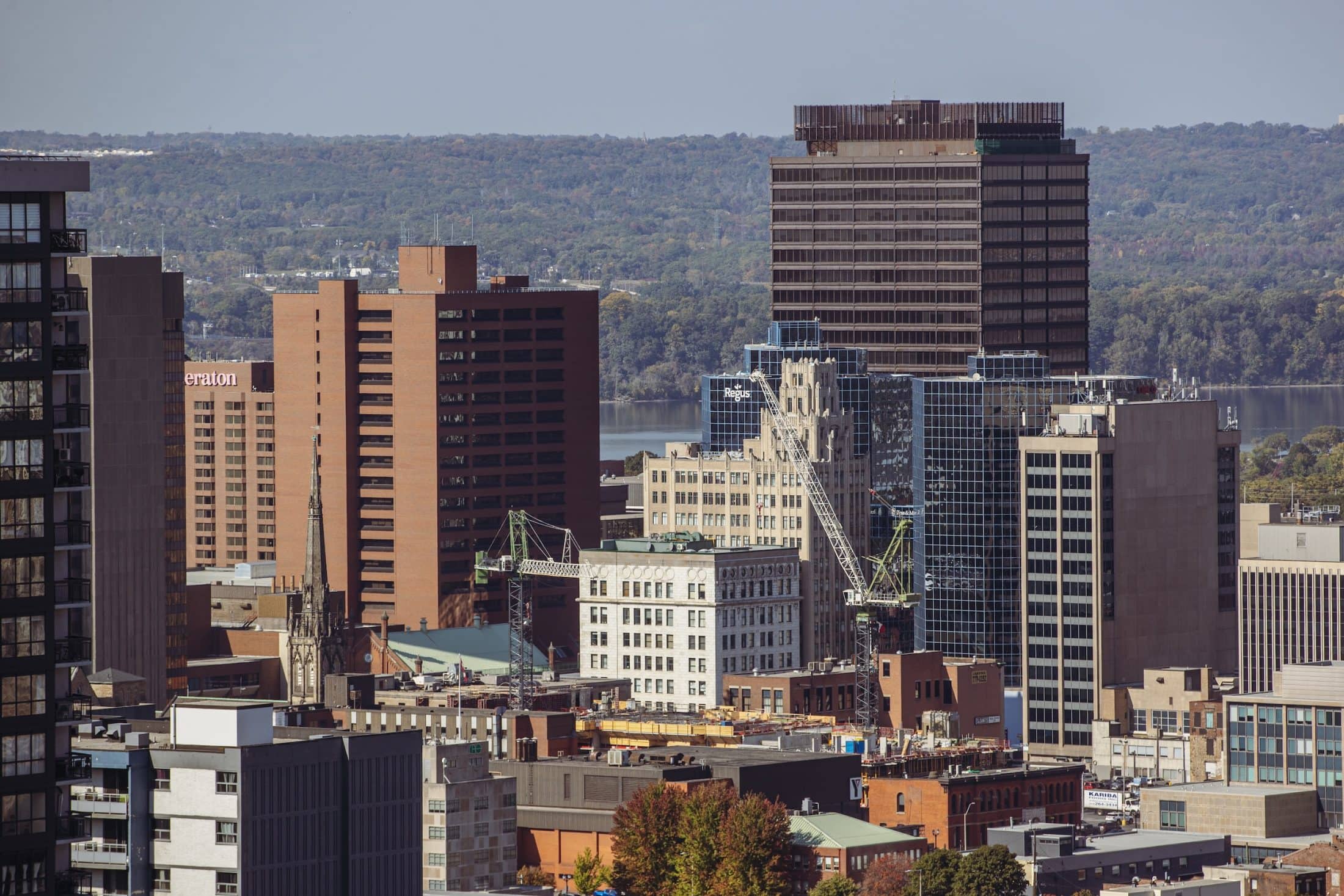
Buildings are the source of nearly a quarter of Ontario’s total emissions. As the province pushes for more construction to meet the demands of a growing population, the passing of Doug Ford’s Bill 98 could limit developers to a decade-old rulebook on green building standards. Photo: Carlos Osorio / The Narwhal
Municipalities including Hamilton, Ottawa, Waterloo Region, Oshawa, Clarington and Guelph have either implemented or begun developing their own green building standards. In Durham Region, local governments have been working toward a goal of net-zero emissions for new housing by 2030. Ottawa officials have warned the legislation could prevent them from requiring electric vehicle infrastructure in developments, even where local planning work has already been completed.
Some municipal officials worry the changes could create new costs in the future.
Buildings account for roughly one-quarter of Ontario’s greenhouse gas emissions, largely because of fossil fuels used for heating. If new developments are built to lower environmental standards today, municipalities may ultimately face higher costs retrofitting those buildings in the decades ahead.
The next chapter in Ontario’s battle over conservation and protected lands
Over the past year, the Ford government has expanded park access, announced new protected lands and invested millions in outdoor recreation. In May 2026, Ontario announced plans to expand Uxbridge Urban Provincial Park by 23 acres, adding ecologically significant lands within the Oak Ridges Moraine. The government has also committed nearly $60 million toward what it describes as the largest expansion of Ontario Parks campgrounds in more than 50 years, including dozens of new campsites at MacGregor Point, Killarney and Driftwood provincial parks.
But the Ford government has also moved ahead with major development projects that cut through environmentally sensitive areas and launched the most significant restructuring of Ontario’s conservation authorities in their 80-year history.
Perhaps no project better illustrates that tension than Highway 413.
A cornerstone of Doug Ford’s re-election campaigns, the proposed highway would connect York, Peel and Halton regions and, according to the province, reduce travel times — by 30 minutes for those driving the entire stretch.
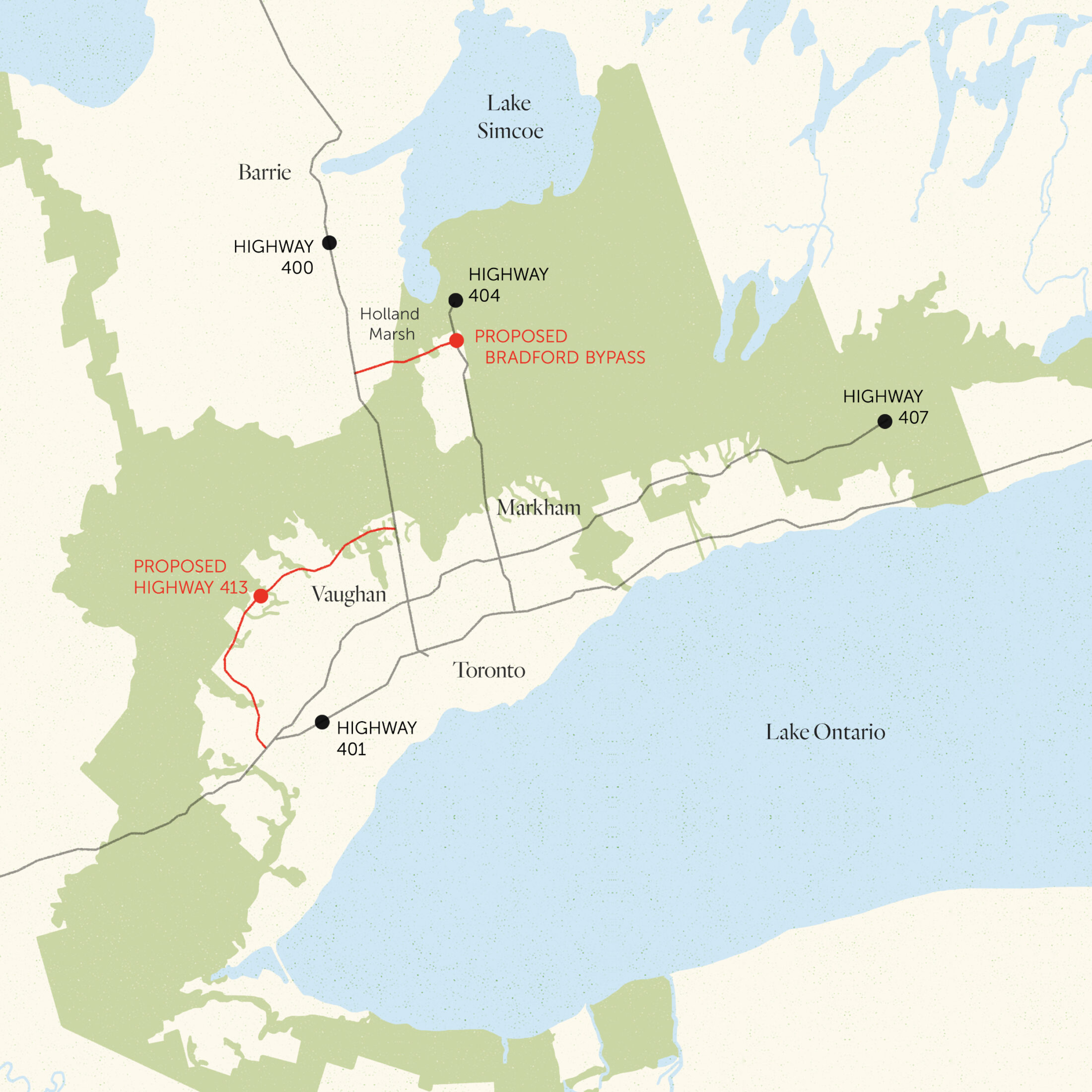
The proposed routes of the Bradford Bypass and Highway 413. Map: Jeannie Phan / The Narwhal
Critics have long argued the slight time savings come at a significant environmental cost.
Environmental assessments have identified impacts on Greenbelt lands, prime farmland, waterways and habitat used by species at risk, while environmental groups argue mitigation measures remain insufficient for several threatened species.
In August 2025, Ontario awarded its first construction contracts for the project, marking the beginning of a development the government says would contribute more than $1 billion annually to the provincial economy.
In Wasaga Beach, the province has removed roughly 60 hectares of Wasaga Beach Provincial Park, handing the land over to the municipality, which is making an effort to redevelop the waterfront and boost tourism. The government says the project would improve public access and support economic activity while maintaining public use of the beach.

The Ontario government forged ahead with its plan to transfer part of Wasaga Beach Provincial Park to the municipality, despite significant local opposition. Photo: Carlos Osorio / The Narwhal
Conservation groups and local residents have questioned whether lifting these protections sets a precedent for future development on provincially protected lands. Some have also raised concerns about piping plovers, as Wasaga Beach is one of the most important nesting sites for the endangered bird.
Similar concerns surfaced in Port Hope.
In 2025, the Ministry of Natural Resources altered the boundary of the Garden Hill Area of Natural and Scientific Interest, a designation that recognizes the unique qualities of an area, removing land that had previously been protected. The boundary change meant a planned subdivision could move ahead.
The biggest change, however, may be taking place behind the scenes.
In 2026, the Ford government formally launched plans to consolidate Ontario’s 36 conservation authorities into nine larger organizations overseen by a new provincial agency. Conservation authorities were created over 50 years ago in response to flooding disasters and the environmental impacts of a growing population.
Officials say consolidation would improve efficiency and ensure resources are distributed more evenly across the province.
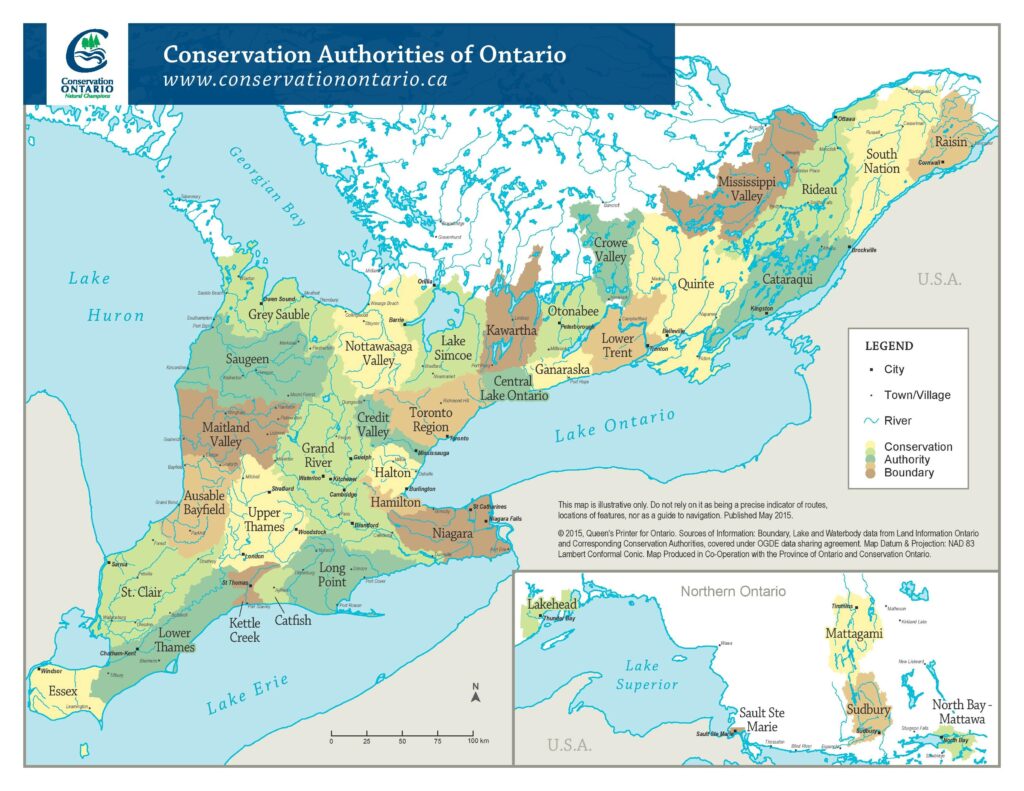
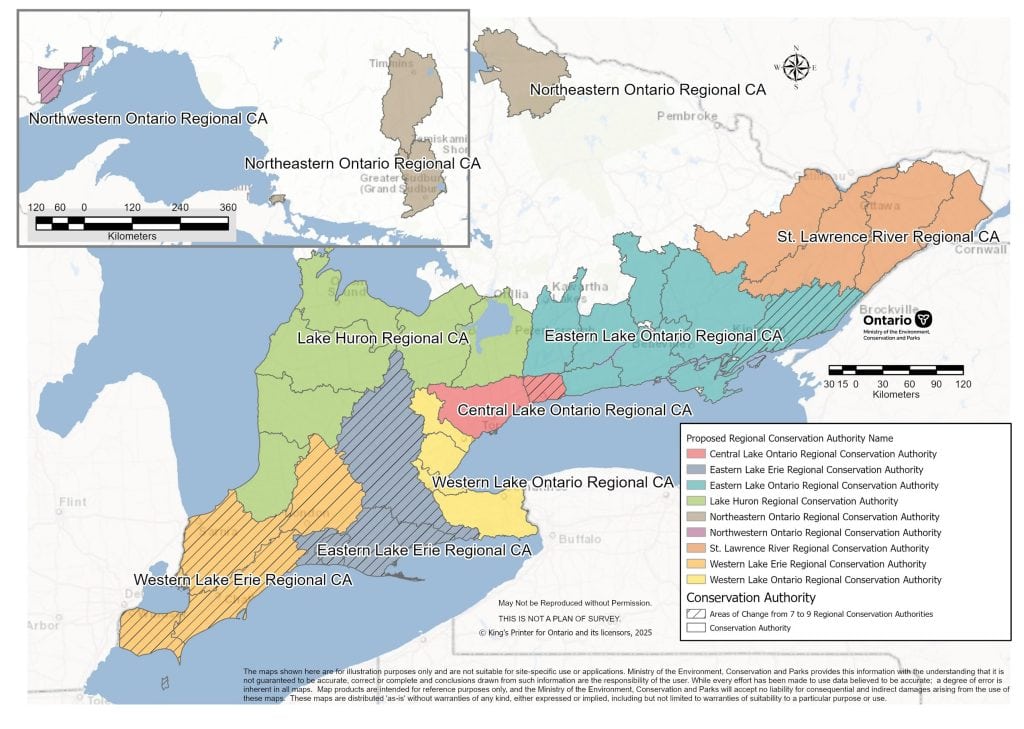
There are currently 36 conservation authorities in Ontario, each managing its own distinct watershed. The Doug Ford government plans to merge those authorities into nine regional conservation authorities instead. Maps: Conservation Ontario; Ontario Ministry of Environment, Conservation and Parks
Jonathan Scott, a councillor for the town of Bradford West Gwillimbury and chair of the Nottawasaga Valley Conservation Authority board, previously told The Narwhal the local environmental expertise in each individual authority is essential. “Merger of that scale could create a larger, more distant bureaucracy that is less responsive to local municipalities, developers and farmers,” he said about the move to consolidate.
The province has already directed conservation authorities to pause major staffing, land acquisition and governance decisions while the transition unfolds. The restrictions are expected to remain in place until at least early 2027.
Ontario is betting big on critical minerals and energy growth
If the Ford government’s environmental agenda has one clear area of investment, it is energy and resource development.
In December 2025, the province officially launched its $500-million Critical Minerals Processing Fund. The fund is designed to help expand mineral processing capacity in Ontario, so that what’s mined here is also refined and processed within the province, rather than shipped elsewhere.
The government has described critical minerals as essential to Ontario’s economic future, pointing to growing demand from electric vehicle manufacturing, battery production, aerospace and defence.
At the same time, Ontario is preparing for a dramatic increase in electricity demand.
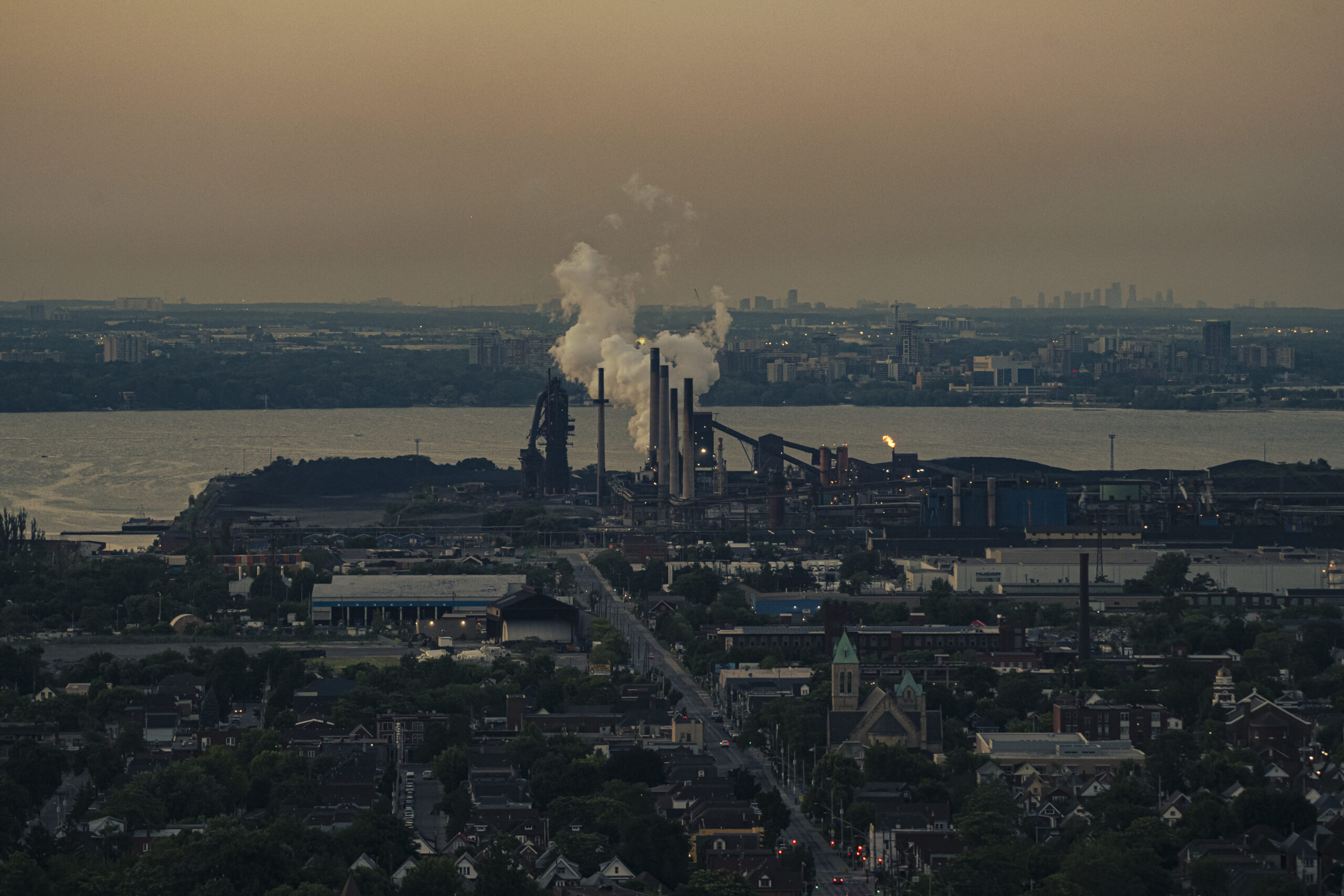
Hamilton is home to two of the largest primary steel producers in Canada — ArcelorMittal Dofasco and Stelco. Photo: Christopher Katsarov Luna / The Narwhal
The province estimates electricity consumption could rise by as much as 90 per cent by 2050 as new homes, manufacturing facilities, electric vehicles and data centres place greater pressure on the grid. In response, the government has launched some of the largest electricity procurements in Ontario’s history.
Over the past year, the Independent Electricity System Operator, the Crown agency charged with balancing supply on the grid, has approved more than a dozen new energy projects, securing massive amounts of additional supply and storage capacity. The province says the projects would provide enough electricity to power hundreds of thousands of homes while helping maintain reliability as demand grows. Many of the projects also include First Nations partners that hold more than 50 per cent ownership stakes.
The government continues to pursue new nuclear generation, including small modular reactors and potential large-scale nuclear generation facilities. In April, the operator awarded contracts to a dozen wind and solar power generating projects, a major departure from the Ford government’s 2018 move to cancel a slew of renewables projects.
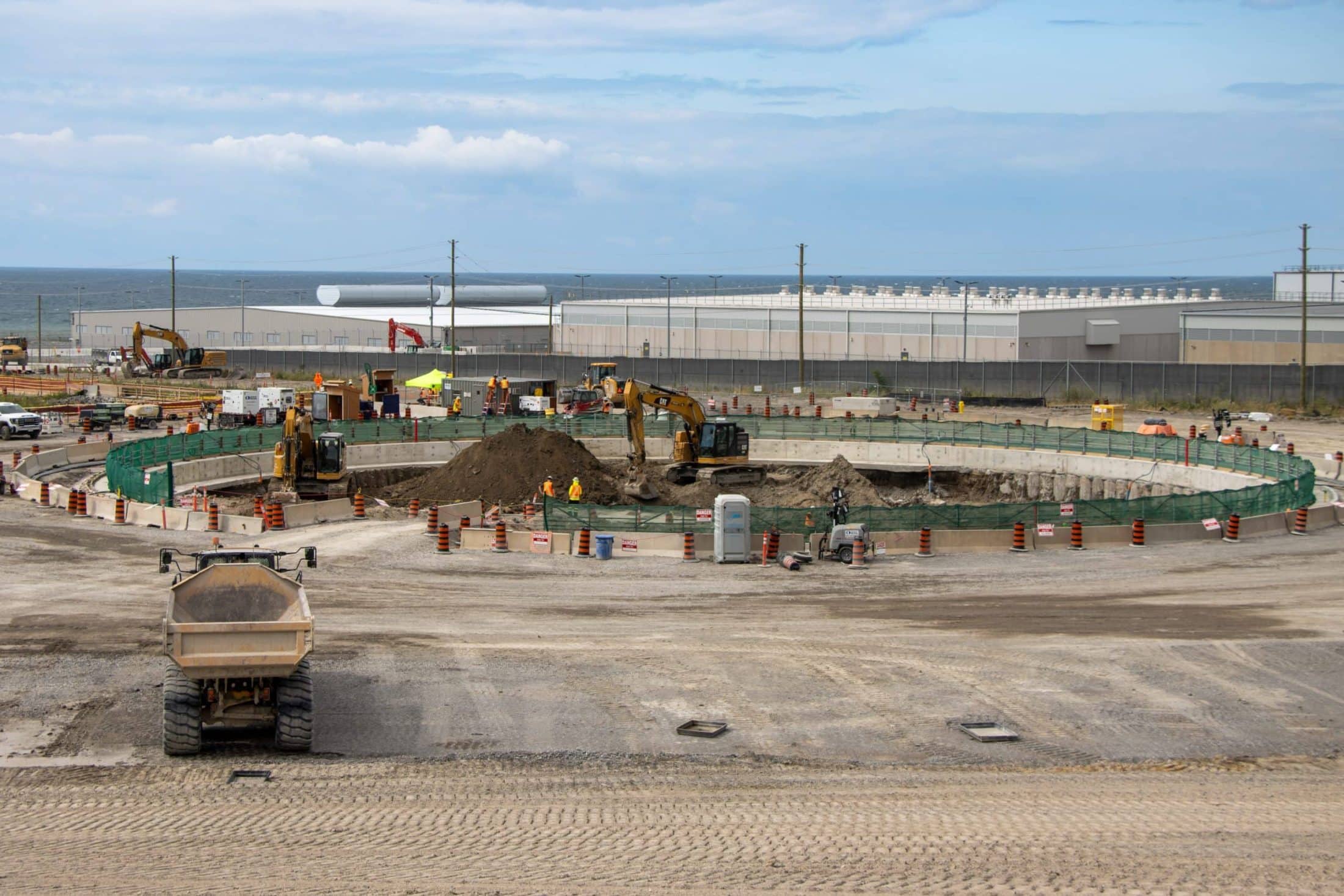
Ontario’s first small modular reactor is being built at the Darlington Nuclear Generating Station in Bowmanville, Ont., just over an hour’s drive east of Toronto, and led by the Crown corporation Ontario Power Generation. Photo: Supplied by Ontario Power Generation
At the same time, officials have repeatedly emphasized the role natural gas will continue to play in maintaining reliability and cost efficiency as electricity demand increases.
Carbon capture and storage is also on Ontario’s agenda
The government has opened the door to commercial-scale carbon storage through Bill 27, legislation that allows companies to pursue projects that capture carbon dioxide emissions from industrial facilities and store them underground. The Ford government argues the technology could help reduce emissions from sectors such as cement manufacturing, steel production and power generation.
But critics argue carbon storage allows for the continued burning of fossil fuels, rather than transitioning away from them.
There are other pressing concerns — carbon storage is proposed for southwestern Ontario, where there are an unknown number of old gas wells that Ontario can’t afford to properly plug. As The Narwhal reporter in September, some worry carbon storage could heighten the risk of leaks from these wells of poisonous hydrogen sulfide and planet-warming methane.
In June 2026, the province announced additional funding to help municipalities address abandoned oil and gas wells scattered across southwestern Ontario.
Transparency and public oversight are disappearing
Alongside environmental changes at Queen’s Park, another debate has emerged — one focused not on what decisions are being made, but how they are being made, who gets to know about it and who gets a say.
In 2025, the Ford government exempted aspects of the redevelopment of Ontario Place from consultation requirements under Ontario’s Environmental Bill of Rights, a move that reduced opportunities for public input on one of the province’s most controversial redevelopment projects. Similarly, the Species Conservation Act eliminated the requirement that property owners, developers or industry whose actions could harm threatened species make a posting on the public environmental registry, as was previously required under the Environmental Bill of Rights.
The most recent flashpoint came in April 2026, when the province passed Bill 97.
Among its many provisions were significant changes to Ontario’s freedom of information laws. Now, records held by cabinet ministers, parliamentary assistants and the premier’s office are exempt from public access requests. The changes were made retroactively, applying to records dating back decades.

In March, Ford revealed plans to “modernize” freedom of information (FOI) laws. The changes block journalists and members of the public from obtaining documents, emails, call logs and other records from the premier, cabinet ministers and parliamentary assistants. Photo: Premier of Ontario / Flickr
The Canadian Association of Journalists and Canadian Journalists for Free Expression warned the amendments could significantly reduce the public’s ability to understand how government decisions are made. They argued the changes would shield records such as emails, phone logs and other communications that have historically been used to uncover information about government decision-making and public spending.
For environmental reporting, freedom of information requests have often provided a rare window into internal government discussions.
The Narwhal’s investigations into the Greenbelt scandal and Ontario’s relationship with Enbridge Gas relied, at least in part, on records obtained through freedom of information laws.
As opportunities for public participation and access to government decisions degrade, it limits who gets a hand in shaping the future of Ontario’s environment and the people who depend on it.
Rajpreet Sahota is a community and policy reporting fellow. Her position is generously funded by the Canadian Race Relations Foundation. As per The Narwhal’seditorial independence policy, the foundation has no editorial input.
The Narwhal’s reporters are telling environment stories you won’t read about anywhere else. Stay in the loop by signing up for our free weekly dose of independent journalism.
From The Narwhal | News on Climate Change, Environmental Issues in Canada via This RSS Feed.