

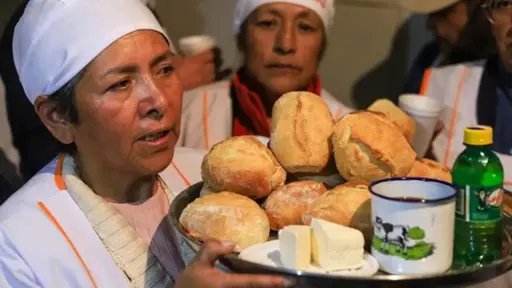
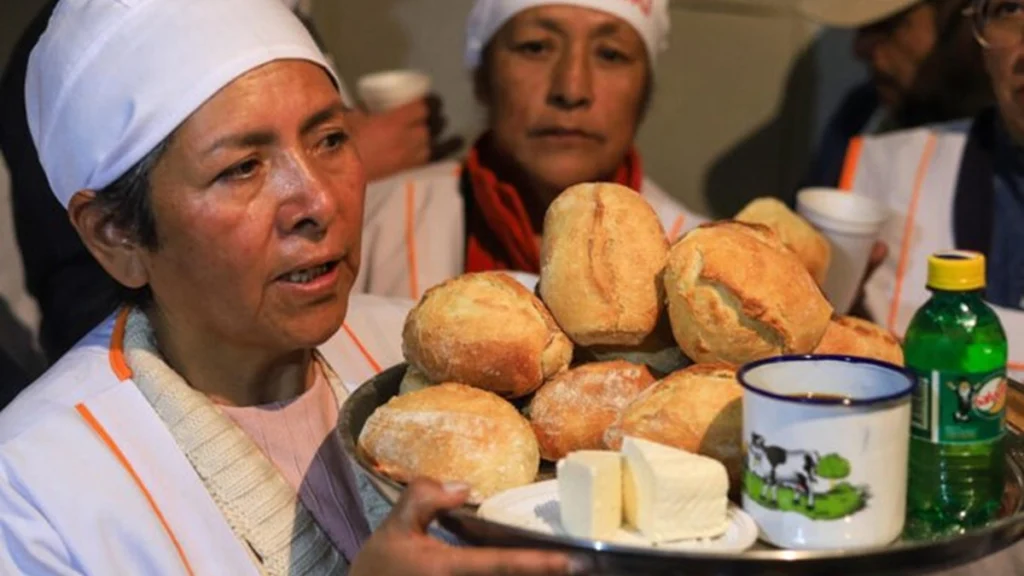
On Monday, Bolivian artisan bakers commemorated Marraqueta Day, celebrated every July 6, by announcing their intention to request UNESCO to declare Marraqueta bread a “heritage of humanity”.
RELATED:
“The marraqueta is a bread like no other. It has even crossed borders.” The goal is for “the whole world to know that the marraqueta is from Bolivia,” emphasized Dandy Mallea, La Paz Artisan Bakers Federation leader.
This emblematic food, popularly known as the ‘bread of the day,’ was already declared a Cultural and Historical Heritage in 2006. Recently, a municipal law passed in 2024 ratified this recognition and officially established the event.
The artisanal production involves flour, water, salt, and yeast, and the rolls rest in jute cloths before baking.
#Visión360 l Estudio de la UMSA revela que la altura de La Paz, entre otros factores, es clave en la textura única de la marraqueta paceña#UMSA #marraquetahttps://t.co/LEqbyhEylq
— Visión 360 (@vision360_bo) July 6, 2026
The text reads, “UMSA study reveals that La Paz altitude, among other factors, is key to the unique texture of the La Paz marraqueta bread”
Anthropologist Diego Noriega explained that its unique consistency, crispy on the outside and soft on the inside, is achieved thanks to the water, La Paz the altitude (over 3,600 meters), and the use of refractory ovens with clay brick vaults. These baking techniques are inherited from ancestral cultures, such as the Tiwanaku and the Inca.
Regarding its origin, historian Florencia Durán indicates that it was introduced by the Greek Michel Jorge Callisperis in 1908, while Antonio Paredes Candia attributes it to the Danes Andrés and Wigo Rasmussen in the 1920s. For the anthropologist, the marraqueta is a humble bread but ubiquitous on the Bolivian table.
“It is fulfilling its role as a symbol of identity, strengthening the identity of any La Paz meal,” Noriega emphasized. Its nickname, ‘bread of battle,’ stems from its use in feeding soldiers during the Chaco War (1932-1935). It also played a vital role in combating hunger during the hyperinflation crisis of the 1980s.
#Bolivia | The Archaeology National Museum (Munarq) reopened its doors with the permanent exhibition ‘Eternal Roots, Living Legacies,’ an exhibition that highlights the connection between pre-Hispanic customs and current traditions of the Andean country.https://t.co/njZEAa3bu5
— teleSUR English (@telesurenglish) July 7, 2026
From teleSUR English via This RSS Feed.
Good bread