


The Democratic Party is once again in upheaval as Graham Platner, its unconventional nominee to knock out longtime Republican Sen. Susan Collins in Maine, faces a rape accusation that threatens to end his once-powerful campaign and endanger Democrats’ chances of flipping a key seat in the November midterm elections.
Platner, a Marine veteran and oyster farmer whose anti-establishment campaign had already weathered a series of scandals, has denied the rape allegation from ex-girlfriend Jenny Racicot, which Politico first reported on Monday. His campaign said the allegation was “coached and coordinated by out-of-state establishment operatives,” though it was supported by messages Racicot sent in 2023, long before Platner had a political profile.
Despite Platner’s denials, a cascade of Democratic politicians, operatives, and organizations have called on him to drop out of the race by 5 p.m. next Monday, in time to be removed from the general election ballot. Platner has said he would only drop out if he’s allowed to pick his successor to face Collins in November. If Platner withdraws, Maine Democrats would have to pick a new candidate by July 27.
[
Related
The Left Put Its Faith in Graham Platner. Will He Break Its Heart?](https://theintercept.com/2025/10/25/graham-platner-tattoo-fetterman-democrats/)
That’s set off a scramble to find a replacement nominee and point fingers over the darkest chapter yet in a race that had already drawn national attention for a series of controversies — including accusations that Platner had twisted another woman’s arm behind her back and trapped her in a room; a sexting scandal; a Nazi tattoo; and a series of Reddit posts in which he belittled sexual assault, asked why Black people don’t tip, and disparaged white and rural voters. (Platner has denied that he mistreated women and apologized for the tattoo, text messages, and Reddit posts.)
Where does the Democratic Party — and the insurgent movement that saw Platner as a powerful rebuke to the establishment — go now?
We’re bringing you an extra episode of The Intercept Briefing this week to cover Platner’s downfall and where Maine voters might look next. In this episode, host Akela Lacy speaks with Adam Carlson, a Democratic strategist and founding partner of the polling firm Zenith Research who supported Platner through all the other scandals until Monday — and now says he was wrong.
“We — as in, the people who were looking for something different — looked at past nominees against Collins and wanted to try something different,” Carlson told The Intercept Briefing. “An outsider, someone who could appeal to white working-class voters, appeal to disaffected Trump voters, independents, Republicans, maybe someone who didn’t fall neatly along partisan lines, progressive economic populist, but also pro-Second Amendment. A bit more heterodox.” When Platner launched his campaign, “it’s, like, here comes this guy who epitomizes what we are lacking.”
The story has reanimated the age-old feud between Democrats loyal to the party establishment and a surging cohort of progressive and leftist candidates bucking the party line. But while competing factions rush to use Platner’s downfall as evidence of their own political prowess, Carlson says, they’re learning the wrong lessons.
[
Related
“Me Too” Comes Back to Congress](https://theintercept.com/2026/04/24/congress-me-too-swalwell-democrats-midterms/)
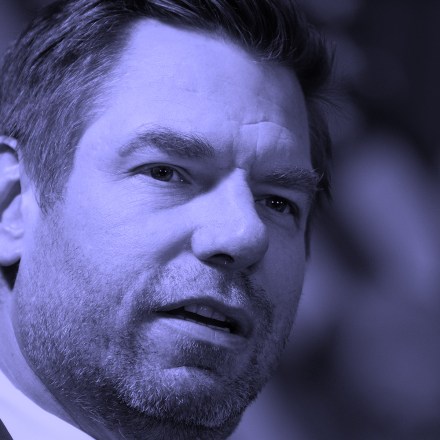
“Yes, you should have better vetting. Yes, having people who are in public office who have faced some level of media scrutiny are less likely to have these kinds of things appear. Not foolproof: Look at Eric Swalwell,” Carlson said. “But I think you can overlearn the lessons from this and try and turn this into a factional win. And I think that all this is subtext for the conversation that we’re about to have in 2028.”
For more, listen to the full conversation of The Intercept Briefing on Apple Podcasts, Spotify, YouTube, or wherever you listen.
Transcript
Akela Lacy: Welcome to the Intercept briefing. I’m Akela Lacy, senior politics reporter at the Intercept.
We’re bringing you an extra episode this week because there has been a serious and troubling update in the Maine Democratic Senate race. Candidate Graham Platner was accused of raping a woman in 2021, according to reporting from Politico on Monday.
The woman, Jenny Racicot, came forward after having previously told the New York Times that Plattner had displayed “reckless” and “unsettling behavior” toward her in a story last month. She reportedly told the Times off the record about the rape allegation, but it was not publicly reported before Politico broke the story on Monday.
In a campaign video Platner released after the story published, he denied the allegation and called it, “troubling, serious, and false.”
Graham Platner: I wanted to directly address the troubling, serious, and false allegations against me. Any accusation of non-consensual behavior is categorically false.
AL: Platner has said his campaign is considering its next options, and observers expect him to drop out in the coming days after a flurry of Democrats and organizations that had endorsed him called on him to do so. But as of this recording on Tuesday evening, he has not dropped out.
In a separate statement, Platner’s campaign claimed the rape allegation, which was supported by multiple accounts, including messages from 2023, well before he launched his Senate campaign, was “coached and coordinated by out-of-state establishment operatives.”
For listeners who might have forgotten, the rape allegation comes after Platner already had another women claim he was physically aggressive with her apologize for having a Nazi tattoo and authoring a series of Reddit posts belittling sexual assault, asking why Black people don’t tip, and making other controversial statements about white rural voters and police.
How did Platner get away with all those blemishes for so long? What does this mean for Democrats’ chances in Maine? To discuss all of this, I’m joined by Adam Carlson, who was a Platner supporter until the most recent news broke. Carlson is a founding partner of Zenith Research, a political polling firm that works with Democrats.
Adam, welcome to The Intercept Briefing.
Adam Carlson: Thanks for having me.
AL: You are someone who supported Graham Platner through all of his other scandals. When did you first learn about this allegation, and what was your reaction?
AC: I first learned about this specific allegation that came out on Monday about the alleged sexual assault when the story came out. There were all kinds of rumors buzzing around, potentially other oppo that may have been dropping later. Maybe Republicans were planning on dropping it after the dropout deadline on July 13. I heard about it when Politico broke the story.
AL: You published a long post on Tuesday morning with some reflections from this fallout. You wrote, “There are a lot of people who bear responsibility for this. The team that didn’t vet him properly. The people (like me) who bought his schtick hook line and sinker and used their platforms to not just promote him early on, and stuck with him after just an insane amount of obvious red flags for months on end — I should have known better, and I for one will be doing a lot of introspection (and hopefully lesson-learning) on how I got to that place of cognitive dissonance.”
You also talk about the blame on Senate Minority Leader Chuck Schumer for trying to foist Gov. Janet Mills on the electorate. I want you to walk us through this a little bit and explain what you’re talking about with respect to that cognitive dissonance here.
Why do you think so many people fell into that?
AC: I’ll speak to what I fell into. I can’t speak for anybody else, but I can’t imagine I am alone just given the meteoric success that Graham had coming out of the gate. I think the Democrats have been struggling for a long time, at least since 2016, probably before then. 2016 is when it really kicked into high gear with white working-class voters.
Maine is a very white state. The general electorate is very working-class, low-college-educated, a bit older – representative of a lot of groups that Democrats have struggled with of late, and that we’re looking to get back.
Susan Collins is a very formidable challenger, always overperforms her polling, her benchmarks, wins in tough environments. I think that we — as in, the people who were looking for something different — looked at past nominees against Collins and wanted to try something different. An outsider, someone who could appeal to white working-class voters, appeal to disaffected Trump voters, independents, Republicans, maybe someone who didn’t fall neatly along partisan lines, progressive economic populist, but also pro-Second Amendment. A bit more heterodox. And here comes this guy who is, on paper, perfect. Outsider.
AL: Heterodox. The definition of heterodox. [Laughs]
AC: Exactly, yeah. He’s a sharpshooter, he’s an oysterman, he was a town harbormaster, he was a combat veteran. This gruff speaking voice. And I think that a lot of us — I live in a fairly working-class neighborhood in Brooklyn. But much different than I’d say white working-class voters are in somewhere like Maine, particularly rural Maine.
In my head, and I think the heads of a lot of people, it’s, like, here comes this guy who epitomizes what we are lacking. People who can speak authentically — or what we thought was authentically — and can reach beyond our traditional messaging of like a Sara Gideon or people that have run against Susan Collins and fallen short in the past.
AL: Sara Gideon being the party-backed candidate who lost to Susan Collins previously.
AC: In 2020, who led in nearly every poll right before by a fair amount — and still lost pretty handily. So I think there’s a lot of trauma [laughs] among people like myself who every six years or so think that we got Susan Collins or people of her ilk in the party who take moderate votes, who cross party lines, who have independent bonafides in the state.
I was looking at someone like Janet Mills, who was rumored to be jumping in, and I was like, “This feels like another one in that same line.”
AL: Another wrong choice.
AC: Yeah, an establishment-backed traditional choice, a safe choice. Someone who doesn’t really excite people, who can’t really appeal to the middle. You’re trying to do just like a partisan Democratic strategy that’s been done before.
So I think a lot of it came from the trauma of losing to Trump a second time, and the trauma of Collins continuing to over-perform, and really needing that seat in order to have a chance to take back the Senate. Here comes Graham Platner, gruff-speaking voice, lifting kettle bells in his launch video.
A lot of us, I’ll put myself in this category of coastal elite types, were like, “Yeah, this is the working class-type candidate that we need.” Turns out he wasn’t working-class. That was implied but not actually true, given his upbringing. I don’t think there’s any outright lying about that, but definitely some misleading about that and just the image he was trying to portray.
This is the risk, right? It’s a high risk, high reward, as we’ve seen with Republicans over the years nominating these outsiders, because they’re untested, unvetted.
They have that kind of appeal: “I’m not part of the Washington system,” or whatever euphemism you want to use, the swamp, et cetera. But there is a downside potential, and I think we’re seeing that now.
AL: Part of that appeal was very early on in this cycle tapping into what we’re seeing now borne out, which is a widespread anti-incumbent sentiment and a bias — warranted or not — against older politicians and people who have been in office for a very long time.
We’re talking about Janet Mills, someone who was not only the governor but was almost 80 years old and was again, this archetype of exactly what the left has said for such a long time is the reason that Democrats are failing at the national level.
But you’re talking about another big storyline coming out of these primaries, which is like, who is the real working class? Who has the authority to speak for the working class, and how do we draw those lines?
“Who is the real working class? Who has the authority to speak for the working class, and how do we draw those lines?”
I was struck by an interview that I had with Amanda Litman of Run for Something back in October when the Nazi tattoo fallout was happening, and she said something that really struck me on this, which is talking about who is deemed authentic and who can credibly speak as the voice of the people. And she touches on the same thing that you’re talking about.
Again, Platner’s aesthetics. The first ad that his campaign put out was that he’s an oyster shucker, from the shores of Maine who can hobnob with farmers and fishermen and people who work on their feet all day. She said, “This particular type of brawly white dude with tattoos who can speak the visual language of what we associate with the working class. This is really a moment for us to collectively gut check — who gets permission to be seen as authentic? And who gets permission to be a little unkempt?”
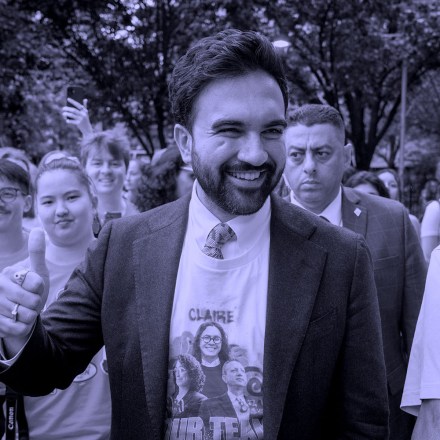
And that was nine months ago at this point. And obviously now it’s more than being unkempt; he’s been accused of rape. But again this constant pursuit of working-class voters that Democrats, in some cases, I think in New York, this narrative was debunked with the gains that, that people saw with Darializa Avila Chevalier and Claire Valdez, although they did also excel in the white coastal elites neighborhood, and that’s something that we’ve been doing a lot of reporting on.
[
Related
The Democratic Party Gets Its Populist Takeover](https://theintercept.com/2026/06/25/mamdani-new-york-primaries-analysis-dsa/)
Avila Chevalier being the candidate who ousted Congressional Hispanic Caucus chair Adriano Espaillat in New York last week, and Claire Valdez who won the Democratic primary to replace retiring Rep. Nydia Velázquez against her chosen successor, Brooklyn Borough President Antonio Reynoso, both of whom are headed to the general election in November but are likely to enter Congress given the safety of those blue seats.
But I think one storyline on this working-class question that at least I missed coming out of Maine was from Greg Sargent at The New Republic that looked at some less favorable polling for Platner that showed him trailing against Collins [in voters] who did not have a college degree, which is often a proxy used for the working class.
“Everyone wants to use this scandal as evidence that proves that their strategy is the best one.”
There are liberal commentators, I saw [former Biden domestic policy adviser] Neera Tanden seizing on that as evidence of the left’s folly here in putting up what they say is an unvetted populist who clearly was unvetted, rather than going with the party pick. The counterpoint to that being that Mills did so poorly in this campaign that she had to drop out before the primary. That was the party’s pick here.
So everyone wants to use this scandal as evidence that proves that their strategy is the best one. But is anyone actually right?
AC: I think everyone’s a little bit right and a little bit wrong. I know that’s a cop-out, but I’ll explain.
AL: [Laughs] OK, I’m listening.
AC: I’ll start with my wing of the party, which — I wouldn’t consider myself a leftist, but definitely an establishment skeptic who is now aligned with the left because we share those goals. I think that we felt, as I mentioned before, wanting to have our cake and eat it too.
Maybe being the most progressive kind of economic-populist candidate is the most electable in the general election. There’s this little bit of a proxy war as we’re seeing in the Michigan Senate race between now just between Abdul El-Sayed and Haley Stevens, on the left and the center, respectively.
AL: Yes, the other news over the weekend in the Michigan race is that Mallory McMorrow, one of the Democratic primary candidates dropped out, setting up another progressive versus centrist test between El-Sayed and Rep. Haley Stevens.
AC: That’s a really good point in that the story of McMorrow — who I supported initially, so I’m really doing great here, 0 for 2 — is she was kind of the Goldilocks candidate between the kind of left-progressive candidate in Abdul El-Sayed and the more centrist and AIPAC-friendly candidate, establishment, Democratic Senatorial Campaign Committee favorite Haley Stevens. And she got squeezed. I think that was part of it.
[
Related
Corporate Interests Paid for Haley Stevens’s Trip to Portugal — and Her Campaign Ads](https://theintercept.com/2026/05/22/haley-stevens-center-forward-corporate-pac-portugal-michigan/)
It’s just like the electorate — the Democratic electorate — is so angry and so desperate to win, and there are two competing theories of the case, not just for 2026, but this is a dress rehearsal for 2028 when this conversation will kick into overdrive. Regardless of whether AOC runs [for president], there will be somebody on the left standard-bearer who will be making that argument.
I think that Graham Platner — I would personally separate these two, but they’re lumped together for, for good reason sometimes at least in terms of the electability argument — Abdul El-Sayed and Graham Platner. Where these two examples of more progressive, economic populist candidates, can they win in a swing state or a swing seat or a blue-leaning seat to defeating a Republican incumbent?
I would argue Abdul El-Sayed is squeaky clean, at least so far in comparison to Graham Platner or anybody. But I think you see the Stevens’s campaign trying to tie them together, and I think you see the Neera Tandens of the world trying to make the case, “We were right about Platner. Listen to us about Haley Stevens as well.”
AL: And forget about Joe Biden, Bill Clinton, Cal Cunningham.
AC: Oh, Eric Swalwell and Andrew Cuomo. Eric Swalwell.
I took last night off of social media. I was like, “I’m good. I’m gonna reflect and sleep on it.”
AL: Keep it in the drafts. [Laughs]
AC: Exactly. Oh, you should see my drafts.
So, that’s one side of it, right? To summarize, the left-progressive whatever, populist coalition faction, whatever you want to call it, was right about Platner being able to tap into that anger and that enthusiasm and that passion that clearly Janet Mills was unable to tap into.
I’m of the opinion that she was never really viable. Not in this cycle. Maybe if it was 2018, maybe if it was a less angry, desperate Democratic electorate — maybe she would’ve had a chance in a different cycle.
“Maybe if it was 2018, maybe if it was a less angry, desperate Democratic electorate — maybe [Mills] would’ve had a chance in a different cycle.”
But someone of her archetype, again, very accomplished, very experienced, not just a two-term governor, but two-term attorney general, has been in public office for decades. A long list of accomplishments. Stood up to Trump on trans stuff, although that’s not the best issue, popularity-wise, to stand up to. But still — was seen as a fighter, and it wasn’t enough. So I’m not of the opinion that if Platner didn’t come around, Mills would’ve waltzed to the nomination.
I think there would’ve been somebody to fill that void potentially. So the left got that right. What they got wrong is that — and what I got wrong — is that believing in white-knuckling it and negative polarization against Chuck Schumer and the establishment and all the naysayers about Platner throughout all these abhorrent scandals.
The Nazi tattoo thing really threw me at the time, and I stopped posting about that race for a couple of months after that, after really backing him very publicly. And then jumped back on the horse because the primary’s heating up.
You’re right, there is a desire to notch that as a win, but obviously he wasn’t the right candidate. And I think that Abdul El-Sayed is now the next test of this, in about four weeks from now.
Now, the other side of it is, yes, the Neera Tandens of the world, the Third Ways of the world, people on Bluesky, et cetera, were yelling and screaming about Graham Platner for months and months and months before even the scandals.
They were like, “This guy’s untested. We shouldn’t rock the boat. This isn’t the time.” And the rest of us were like, “Look at him! He’s great! He’s going to break the archetype, break the mold.”
AL: Look at him go.
AC: And they were right. They were 100 percent right about Graham Platner.
But I think that they’re learning the wrong lessons from this, in my opinion. In that, just go with the establishment candidate. Yes, you should have better vetting. Yes, having people who are in public office who have faced some level of media scrutiny are less likely to have these kinds of things appear. Not foolproof: Look at Eric Swalwell.
But I think you can overlearn the lessons from this and try and turn this into a factional win. And I think that all of this is subtext for the conversation that we’re about to have in 2028. This is JV compared to what we’re about to experience in about, I don’t know, six to eight months.
[Break]
AL: Backing up a little bit to the midterms, which are looming in the background here the big takeaway being that both parties have a consistent problem with candidates credibly accused of sexual assault. This news, as you mentioned, came after McMorrow dropped out in Michigan, and Maine was a pickup that Democrats really needed to ease an already extremely difficult path to winning the Senate.
Do you think their chances in Maine are completely shot now? We’re anticipating news that Platner drops out in the next day or two. The deadline to do so would be on July 13, which is the coming Monday. There’s been reporting that Maine Democrats are going to rush a new convention process to potentially pick another candidate. There are several names being floated right now, most of the candidates who lost in the gubernatorial primary. But do you think Democrats’ chances in Maine are shot now?
AC: I would say it’s the opposite. I spoke with a bunch of Republican operatives, strategists, pollsters yesterday when I was taking my social media hiatus — my very brief social media hiatus, my dopamine hit hiatus — to ask them, “How you feeling?” And they’re like, “God, I hope he stays in.” They’re like, “Oh, what’s in it for him to drop out? Like at this point, might as well just keep going.” When his video dropped yesterday of him saying, “We’re taking time to evaluate next steps,” it felt to a lot of us who are in this industry who’ve seen these kinds of things before, as a prelude to a dropout.
I’d be shocked and appalled and angry if he didn’t drop out. I think what he’s trying to do right now is use his leverage to get his ally Troy Jackson, former state Senate president, I believe, who ran and came close to winning the gubernatorial nomination this year — who was also backed by Bernie Sanders, close with unions, the same type of archetype, but is an elected official. Again, fairly aligned in a lot of ways with Platner’s vision and kind of economic populist message. I think he’s trying to maybe use that as leverage to get his guy to take his place. So he’s not replaced with an “establishment-type” candidate. Although we’ll see if we’re getting into uncharted territory with this rapid convention.
As we saw in 2024 with the Biden to Kamala swap, right? That wasn’t a convention. It was like an insider elite’s rapid turnaround here. And who knows what’ll happen coming out of the convention.
But I think the consensus is, among Democratic and Republican strategists that I’ve spoken to, that Democrats have a better chance of holding the seat now. And I think that one of the arguments is that, “Oh, they won’t have any money.” The money will come. This is a must-win seat, and now that Platner, who was already struggling with fundraising — he put out a thing, I think, last week, I think a few folks like Matt Yglesias were, like, making fun of him for trashing the establishment and then asking the establishment for money because he’s getting swamped on the airwaves.
So I think the money will come to whoever replaces him on the ballot. But I do think that Democrats are in a better position, although we’re in uncharted waters. So it’s going to be tricky, and Susan Collins is no slouch. But someone with less baggage running in this kind of environment does have a really good shot still.
AL: One question that keeps coming up for me is it really possible that the people who vetted Platner missed this? I could see a plausible scenario where he blacked out and Jenny Racicot, the people that she told, weren’t going to go spreading this around because he wasn’t running for the Senate. But do you actually think the campaign didn’t know about this, or what do you think happened there?
AC: I don’t know. I know that Graham knew about all these things. He knows what he posted. They were deleted, whether it was the Reddit posts or whatever else was was unearthed.
AL: And the claim that he didn’t know about the Nazi tattoo has pretty much fallen apart at this point.
AC: Yeah, I think it fell apart a while ago. And I don’t think that the people who vetted him and recruited him to run knew about all these things before. I think Graham Platner said throughout the campaign —
AL: But like how? Especially the Reddit posts. Like how?
AC: The Reddit posts, that was a vetting failure. No doubt about it. Anything that has a digital footprint that you don’t unearth now, even if it’s deleted in the archives, like KFile, whoever’s going to do it, they’re going to unearth it. Oppo firms, they know how to do that. We saw with Darializa Avila Chevalier in New York 13.
AL: Right.
AC: These things don’t stay deleted. The internet is forever, which we’re going to see that coming up more and more with millennials and Gen Z politicians who grew up on the internet, who posted dumb stuff when they were younger — or even when they’re older.
So that was a vetting issue, and that’s something that should be addressed structurally, not just with DSCC establishment type backed candidates, but with all viable candidates. Like, the party apparatus or outside groups need to do a better job of doing self-vetting, self-oppo on these kinds of things.
In terms of things that don’t have a digital footprint that were verbal, other accusations from people — Graham knew. There’s no doubt about that, right?
AL: Yeah, and I’ll just say for our listeners, because Platner’s accuser says that after the night that she says that he raped her, she followed up with him because she was worried that she was pregnant to tell him that she wasn’t pregnant, and they had communications after the fact.
AC: I think there’s no real way of knowing when you’re vetting somebody about that unless the candidate comes forward, right? You can talk to people in their life, you can talk to their exes, you can do this. Maybe they didn’t think that Platner would be viable. Maybe they weren’t ready to talk about it yet. At the end of the day, that’s not on the vetters necessarily. That is on Graham Platner.
I think what’s getting lost in a lot of this in the blaming of people like the vetters or people like me who help prop him up, or Schumer for that matter, or the voters, or whoever it is you want to blame — and I think there’s plenty of blame to go around — is that this is on Graham.
He kept saying repeatedly throughout the campaign — and every time he did it, I would wince, even earlier on when I was standing by him — “Oh, nothing more is coming out. They’ve emptied the tank.” I spoke to Democrats, Republicans who are in the know who are like, “Yeah, more’s coming.”
A lot of us were like, “If he survived Nazi tattoo stuff, then he can survive anything.” Little did we know that — obviously, something like this is objectively even more serious than that.
AL: Yeah, there’s no question.
AC: But the fact that he kept saying nothing more is coming out speaks to either, you’re in denial, or you think that it’s never going to come out, and it’s hubris that you think you can can hide it well enough or people won’t speak out against you. But I don’t know. I’ve been following politics and working in politics for a long time. This stuff always comes out, and to think that you are the exception never works out well.
Maybe it happens once you’re in office. At some point the bill comes due. And if you’re not being forthright with people that are putting their entire reputation on the line, not talking about me, people who worked on this campaign, who got him in the race, vetted him, et cetera, and then all the fallout that extended out from that —
AL: And all the people who are withdrawing their endorsements of him right now.
AC: Exactly. There’s just so much collateral damage, and clearly there’s something appealing about his candidacy that both the people inside and outside of Maine saw something in him, and I think there is something real about what he tapped into. The ideas of his campaign can live on, but if you’re not forthright about these kinds of things, what else aren’t you being forthright about?
There were all these [Sen. John] Fetterman comparisons throughout the campaign, this gruff, unconventional guy. And I was one of the people who was like, “No, you’re just stereotyping these types of people,” but we don’t know what would’ve happened if he had won and was in the Senate, and maybe, who knows what positions he would’ve taken or what else would’ve come out.
Then maybe we [would] have a special election on our hands. There’s all kinds of implications, and I do hope that he does drop out — both to work on himself and for the sake of the party and the sake of the Democrats’ chance of having a window to take the majority. Because if Democrats lose that seat, it’s almost impossible for them to flip the Senate.
AL: I’ll just mention also that the Democratic Senatorial Campaign Committee and the Democrat-aligned Majority PAC have said that they will not spend on this race if Platner does not drop out.
Adam, we’re going to leave it there.
Thank you so much for joining us on The Intercept Briefing. Great to have you on.
AC: Thank you for having me.
AL: Is there something you’re concerned about and want to see more reporting on? Let us know. Email us at podcasts@theintercept.com, or leave us a voicemail at 530-PODCAST. That’s 530-763-2278.
That does it for this episode.
This episode was produced by Laura Flynn. Ben Muessig is our editor-in-chief. Maia Hibbett is our managing editor. Fei Liu is our product and design manager. Nara Shin is our copy editor. Legal review by David Bralow.
Slip Stream provided our theme music.
This show and our reporting at The Intercept do not exist without you. Your donation, no matter the amount, makes a real difference. Keep our investigations free and fearless at theintercept.com/join.
And if you haven’t already, please subscribe to The Intercept Briefing wherever you listen to podcasts. And leave us a rating or a review, it helps other listeners to find us.
Until next time, I’m Akela Lacy.
The post The People Who Stood By Graham Platner — Until He Was Accused of Rape appeared first on The Intercept.
From The Intercept via This RSS Feed.
I’ve always disliked this dude.