

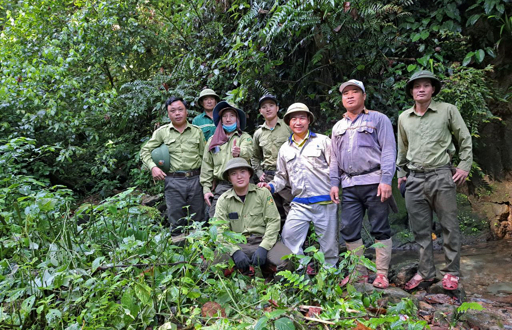
Southeast Asia’s middle class has grown exponentially in recent decades, driving demand for exotic pets, meats and animal parts used for luxury goods and traditional medicines. In Vietnam, long a destination country for trafficked animal products, rising demand has motivated wildlife trafficking rings to expand their activities domestically as well as internationally, putting the country’s rich biodiversity under pressure from indiscriminate and widespread trap use. As trafficking rings become more sophisticated and entrenched, conservation groups have also had to adapt, embracing new technologies and deepening their own networks to combat wildlife crime. One group working to stay ahead of traffickers is Save Vietnam’s Wildlife (SVW), which has partnered with several national parks to implement antipoaching practices in Vietnam’s richest and most targeted ecosystems. Pu Mat National Park traces the border of Vietnam and Laos, where its rich biodiversity and many endemic species suffer growing pressure from poaching activity. Since 2018, SVW has worked in partnership with the park and its rangers to support the recruitment, equipping and training of a dedicated antipoaching unit, or APU. Since its inception, the APU has removed tens of thousands of snares, dismantled poaching camps, confiscated firearms, and detained more than 1,000 alleged violators. Its approach integrates tools such as the SMART data aggregation software and remotely monitored “PoacherCams” to identify trafficking hotspots and guide patrols more strategically. At the same time, outreach efforts with local communities aim to reduce both the supply of and demand for illegally sourced wildlife. APU coordinator Huu Trung Nguyen, team head…This article was originally published on Mongabay
From Conservation news via This RSS Feed.
fucking ignorant assholes, too dumb to even eat shit and die