

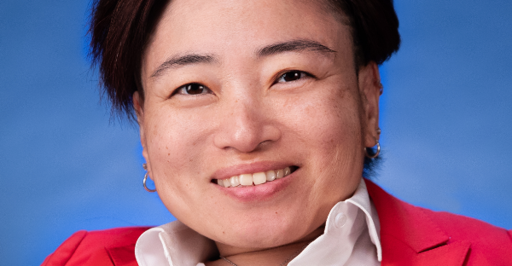
Janine Jackson interviewed the Disability Justice Initiative’s Mia Ives-Rublee about the Trump administration’s disability directive for the July 3, 2026, episode of CounterSpin*. This is a lightly edited transcript.*
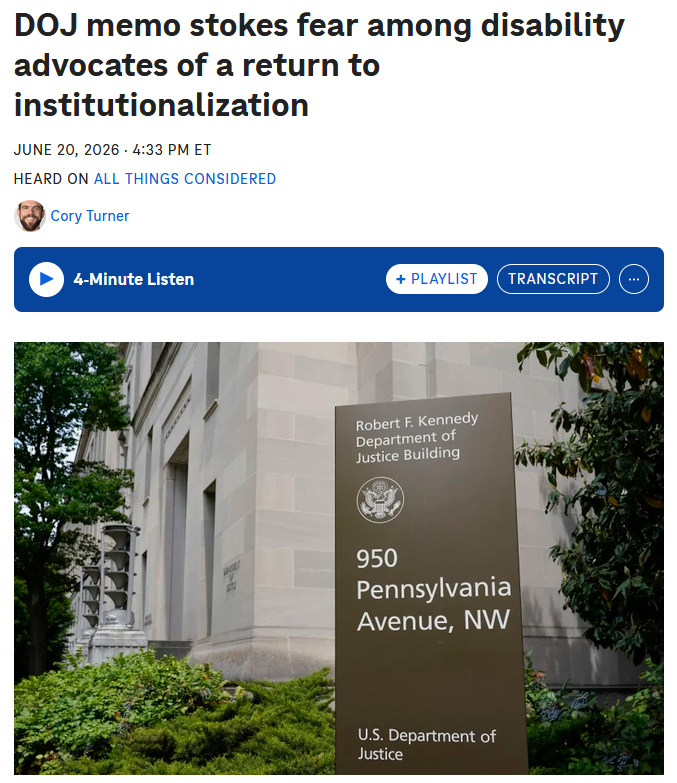
NPR (6/20/26)
Janine Jackson: The Rehabilitation Act of 1973 addressed the rights of people with disabilities in their interactions with the federal government, including entities that receive certain federal contracts. Section 504 of that act prohibits organizations and employers from excluding or denying individuals with disabilities an equal opportunity to receive program benefits and services.
The hard-won Americans with Disabilities Act, passed into law in July of 1990, and specifically Title II of the ADA, emphasized disabled people’s access to civic life.
These laws have been interpreted for decades as meaning that our shared societal goal is to have disabled people live in community, with family, with friends. A new thing, a memo from the Office of Legal Counsel within the Justice Department, now says: “or maybe not.”
A professor at George Washington University—cited on NPR, one of few outlets to take this seriously—says, “It is now the position of the United States government that people with disabilities don’t have a right to be part of their communities,” adding, “I can’t overstate how significant this change in position is.”
Here to help us understand the meaning of this particular shift, and how it fits within a broader engagement, is Mia Ives-Rublee. She’s senior director of the Disability Justice Initiative at the Center for American Progress, and she joins us now by phone. Welcome to CounterSpin, Mia Ives-Rublee.
Mia Ives-Rublee: Thank you so much. I’m so glad to be here.
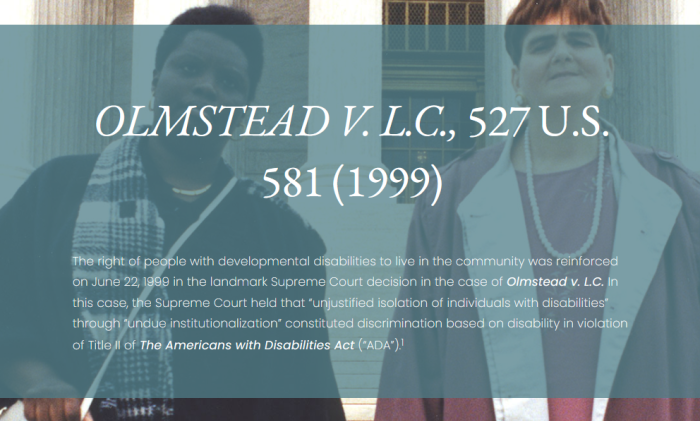
JJ: This is a story about law, but we all know it’s not about just what’s legal to do or to not do. After the Rehabilitation Act, after the ADA, in 1999 we have Olmstead v. L.C. This is two women suing the state of Georgia, and the Supreme Court agrees, with reference to that existing legal underpinning, that states have a legal responsibility to provide services that integrate people into communities, that that integration is the goal; it’s the best way forward.
So now this person who wrote, this deputy assistant attorney general, says, “We recognize this view of Olmstead‘s import is out of step with a common understanding of that decision with the federal courts.” So this new memo, what does it mean? What could it mean? Why is it important?
MI-R: So this memo doesn’t change the current laws, or the decision that the Supreme Court made in 1999. What it does is provide specific avenue for states to try to challenge these laws and the Supreme Court decision, in hopes of getting it overturned by the Supreme Court. So people still have basic protections that emphasize their right to live in the community, but it provides this sort of crack in the armor that will probably be utilized by certain states to try to reduce the amount of money that they’re spending on things like home- and community-based services, and long-term support services.
JJ: Yeah. I see folks hearing “it opens a window.” It doesn’t require anything, but it’s offering something that we know that a lot of folks are going to take up.

History News Network (9/03)
I want to say, I’m creeped out by the memo saying that Olmstead “held only that a state cannot institutionalize such patients”—they’re talking about people with disabilities—“without justification,” and then adds, “What counts as adequate justification remains an open question.” That reads like a line from a horror movie to me, frankly. Talk about who and what could be affected by this.
MI-R: I think that the two communities that I’m extremely concerned about are individuals with significant mental health issues. So individuals who may be diagnosed as bipolar, or diagnosed with schizophrenia, individuals who have significant mental health issues and are more likely to be very vulnerable. These are individuals that need significant support to continue living in the community, often. And so that’s one portion of the population.
I think the other portion of the population is individuals with developmental disabilities. So we’re looking at people who have been diagnosed as autistic. This could include individuals who have different intellectual disabilities. It includes a wide variety of people, but these are individuals that are already significantly at risk of being institutionalized.
The thing that worries me is this comes after a lot of the conversation that Secretary RFK Jr. has had about creating camps and work farms that, I’m not being over-dramatic in saying these sound similar to the “work camps” and concentration camps that happened in Nazi Germany. And the irony is that Nazi Germany got a lot of its eugenic policy ideas from the United States.
JJ: Which I think a lot of folks don’t know.
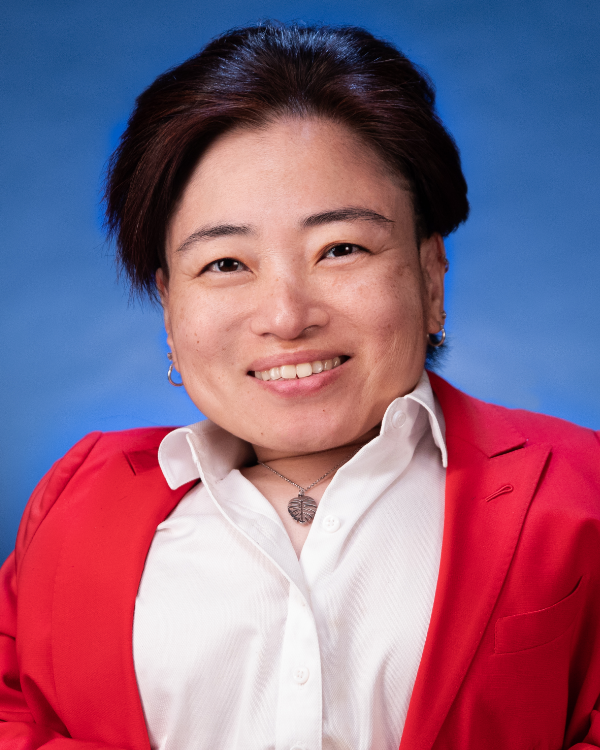
Mia Ives-Rublee: “Without understanding the well-researched interventions that actually help people rather than incarcerate them, I’m worried about the direction we are taking.”
And I do think there’s popular misunderstanding. If you see someone on the street who seems to be in mental health crisis, I think, absent a coherent understanding of what could happen, what social supports might mean, there’s a feeling of, “Well, just get them away from me.” And I feel like that’s what they’re playing on, and that’s what they’re hoping will work in the popular imagination.
MI-R: Yeah. And we’ve seen support for that across the political spectrum. And so some of these things, unfortunately, are popular amongst the general public. And I think without understanding the well-researched interventions that actually help people rather than incarcerate them, I’m worried about the direction that we are taking, because we have made so much progress towards ensuring disabled people have similar rights that nondisabled people have. To see it getting reversed is really, really concerning. And to tell you the truth, as a person with a disability, it’s kind of scary to me.
JJ: I want to bring it into some broader context because, as I stated, this particular memo is not getting much attention, and it’s now almost a week old, so now it’s an “old story.”
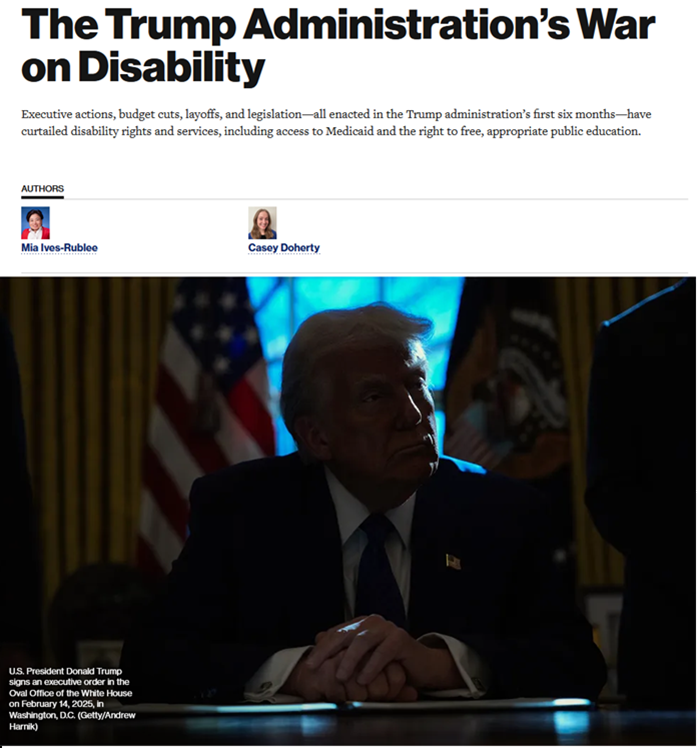
It’s unclear what’s going to happen, but you wrote with Casey Doherty an overarching account of the Trump administration’s war on disability. So I would ask you to talk about how this newest thing really just fits; it’s not an aberration. It fits with an all-out war on disabled people, and on the laws that have been created to address and encourage the ability of people with disabilities to live in community. So what else do folks need to know? It’s not just this Trump administration, it’s a coherent attack.
MI-R: Yeah. You can go all the way back to Project 2025, right, where they literally lay out what they plan to do, and they are being quite successful in making progress on that plan. So there is this need, which you look at a lot of the quotes and memos from people like Stephen Miller, there is this push from this administration to get rid of anybody that they do not like, or do not want to be in society. And so that means cutting rights and services to some of the most vulnerable populations in the country, and that, in particular, includes disabled people, particularly disabled people of color.
American Progress (7/28/25)
We see that through a number of actions that have been taken, whether it’s attacks on DEIA, saying that we shouldn’t try to ensure that laws that were created to disenfranchise and discriminate against specific populations don’t get addressed in particular. And then we look at things like the OBBBA, which strips things like SNAP and strips Medicaid. These are all programs that, in particular, disabled people are disproportionately reliant on.
And what I found interesting, because I went to a couple of the hearings around some of these issues in the Senate and the House, was the continual statement by representatives and senators saying that this would not impact disabled people, but it was very clear that it would impact disabled people. It would impact everybody, but disproportionately, it would impact disabled people.
What I say in my piece around the “war on disability” is that Medicaid provides so much support for all communities, and is one of the pillars of our current healthcare system, and covers a lot of the costs that everybody gets to benefit from, because it’s not paying one specific provider, it is paying for a group of services and supports that an individual receives, and helps to pay for things like rent of a building or land. It pays for physicians’ wages, it pays for equipment, it pays for all of these things.
And when you take out one of the pillars, or significantly decrease one of the pillars that helps pay for our healthcare system, it collapses the system, right? And so we’re looking at decreasing the support that much of the disability community relies on to be able to survive. By doing that, you cause more deaths, more fatalities, and an increase in disability, an increase in the severity of disabilities.
JJ: I always wonder about media coverage of disabled people, given that it is a community that anyone could join at any moment, and that anyone who has a child could join at any moment. It seems almost like crossing your fingers: “It’s not going to happen to me. I’m going to make policy that doesn’t involve that.” It’s weird. I’m just going to say it’s weird.
And then when media do do their occasional story about disabled people—very much reads as a “very special episode”—they think that means they cover disability. And what I hear you saying, and what we’re both saying, is disabled people are part of the story when you’re reporting on air travel, and when you’re reporting on housing costs, and when you’re reporting on college scholarships. It’s not a once a year, do a deep dive, “What do disabled people care about?” It seems to me a major failing of news reporting that they can’t somehow integrate people with disabilities into every story that they cover.
MI-R: Yeah. I think people don’t realize how much disability impacts the United States, and the world. And it’s been something that we at the Center for American Progress, and particularly the Disability Justice Initiative team, have been really trying to hammer home on, is that disability impacts every single policy that we create, and that every single policy impacts disabled people.
And one of the interesting things is that Rep. Tom Kean Jr. just recently put out a public apology on why he was absent from work, and then discusses his severe depression, which is a disability. And yet, at the same time, he voted to cut a significant amount of Medicaid. And so I think there’s this disconnect of understanding how disability impacts different policies, and how much it impacts every single one of us.
Extra! (6/13)
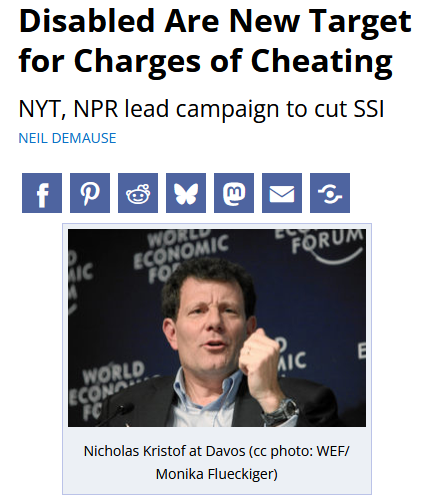
JJ: Absolutely. And there is, and you’re noting it, a kind of overarching storyline from corporate news media—and it’s an unspoken backdrop to any individual story on a number of issues—that the government is generously offering things, and some bad people take advantage, and that’s starving other worthy people of benefits, and there’s a whole problem with… It’s not a coherent argument. It’s like a zero sum thing, that some people are faking a need, and probably that’s why you’re struggling. But this still shapes media narrative around disability, that it’s somehow a grift. Somehow, if you look into it differently, it’s a grift.
And I just want to ask you what—I mean, there is good journalism. I’m not saying there isn’t, but what would be the ingredients of journalism that could shift this narrative?
MI-R: That’s a great question. I think that, one, we need more disabled journalists. We have a couple that are currently doing a wonderful job reporting on disability, but they’re few and far between. And I think that being able to train up the next generation of journalists to understand how disability impacts so many people is going to be essential.
And the thing that I try to emphasize is that the disability community is just going to continue to grow. It’s been growing exponentially since the beginning of the pandemic. And part of that is due to infectious diseases causing specific disabilities. Some of it is due to our crumbling healthcare system. And then some of it is due to the aging baby boomers.
And us not understanding the intersection of policy and disability is going to be a real problem in the near future. I mean, it’s already a problem, but it’s going to be even higher a problem coming up, because the AARP actually did a survey of folks that are coming up towards retirement, or are already retired. And their survey asked them where they would like to retire and live out the rest of their lives. A majority of them said they wanted to live in their communities.
And with that being said, we have a major crisis on our hands, because we don’t have enough caregivers to be able to support that effort. And by stating that, “Oh, states can now ignore Supreme Court legal precedents and ignore law,” it’s going to ensure that states don’t actually put money, and invest money and infrastructure, around an aging population that is going to need the support.
So what’s going to happen is a lot of folks may be languishing in hospitals; emergency rooms will continue to get significantly congested, and we’re going to see a worsening of our healthcare overall, and we will see more people either homeless or incarcerated or dead.
NPR (7/2/26)
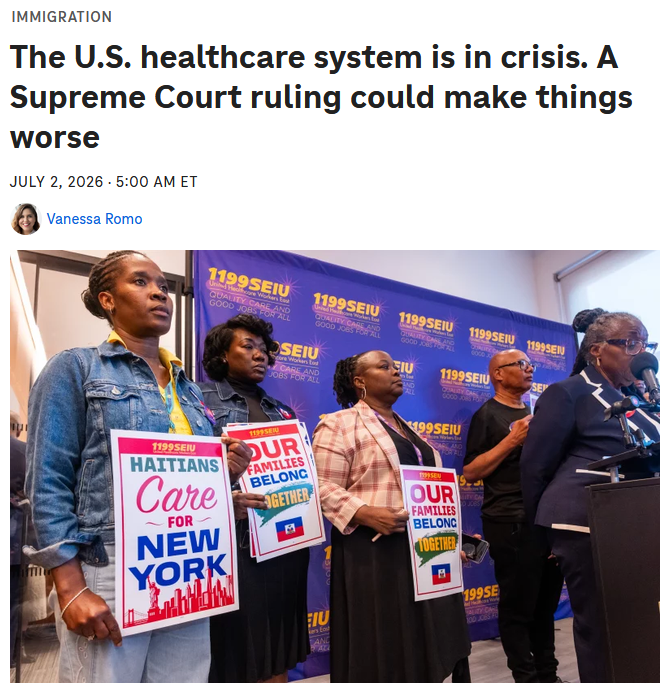
JJ: Which only leads me to say, finally, that I wish that media would connect issues of incarcerated people, of disabled people, of deporting Haitians who, come on, who’s taking care of your grandmother?, healthcare workers. We’re saying the failure of media to connect the dots of the social support networks that exist in this country, to me, seems like a major failing. And I’m not trying to rant at you, but if you have thoughts about that and what media could do, I’d love to hear them.
MI-R: Yeah. Part of this is due to those who hold power are very good at separating people, and pitting them against each other, and that gets reflected in media coverage as well. I think that a lot of times, it’s like, “I’m going to cover this one issue, but I don’t actually give it context.”
And I think a lot of people don’t realize that policies don’t live in a vacuum. What I often talk about, when I’m talking about policy and the work that I do, is I’m literally sitting there with a three-dimensional puzzle that I’m having to try and figure out how different things fit together, or don’t fit together, and how I can get them to actually fit together.
And one example of this would be during the height of the pandemic, when they were giving out checks to everyday citizens, what we saw was that Congress didn’t realize how that would impact disabled people who were on SSI. And that resulted in a number of people on SSI losing their eligibility status. And so they actually had to go back and write up new policies that basically stated, “Hey, you can ignore this payment and this asset for a couple years.”
JJ: Do you have any final thoughts about what we should know about this particular…. You know, it’s a memo, it’s not a law, but maybe media are going to cover it. What should they ask as they cover this particular iteration? Any thoughts?
MI-R: Yeah. I think, one, that this isn’t new, and that this is part of a general plan overall. And that it actually provides us a trajectory of where this administration is thinking on going, and will help advocates and lawyers see how the administration plans to argue around this issue. So I think them releasing this actually provides us some information that we may not have had previously. While it does open the door to states, it also provides us a roadmap in understanding what they plan to do.
JJ: We’ve been speaking with Mia Ives-Rublee. She’s senior director of the Disability Justice Initiative at the Center for American Progress. They’re online at AmericanProgress.org. Thank you, Mia Ives-Rublee, for joining us this week on CounterSpin.
MI-R: Oh, thank you so much. I really appreciate you all covering this.
From FAIR via This RSS Feed.