

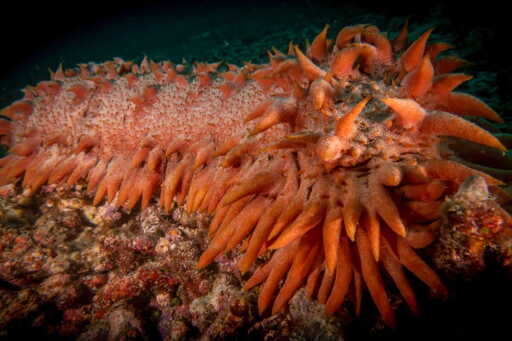
Off the northwestern coast of Australia, in some of the world’s most pristine and diverse coral reefs, sea cucumbers are rapidly vanishing. Overall populations of these tubular, blobby animals declined by more than half from 2018 to 2023 in the Rowley Shoals, a remote Australian marine park, according to a recent survey. Some especially vulnerable species, such as the pineapple sea cucumber (Thelenota ananas) and the hairy blackfish (Actinopyga miliaris), have disappeared across most or all of the monitoring sites there. Researchers believe a boom in illegal fishing is to blame. Sea cucumber harvesting is prohibited in the Rowley Shoals, and the survey found Australian authorities caught 112 fishing vessels in the area carrying a collective 22 metric tons of sea cucumbers between 2021 and 2023, a figure that translates to roughly 33,000-45,000 animals. This is just the share of illegal fishing that authorities managed to intercept; the researchers noted that the actual sea cucumber body count is likely much higher. The problem isn’t unique to Rowley Shoals. It occurs in reefs across the country’s western and northern waters and has recently been on the rise, according to several researchers interviewed by Mongabay, driven by demand for the animals in China and other East Asian countries where they are considered a delicacy and used in traditional Chinese medicine. Illegal sea cucumber fishing spiked in northern Australia in 2024, according to experts, with fishers targeting sanctuaries and internationally protected species. The Australian government responded by launching Operation LUNAR at the end…This article was originally published on Mongabay
From Conservation news via This RSS Feed.