

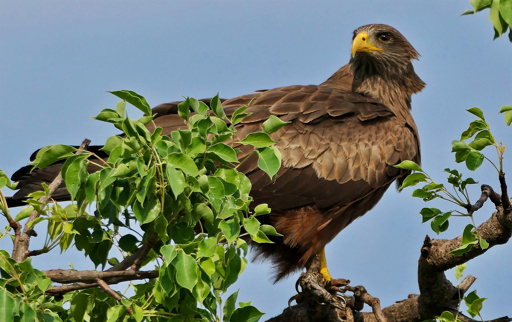
With West Africa’s vulture populations dwindling, poachers are increasingly turning to yellow-billed kites, a medium-sized, extremely adaptable raptor found in nearly every landscape across much of sub-Saharan Africa. And though they are listed as a “least concern” species on the IUCN Red List of Threatened Species, they face a growing threat: They’re more frequently hunted for use as fetishes and for food. Like vultures, kites — both alive and dead — and their parts are used in rituals and as charms. They’re caught as bushmeat, supply fetish markets and are used as ingredients in local traditional medicine. A study by Abiola Chaffra, a research fellow at the International Bird Conservation Partnership, found that during November-to-March hunting seasons in 2022 and 2023, hunters killed 20,200 yellow-billed kites (Milvus aegyptius) in southern Benin. They flock from across Africa to nest and breed in southern Benin each year, and as soon as they arrive, they’re in danger. “[These hunts occur] every year because the kites always come back,” Chaffra told Mongabay. The research will be published in the bulletin of the African Bird Club. Their loss could have broad impact: Yellow-billed kites are opportunistic predators that eat a wide range of small mammals, amphibians and insects that are considered pests. They play a key role in cleansing landscapes of disease and scavenging carcasses. Yellow-billed kites at a fetish market in Benin. Image by Abiola Chaffra. Belief-based demand Raptors have long been used in rituals in Benin, but it appears to be increasing, Chaffra…This article was originally published on Mongabay
From Conservation news via This RSS Feed.