

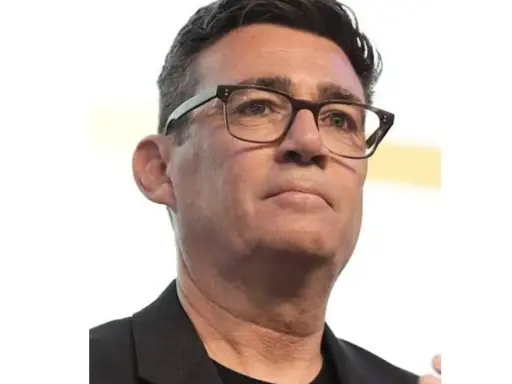
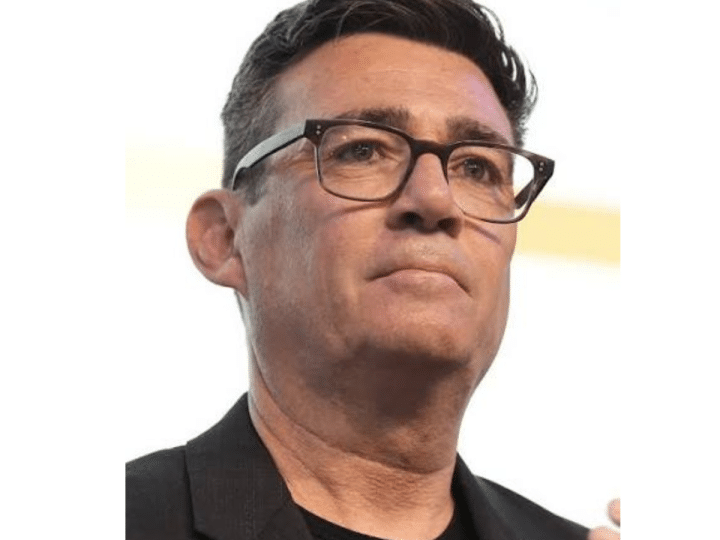
Andy Burnham has explicitly rejected the possibility of another Scottish independence referendum.
The future prime minister hopeful has drawn sharp criticism from Scottish politicians and commentators over his decision.
Burnham told a gathering of some 25 Scottish Labour MPs that he is “not willing to consider” a second vote, the National reported. This comes despite his support for further devolution, which has already ruffled Scottish feathers.
The stance puts Burnham in the same camp as every prime minister since 2014. Each has denied giving the Scottish people and their chosen government the section 30 order necessary to hold another vote on secession.
To many Scots, it’s yet more evidence that Burnham will bring more of the same as Starmer or the Tories.
Scottish response to Burnham’s comments
One MP at the meeting told the Scottish Mail on Sunday:
Andy was crystal clear that it is not something he is going to be considering.
Another attendee reportedly told the Mail:
[Burnham] made the point that he’s not a fan of referendums, isn’t going to be granting one and it’s not something he is willing to consider.
However, Burnham’s statement to Scottish Labour follows his pledge to speak to the Celtic Alliance leaders “soon” on an “ask me anything” post on social media platform Reddit.
When Burnham was asked on Reddit about his plans for devolution and working with pro-independence parties — who now control governments across the three Celtic nations — Burnham replied:
I would like it to be as collaborative and pragmatic as possible.
I want the same offer to power up places to be available in all parts of the UK.
I will speak soon to First Ministers of Scotland, Wales and Northern Ireland to agree a positive way of working to this end.
Burnham previously vowed to increase devolution across the UK, including the devolved nations. This included plans for a “Number 10 North,” based in Manchester, aiming to “redistribute power”.
Burnham caught in yet another lie raising more concern that he is just another Starmer
Burnham ‘flies in the face of democracy’
Burnham’s commitment to the union, which is fundamentally a premise of all Labour and Scottish Labour politicians, has predictably upset many. He’s been slammed for what some consider undemocratic behaviour.
The Scottish Greens have responded, arguing that, if Andy Burnham “really believes in less centralised democracy, then he must not stop the people of Scotland choosing their own future”.
Patrick Harvie, a prominent Scottish Green MSP, previously the party’s co-leader and former Scottish government minister under the Green-SNP coalition, said:
Andy Burnham talks about devolution and letting people shape their own future.
This will be the first real test of whether he believes it.
Scotland has just elected the largest pro-independence majority in the history of our Parliament. If that’s not a mandate, what is?
It’s a simple question and one that no Labour leader has been able to answer. …
Refusing to even let the question be asked flies in the face of democracy.
Meanwhile, SNP MSP David Linden said that Burnham was just more of the same.
Westminster politician disrespecting Scottish democracy before they have even started measuring the curtains in Downing Street.
Andy Burnham has promised to break with the past and he must be true to that – Scotland voted for a referendum, Scotland voted for more powers to be in our hands. Those promises must be met.
The disastrous Brexit, the tax on Scotland’s energy which is costing thousands of jobs and the hike on national insurance which is strangling Scotland’s economy – that is the cost of Westminster.
(Very) recent history of a centuries-old dispute
On 7 May, the SNP secured its fifth consecutive election win which — for many Scots — reinforces a pro-independence mandate. Speaking after re-election, First Minister John Swinney emphasised that Holyrood “clearly expressed its view that Scotland should have the powers to arrange an orderly referendum on independence”.
But in 2022, the British Supreme Court ruled that any future referendum could only be held with the consent of the UK government. No consent has been granted, nor does it appear likely, Burnham and all.
Scottish voters, particularly pro-independence voters, often point out that England pushed Brexit onto Scotland despite an overwhelming 62% pro-EU majority, north of the border. Some even believe that Brexit may have swayed the independence vote had it happened before the referendum.
This is a bitter point for many given that the ‘Better Together’ — pro-union, Labour- and Tory-led — campaign often touted EU membership as a key reason to remain in the UK. That was dashed just two years later.
How popular is Scottish independence?
At the original Scottish independence referendum in 2014, about 55% of voters opposed independence.
That percentage has hovered around there since, although pro-‘yes’ reportedly peaked at 53% in mid-2020 and again in late 2022. Another polling scheme suggests that 2019–2021 saw sustained pro-independence support at between 51-53%, but more recently this dropped.
Pro-independence politicians from the SNP and Scottish Greens suggested to the Canary a major factor in pro-independence sentiment slipping away. They blame an overall material impoverishment caused by the UK’s sustained cost of living crisis.
Now-elected SNP MSP, Kate Campbell, for instance, said:
People are focused on bread-and-butter issues right now…
Housing, the cost-of-living, making sure people are just surviving and getting through at the moment — that has to be the priority for government.
However, indy support has not dropped below 43% since 2014, meaning that only the unionist camp shrank over time. Pro-unionists consistently hold less strong beliefs than pro-independence counterparts.
Demographic changes since 2014 might suggest that the figure could be much lower now, given that — like Brexit — age demographics reflected voter opinion. Younger Scots largely supported the pro-independence vote and still do, with clear pro-indy leanings for all Scots under 50.
Those younger, pro-independence generations might see their day yet. But before Swinney can raise the issue personally with Burnham, and even then, it’s not looking likely to be soon.
Featured image via Peter Byrne/ PA Images
From Canary via This RSS Feed.