

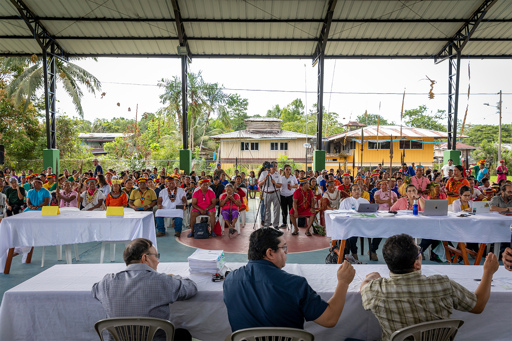
Non-governmental organizations (NGOs) have played a critical role in the fight to secure title to ancestral Indigenous lands in the Amazon. They can provide financial assistance and legal representation in court, but new research shows that for groups that do not benefit from this support, the arrival of NGOs may cause more harm than good. A recent paper, published in Political Geography, highlights how this dynamic has played out in the northern Ecuadorian Amazon. There, with the backing of the NGO Amazon Frontlines, the Siekopai community of San Pablo de Katëtsiaya won title to 42,360 hectares (104,674 acres) of their ancestral land. However, the area had long been occupied by another Indigenous group, the Kichwa community of Zancudo Cocha, or Zancudo, which also had deep cultural and spiritual ties to the land but was not included in Amazon Frontline’s efforts. Such unequal support is termed “uneven territorial sponsorship” by the study authors. It can come from third parties including NGOs, states, religious organizations and others when they support one community at the disadvantage of another that may have a similar ancestral claim to the land. In Ecuador, it has led to tensions between the two communities, with reported incidents of violence and a lack of compromise. Amazon Frontlines helped the Siekopai secure title to the territory by framing their claim in a more non-Indigenous, Western, legal tradition, which defines territory as sovereign, sacred and timeless, according to the paper. In contrast, Amazonian communities tend to see territorial claims as more…This article was originally published on Mongabay
From Conservation news via This RSS Feed.