


This article by Teri Mattson originally appeared in LA Progressive on July 5, 2026.
Within hours of Colombia’s June 21 presidential runoff, major international news organizations declared the country’s conservative candidate the victor. Political commentators across the hemisphere described the result as another blow to Latin America’s progressive “Pink Tide” and another victory for the global right.
Colombia’s presidential runoff was never just about one country’s future. Coming after conservative victories elsewhere in Latin America, the election became an early test of whether the region’s second Pink Tide has reached its high-water mark or is simply entering another phase of political evolution.
Yet on the streets of Bogotá, where international election observers continued watching the vote count unfold, the mood was markedly different.
The official scrutiny process was still underway. Progressive candidate Iván Cepeda had not yet conceded. Tens of thousands of Colombians gathered peacefully in the streets—not to reject democracy, but to insist that every ballot be counted before history was written.
For observers who spent election day moving from polling station to polling station across Colombia’s capital, the election told a far more complicated story than the headlines suggested.
Rather than signaling the collapse of Colombia’s left, the razor-thin election revealed a country almost perfectly divided between two competing visions of its future. More importantly, it demonstrated that progressive political power in Colombia extends well beyond whoever occupies the presidential palace.
That distinction may prove decisive over the next four years.
A Nation Still Divided
The conservative victory—by less than one percentage point—cannot reasonably be interpreted as an overwhelming mandate.
Instead, it exposed a Colombia that remains politically balanced between two powerful currents: one emphasizing security, military cooperation with Washington, and market-oriented economics; the other advocating expanded social protections, implementation of the peace process, labor rights, and greater regional independence.
Only four years earlier, Colombia had elected its first left-wing president, Gustavo Petro, ending generations of uninterrupted conservative rule.
That historic breakthrough was never simply an electoral phenomenon.
It emerged from years of organizing by labor unions, Indigenous organizations, Afro-Colombian communities, student movements, feminist groups, environmental activists, and neighborhood organizations. The nationwide Paro Nacional protests of 2021 fundamentally reshaped Colombian politics, creating the social foundation that eventually carried Petro into office.
Those movements did not disappear because a conservative candidate narrowly won a single election on June 21.
As several election observers noted after returning from Bogotá, governments may change, but organized political movements often endure.
Democracy Observed Up Close
Among those witnessing Colombia’s election firsthand were members of an international delegation organized through the Democratic Socialists of America.
What they encountered challenged many assumptions held by North American observers.
Colombia’s voting process remains overwhelmingly paper-based.
Voters locate their assigned polling station using their national identity number before entering schools or public buildings that serve as voting centers. Election workers verify credentials, issue paper ballots, and voters mark their choice by hand before depositing ballots into sealed boxes.
When polls close—precisely at 4:00 p.m.—the process changes dramatically.
Instead of transporting ballots to centralized counting facilities, votes are immediately counted by hand inside each polling station under the observation of party witnesses and election observers. Results are recorded on official tally sheets, signed by multiple participants, and only then transmitted for the preliminary count.
The official scrutiny process that follows includes additional verification before final certification.
For observers accustomed to electronic voting systems in the United States, the transparency of the counting process was striking.
Every ballot remained visible.
Every tally occurred publicly.
Every result required multiple signatures.
Although concerns persisted regarding later stages involving computerized tabulation, the polling places themselves were characterized by order, transparency, and calm.
Perhaps equally notable was the presence of exceptionally young election witnesses representing progressive parties—many appearing barely out of their teenage years.
Their participation suggested something larger than a campaign.
It suggested the emergence of a new political generation.
The Politics of Fear
If one theme dominated conversations throughout election day, it was security.
The conservative campaign successfully centered public debate around violence, crime, and public order—issues that have shaped Colombian political life for generations.
Given Colombia’s history of armed conflict, displacement, and political violence, these concerns cannot simply be dismissed as campaign rhetoric.
For millions of Colombians, security is deeply personal.
It influences whether children can safely walk to school, whether families can travel after dark, and whether small businesses can survive.
Conservative campaigns across Latin America have increasingly framed elections around these anxieties.
Whether in Peru, Ecuador, Argentina, or now Colombia, security has become one of the right’s most effective political narratives.
Progressive movements face a difficult challenge.
They must address legitimate public fears without abandoning commitments to human rights, peacebuilding, and social investment.
Several observers suggested that Colombia’s left must develop stronger communication strategies capable of responding to fear without simply imitating conservative messaging.
That lesson extends well beyond Colombia.
Washington Never Left the Picture
Although Colombians alone cast the ballots, the election unfolded under the unmistakable shadow of U.S. influence.
Colombia remains Washington’s closest military and security partner in South America.
For decades, billions of dollars in U.S. military assistance under initiatives such as Plan Colombia have tied the two governments together through intelligence cooperation, counternarcotics operations, and regional security strategy.
During the campaign, public endorsements and statements from political figures in Washington reinforced perceptions that the United States favored a conservative outcome.
Whether those interventions directly influenced voters is difficult to measure.
Their symbolic significance, however, was unmistakable.
Many Colombians remain deeply sensitive to foreign involvement in domestic politics.
Throughout Latin America, memories of Cold War interventions, support for military dictatorships, and economic pressure continue shaping public attitudes toward U.S. engagement.
For progressive organizers interviewed after the election, the challenge extends beyond criticizing Washington.
It requires constructing compelling national narratives capable of competing against well-funded conservative messaging that often links closer U.S. ties with promises of economic stability and public security.
Why Colombia Matters to Washington
Colombia’s presidential elections have never been solely domestic affairs. For more than a quarter century, Colombia has occupied a unique place in United States strategy toward Latin America.
Since the launch of Plan Colombia in 2000, Washington has invested billions of dollars in military assistance, intelligence cooperation, counterinsurgency operations, and counternarcotics programs.
Although originally framed as an anti-drug initiative, Plan Colombia gradually evolved into one of the largest U.S. security partnerships anywhere outside the Middle East. Colombian military officers trained alongside U.S. forces, intelligence sharing deepened, and Bogotá became Washington’s closest strategic partner in South America.
That relationship expanded further after Colombia became NATO’s first global partner in Latin America in 2018, reinforcing its role as a regional security actor and an important ally in U.S. hemispheric policy.
The election of Gustavo Petro in 2022 introduced new uncertainty into that relationship. While Petro maintained cooperation on security issues, his administration also sought to rebalance Colombian foreign policy by restoring diplomatic relations with Venezuela, emphasizing environmental diplomacy, promoting implementation of the 2016 peace accords, and advocating greater Latin American autonomy in regional affairs.
The 2026 election therefore carried implications extending well beyond Colombia’s borders.
A government more closely aligned with Washington could reinforce U.S. influence at a moment when Latin America is becoming an increasingly contested geopolitical space, not only between progressive and conservative political projects but also among global powers seeking greater economic and diplomatic influence throughout the hemisphere.
For that reason, many observers viewed Colombia’s election as one of the region’s most strategically important contests—not simply because of who would govern Colombia, but because of the country’s central role in shaping the political balance of the Americas.
Elections Are Not the End of Politics
Perhaps the observers’ most important insight concerned a distinction often overlooked in international media.
Winning government is not the same as possessing political power.
Political power also resides in unions.
Neighborhood organizations.
Community councils.
Women’s movements.
Student organizations.
Peasant associations.
Faith communities.
And countless local institutions that continue organizing regardless of who occupies the presidency.
Mexico offers one example.
The political success of MORENA followed more than a decade of patient organizing, political education, and institution-building before Andrés Manuel López Obrador finally reached the presidency.
Honduras followed a similarly lengthy trajectory before Xiomara Castro’s election.
Even Venezuela’s Bolivarian project has depended upon communal councils, neighborhood assemblies, and local institutions extending far beyond electoral campaigns.
Several observers argued that Colombia now faces a similar moment.
Rather than viewing the election as an endpoint, many activists are already treating it as the opening chapter of a four-year organizing campaign.
Congressional elections lie ahead.
Municipal organizing continues.
Political education expands.
New leadership emerges.
The election may have ended.
The movement has not.
That perspective was reinforced by Pacto Histórico presidential candidate Iván Cepeda himself. In his concession speech, he pledged that the progressive coalition would become a “democratic, vigilant and constructive opposition,” committed to defending many of the social reforms advanced during the Petro administration while organizing for the future. Rather than signaling retreat, the message underscored that Colombia’s left intends to remain an active political force both inside and outside the country’s formal institutions.
Outgoing President Gustavo Petro has signaled a similar path. As he prepares to leave office, Petro has indicated that he intends to become a leading figure in the opposition, helping organize mass movements and defend the political legacy of his administration. Together, their messages suggest that Colombia’s progressive project is entering a new phase—not one centered on governing from the presidential palace, but on rebuilding political strength through democratic opposition, civic participation, and grassroots organizing.
Colombia’s Next Four Years
Walking through Bogotá the day after the vote, international observers encountered students marching through the streets carrying banners and discussing strategy rather than despair.
The prevailing sentiment was neither denial nor resignation.
Instead, organizers spoke about preparation.
Four years.
Time to strengthen local organizations.
Time to recruit new leaders.
Time to expand political education.
Time to communicate more effectively.
Time to build broader coalitions.
For a political coalition that itself is relatively young, losing by less than one percentage point demonstrated not weakness but remarkable organizational capacity.
That perspective offers a useful corrective to simplistic narratives of defeat.
Progressive politics throughout Latin America has historically advanced in cycles rather than straight lines.
Electoral victories alternate with setbacks.
Coalitions fracture before reforming.
Movements adapt.
Leadership changes.
Ideas evolve.
What ultimately determines political durability is rarely one election.
It is the capacity to remain organized after losing one.
The Second Pink Tide at a Crossroads
The significance of Colombia’s election becomes clearer when viewed within the broader trajectory of Latin American politics over the past three decades.
Beginning with the elections of Hugo Chávez in Venezuela in 1998, Luiz Inácio Lula da Silva in Brazil, Néstor Kirchner in Argentina, Evo Morales in Bolivia, and Rafael Correa in Ecuador, much of South America experienced what became known as the first Pink Tide—a wave of progressive governments that challenged the neoliberal economic consensus that had dominated the region since the 1980s.
Although these governments differed considerably in ideology and policy, they shared several broad objectives: expanding social welfare programs, reducing poverty and inequality, increasing state participation in strategic sectors of the economy, strengthening regional integration, and pursuing a more independent foreign policy toward Washington.
Many of those governments later gave way to conservative administrations through elections, parliamentary crises, judicial campaigns, or, in some cases, outright political destabilization. Yet beginning in 2018, a second Pink Tide emerged as progressive candidates again won elections across Mexico, Honduras, Colombia, Brazil, Chile, and elsewhere.
Colombia’s 2026 election now raises an important question: Is this second progressive cycle beginning to recede, or is it simply entering another period of political adjustment?
History suggests caution before drawing sweeping conclusions.
Latin American politics has rarely moved in a straight line. Conservative governments often generate new social movements, just as progressive governments eventually confront voter fatigue, economic headwinds, or internal divisions. Political tides rise and fall, but the organizations that sustain them—labor unions, community associations, student movements, Indigenous organizations, and grassroots political education—often survive electoral defeats.
That is precisely why many Colombian organizers interviewed after the election refused to characterize the result as the end of their movement. For them, it represented another chapter in a much longer political process whose outcome remains far from settled.
Beyond Colombia
The implications reach far beyond Bogotá.
Across Latin America, progressive governments face mounting conservative opposition amid slowing economic growth, rising insecurity, aggressive media campaigns, and renewed geopolitical competition.
Brazil confronts another pivotal election.
Mexico increasingly finds itself regionally isolated as one of the hemisphere’s remaining major progressive governments.
Bolivia continues managing internal political tensions.
Cuba faces intensifying external pressure.
While progressive movements elsewhere search for new strategies capable of responding to changing political realities, Colombia has become a case study.
In the end, the most revealing scene from Colombia’s election was not the final tally displayed on television screens. It was the sight of young election witnesses carefully counting paper ballots, students marching peacefully through Bogotá the following day, and veteran organizers already discussing the next four years rather than lamenting the last twenty-four hours. That quiet determination may prove to be the election’s true legacy. Governments change. Political tides ebb and flow. But throughout Latin American history, enduring change has rarely begun in presidential palaces. It has begun in neighborhoods, classrooms, union halls, and public squares where ordinary citizens decide that one electoral defeat is not the end of the story, but the beginning of the next chapter.
Teri Mattson currently works with the Venezuela Solidarity Network. She is an activist with the SanctionsKill coalition and CODEPINK’s Latin America team. Her writing can be found at Anti-War.com, CommonDreams, Jacobin, and LA Progressive. Additionally, Teri hosts and produces the YouTube program and podcast WTF is Going on in Latin America & the Caribbean.
-

Colombia’s Left After the 2026 Election: Defeat, Renewal, and the Future of the Pink Tide
July 6, 2026July 6, 2026
A razor-thin conservative victory has not ended Colombia’s progressive movement. Organizers, unions, students, and community groups are already preparing for the next four years.
-
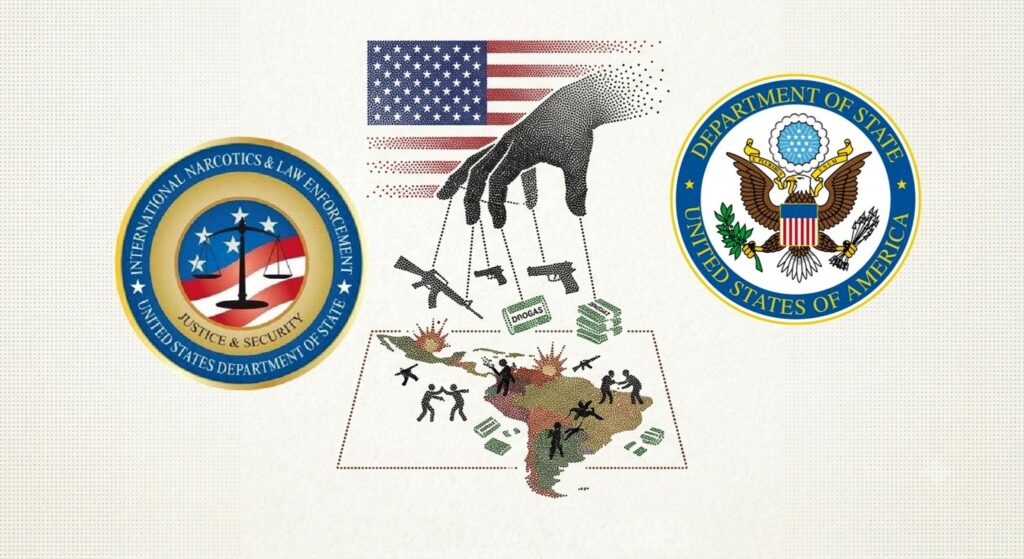
The United States: Between Interference and the ‘Fight’ Against Drugs
July 6, 2026July 6, 2026
The State Department’s INL bureau spent $819.8M in Mexico under AMLO, funding SAT-flagged NGOs and Venezuelan coup-plotters behind Bukele’s territorial-control plan.
-
Morena Proposes Creating a “National Real Estate Alert” as a Strategy Against Property Seizures
July 5, 2026
Mexico City logged over 20,000 seizure investigations since 2020; the bill would instantly notify owners when someone tries to alter their property’s legal status.
The post Colombia’s Left After the 2026 Election: Defeat, Renewal, and the Future of the Pink Tide appeared first on Mexico Solidarity Media.
From Mexico Solidarity Media via This RSS Feed.