

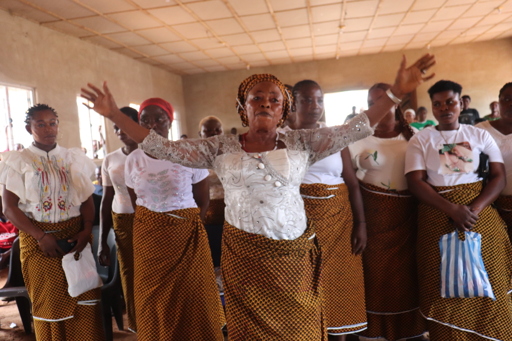
BOKI, Nigeria — The morning light fills Ulom with warmth and radiance. A dome of mountains, their green vegetation spread out like giant green walls, is visible at the edge of this serene village in Nigeria’s southeast. In the king’s palace, a women’s group kicks off its monthly meeting with prayers and choruses. Today’s meeting centers on river pollution, a significant issue being addressed as part of a broader initiative to save Afi Mountain Wildlife Sanctuary (AMWS), a 100-square-kilometer (39-square-mile) wildlife hotspot situated near Ulom. Gazetted in 2000, the sanctuary is inhabited by the critically endangered Cross River gorilla (Gorilla gorilla diehli), endangered Nigeria-Cameroon chimpanzees (Pan troglodytes ellioti) and drills (Mandrillus leucophaeus); porcupines; duikers; and dozens of bird, bat, and butterfly species. Afi is the shared heritage of 16 villages, including Ulom, broadly known as the sanctuary’s landlords. Together, these communities have set up initiatives and bylaws aimed at protecting the hotspot, often in collaboration with nonprofits and other stakeholders. The women’s collective meeting here today is one signal of a growing surge of women’s conservation leadership across the host communities. Asu Margaret, the group secretary, reads aloud from a notebook. “In our previous meeting we discussed how to prevent wildfires in the Afi Mountains,” she says. “We rejected the felling of trees. We maintain the ban on timber dealers.” Only about 300 Cross River gorillas are estimated to survive in the wild; roughly 100 of them live in a patchwork of interconnected protected areas that includes Afi, Mbe Mountains,…This article was originally published on Mongabay
From Conservation news via This RSS Feed.