
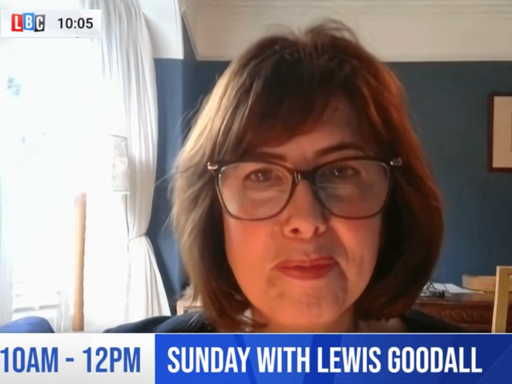
During a recent LBC interview, deputy leader of the Labour party, Lucy Powell rightly called out X as a “toxic and difficult environment“, adding that the government should consider stronger regulation.
But her comments, as usual, have missed the mark. For Powell, the concern is less about the harm social media causes to everyday life, but the influence it can have for political parties during election campaigns.
When it comes to protecting children online, the outgoing Labour leader, Starmer, chose to restrict access rather than properly regulate these platforms. Yet when social media, which is undeniably more democratic than traditional media, could potentially influence elections, suddenly Labour want tougher regulation
However, Powell’s suggestion of extending purdah-style restrictions to social media points in the wrong direction entirely. Rather than taking on the tech giants, deputy Labour leader is aspires to place new limits on what ordinary people can say and share on polling day.
Lucy Powell brands Elon Musk’s X ‘toxic’ as she says social media rules around elections must be tightened https://t.co/07UKPpGT6M
— LBC (@LBC) July 5, 2026
Social media harm ignored – until it becomes a threat to power
Calls for social media to finally be regulated have been growing for years, with them ramping up earlier this year when the xAI chatbot Grok on Musk-owned platform X began creating digital deepfake pornography of women and children. Some of the content was especially violent in nature and disturbing.
Labour MP Jess Asato, who was depicted in digitally manipulated images, is now suing X for a breach of privacy. However, it is worth noting that if we had strong regulations to ensure criminal behaviour isn’t treated like a commodity to cater for, her personal legal action wouldn’t have been necessary.
Lisa Nandy, whose job as head of the department for Culture, Media and Sport is to bring regulation to address critical issues, has instead chosen to walk away from X taking the whole department with her.
Many have commented on her shameful lack of effort to hold billionaire Musk accountable for his management of X, and failure to make the deepfake-generating app pay for its harms. Now, it seems another northern MP cares about regulation — but makes a specific mention of its use around election periods.
However, it is hard to see this as anything other than suggesting she would seek to restrict free speech for people on social media platforms — at a time when it is often essential for people to make sure they really understand what politicians are really about.
It has also been hugely helpful in ensuring people are more widely aware of the rampant corruption in British politics, and the fact that, for many, they are working for vested interests and not the British public at large.
Powell has prior form here, having called for private groups on Facebook to be banned in 2018:
Quintessentially Powell.
Lucy Powell MP, now the Deputy Leader of the Labour Party, put forward a motion for consideration of a bill in 2018 banning private Facebook groups, claiming that right wing groups were not being prosecuted as much as she would like. Naturally, she… https://t.co/yecFWFaI9Z pic.twitter.com/kFT4PsMKsJ
— Michael Reiners (@MCRReiners) July 5, 2026
Freedom of speech constantly under threat by Labour
Starmer’s Labour has very much been a story of repression. Firstly, with the targeting, repression and exclusion of leftists in the party. Since gaining power, this has escalated to repressing the right to protest and freedom of speech across the UK which has seen thousands arrested for holding a sign expressing support for now-proscribed Palestine Action.
Those arrested now face serious legal charges of terrorism, despite their actions largely being peaceful and the resounding call made by the direct-action group to oppose and end the genocide being waged against Palestinians by Zionist Israel with absolute impunity.
With Burnham ready and waiting to take power, with much of the Labour party seemingly behind him, it seems that these moves to repress ordinary people to protect power may actually escalate. Given many are praying for a change, this threatening continuation of oppressive, authoritarian state control is likely to disappoint many across the country.
It’s a shame they aren’t so eager to repress the super-rich who sow chaos and exploit divisions for their own immense power and profits — as usual, draconian measures are only ever levelled at the public.
This has since been called out on X by the Free Speech Union, who said it is clear the “Government does not like being scrutinised by either the public or Parliament”, adding that “an Andy Burnham government would be every bit as hostile to free speech — if not more so”:
Lucy Powell, the Deputy Leader of the Labour Party — and potentially our next Deputy Prime Minister — is calling for greater restrictions on social media, particularly during election campaigns.
It is becoming abundantly clear that this Government does not like being scrutinised… https://t.co/NBCwNw48gv
— The Free Speech Union (@SpeechUnion) July 6, 2026
MikeD on X commented saying:
Lucy blocked me for posting an inventory of her donations and freebies as have quite a few other @UKLabourMPs.
They most certainly want to avoid this kind of scrutiny at election time. Powell is a lifelong professional grifter and wants to protect her first-class seat on the gravy train at all costs.
Another has commented how this would stop people talking to each other, which would just be entirely unworkable:
I’m not sure Powell actually understands what social media is. It’s people talking to each other. Does she want to ban this? Laws against correspondence and association are 18th century tyranny. https://t.co/6BSXtYYTHC
— James Martin Charlton (@jmc_fire) July 6, 2026
Purdah is outdated and needs to change, not be rolled out further
Just look at the last few PMs. It’s hard to argue the public hasn’t been repeatedly hoodwinked by corrupted, self-serving politicians. Time and again, voters have been promised one thing, only for politicians to deliver the opposite.
That points to a far deeper issue in our democracy — people aren’t getting proper scrutiny of those asking for their vote.
The mainstream media should be doing more of that vital work – thus properly challenging leaders and picking apart their claims instead of letting so much slide.
Against that backdrop, Lucy Powell’s suggestion that the public needs even tighter restrictions on access to political information during elections feels badly out of touch. Given Labour’s recent moves to push propaganda through YouTube, it isn’t hard to see their cynical agenda at play.
However, the problem isn’t too much debate online, that’s merely a symptom exploited by bad actors — it’s too little accountability for people in power.
Featured image via the Canary
From Canary via This RSS Feed.