

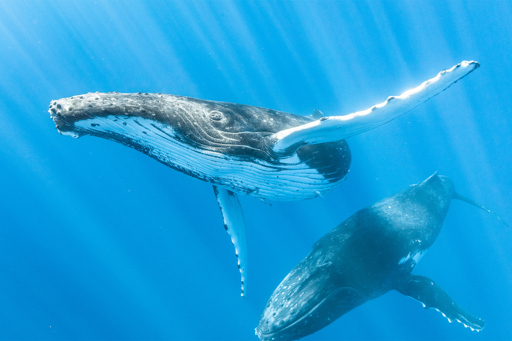
Seventy years ago, Le Monde du Silence, a film by Jacques Cousteau and Louis Malle, depicted the ocean as silent. Today, we know that the ocean is filled with the melodies of millions of vocalizing sea creatures, from the crisp snapping of shrimps to the complex singing and speaking of whales. In fact, the first life to vocalize with intent likely began in the sea. It is far from silent. Together, our careers span generations of ocean exploration. Sylvia has spent more than seven decades advancing ocean exploration and conservation, helping inspire the protection of critical marine ecosystems. And David has worked for more than three decades to better understand how marine life perceive their world, which has led him to a current focus with Project CETI translating the communication of whales. This is uncovering a vast depth and complexity in whale voices, which we are just beginning to understand. While there have been remarkable conservation successes, the overall trend is clear: the health of the ocean is declining faster than our efforts to protect it. Throughout our careers, we have witnessed extraordinary discoveries about marine life as well as humans’ ability to access even its deepest reaches, alongside dramatic changes to the ocean itself. We have celebrated conservation victories and scientific and technological breakthroughs. But we have also watched habitats disappear, species decline, and human impacts reach even the most remote corners of our oceans. David Gruber and Sylvia Earle in conversation for the Project CETI program, “The Deep…This article was originally published on Mongabay
From Conservation news via This RSS Feed.