

This article by Aníbal García Fernández originally appeared in the July 4, 2026 edition of Contralínea, a Mexican investigative magazine.
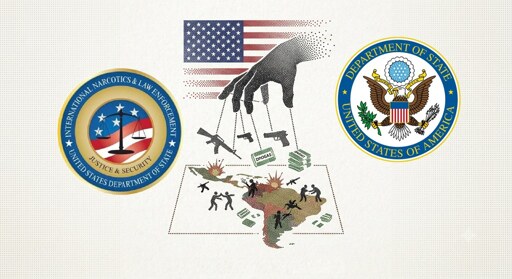
The United States’ interventionist strategy includes its drug-fighting policy, carried out not only through the operation of the DEA, but also through the Bureau of International Narcotics and Law Enforcement Affairs (INL). The INL depends on the State Department and operates through the consular network. Here, it is based at the U.S. Embassy, headed by former Green Beret Ronald Johnson. Its current director for Mexico is Katie Stana.
Stana is career staff within the State Department. Her profile highlights that she was a Pearson Foreign Policy Fellow in the office of Senator Chris Murphy; she was International Narcotics and Law Enforcement director at the Embassy in Islamabad; she was at the Embassy in Italy as a General Services supervisory officer; she was a consular/rotational economic officer at the Embassy in Ankara; and she was part of the Embassy in Montevideo. She graduated in 2016 from the National War College at Fort Lesley J. McNair and from the University of Virginia in 2002. In 2024 she left the consulate in Barcelona and later came to join the U.S. Embassy in Mexico.
INL Programs Funded in Mexico
According to the U.S. Embassy, the INL coordinated “all the projects included within the $2.3 billion budget of the Mérida Initiative.” Through it, it “provided equipment, technical assistance, and capacity building to Mexican law enforcement and judicial personnel” between 2008 and 2021, when the government of President López Obrador canceled that Mérida Initiative, considering it interventionist, and promoted the Bicentennial Understanding.
The INL’s strategy since the terms of Calderón and Peña Nieto was not only to collaborate with the federal government, but also with civil society organizations “in reducing drug demand and in promoting a culture of legality.”

The U.S. Embassy’s page describing the INL. Screenshot: U.S. Embassy in Mexico
Already during the presidential term of Andrés Manuel López Obrador, the INL funded at least 48 companies, NGOs, and universities for a total of $819.8 million in constant 2023 dollars. However, the main funding went to the State Department itself in Mexico, for just over $430.4 million. Of the 18 projects registered in the 2019–2024 period, one of the programs took 97.3 percent.
That project was funded with $418,613,634 so that the INL would “advance the national security interests of the United States by supporting bilateral, regional, and global programs that enable partners and allies to manage and address transnational threats at their source.”
According to U.S. government records, these programs “improve partner countries’ capacity to cooperate effectively with U.S. law enforcement, and address the underlying conditions, such as corruption and weak rule of law, that fuel state fragility.”
The University of Arizona had two projects, one for the “use of victim defense clinics and institutionalized training to promote competence in Mexican justice reforms,” funded with $736,856. The second project was funded with $76,712, and its objective was to “carry out a project to combat high-impact crimes in the Mexican states along the border between the U.S. and northern Mexico.”
In the U.S. government’s databases, information is often lost due to the sheer number of postings. That is the case for a funding category titled “Non United States Other,” which had funding of $67.8 million in the 2019–2024 period.
Figure 1. NGOs, companies, and universities funded by the INL (2019–2024)
Another of the NGOs that received INL funds is the Center for Studies on Teaching and Learning of Law (CEEAD), whose funding Contralínea reported on, and which the SAT (tax authority) also barred from deducting donations from taxes, along with México Evalúa and others. In the 2019–2024 period, the INL funded several projects to certify justice-sector operators in Mexico, which included the state prosecutors’ offices.
Training courses in Florida also stand out. Such is the case of the “Miami Dade 2022 Law Enforcement Training Mexico Covers” course, which had funding of $943,678. And yet another program funded in 2024 with $246,757 whose objective was “the transfer of money, property, services, or anything of value to the state, local government, or other recipient to carry out a public purpose of support or stimulation authorized by federal statute.”
Another course was for investigating alleged acts of corruption in which, again, the main purpose of the funding is for a supposed “public purpose,” and the amount was $22,633. As is known, the United States Agency for International Development (USAID) was canceled and downgraded to be integrated into the State Department, and the funding was redirected; among that redirection is what was spent on media outlets that supposedly investigated corruption.
Prosecutors’ Offices as Targets of Interference
The prosecutors’ offices have been the object of the intervention the INL exercises, both directly and indirectly, whether because it provides preparatory courses to police as well as to those in charge of implementing the new adversarial criminal justice system, judges, and prosecutors. It is even complemented by the courses given by the FBI. One of the emblematic cases was that of former prosecutor Carlos Zamarripa in Guanajuato, who boasted about the courses. This stands as a clear example of the failure these courses entail, since the administration of justice in that state—which also has high rates of violence—has produced no results.
Another of the organizations that received INL funds is Tojil. The resources were to “support the project to improve accountability and transparency in Mexico’s prosecutors’ offices.” On its website they define themselves as a “nonprofit organization dedicated to combating corruption and impunity through strategic litigation, investigations, and collaboration with the authorities to develop public policy.” Between 2021 and 2024, Tojil received $1,814,454. In 2024 its director Adriana Greaves, co-founder of Tojil, took part in leading the anti-corruption prosecutor’s office in Mexico City.
Upon Bertha Alcalde’s arrival at the Prosecutor’s Office, she named Adriana Greaves as head of the Internal Affairs Unit. Her plan includes the training and professionalization of staff, the establishment of agreements and clear criteria for institutional practice.
Greaves collaborated in the implementation of the Adversarial Criminal Justice System in the Attorney General’s Office and the National Security Commission. She was an editorial adviser to the newspaper Reforma in 2022. In addition, the profile kept on the Tojil website mentions that she was a member of the UN Convention Against Corruption (UNCAC Coalition), now called the Global Civil Society Coalition, and an implementer of programs of the Open Society, the coup-plotting National Endowment, USAID, and the INL.
In 2014 and 2015, she served as lead prosecutor in the Unit for the Implementation of the Adversarial Criminal Justice System of the then Attorney General’s Office (PGR). That criminal justice system, as Contralínea has already reported, relied on funding from the U.S. government.
Also part of Tojil is Estefanía Medina Ruvalcaba. She held several positions in the now-defunct PGR. She was an adviser in the Chamber of Deputies and in the Executive Secretariat of the National Public Security System. Like Greaves, she was a consultant for USAID at the U.S. Embassy in Mexico and for the United Kingdom Embassy. She worked at Reforma between 2019 and 2021, and since 2024 she has been vice president of the Anti-Corruption Commission of the International Chamber of Commerce Mexico.
Another of the companies contracted by the INL is General Dynamics, a company that is part of the military-industrial complex. It received $4,575,300 for “administrative and operating expenses of the Oversight Services Division that contribute to advisory and assistance services.”
The International Republican Institute (IRI), which belongs to the NED’s network of institutes, received $692,680 to “support Mexico’s New Justice and alternative justice mechanisms.”
As this weekly has already reported, another institution that receives INL funding is the Collaborative Public Policy Solutions Laboratory (Lab-Co), directed by Thomas Julien Favennec and Santiago Hernán Rosas Lorenzo, president and secretary respectively. According to U.S. government data, Lab-Co obtained the project “Strategic and tactical analysis, technical assistance, and certification.” It was funded in 2023 with $537,601, and in 2024 with $1,869,823.
Lab-Co offers a course at CIDE, the diploma in Design and Implementation of Public Security and Justice Policies. Lab-Co counts among its members Santiago Rosas, who has been identified as the one who designed Nayib Bukele’s Territorial Control Plan. In addition, its Advisory Council team includes Roberto Patiño, a Venezuelan opposed to the government, founder of the organization Mi Convive and one of those who supported the attempted coup d’état in Venezuela when Juan Guaidó proclaimed himself president. Journalistic investigations in Venezuela have pointed to a group belonging to the Fundación Futuro, linked to Leopoldo López’s Voluntad Popular, another opponent of the then government of President Nicolás Maduro, as part of the organizations that destabilize progressive governments.
Lab-Co brings together the same INL resources, Venezuelan opposition figures and coup-plotters, as designers of plans that ended up violating human rights in El Salvador, and who now design public policy for prosecutors’ offices and for the Executive Secretariat of the National Public Security System with INL resources.
Within the framework of the plan to review the states’ prosecutors’ offices, as part of the new work plan of the Attorney General’s Office, now headed by Ernestina Godoy, it would be ideal to review the agreements and accords established by these organizations funded by the U.S. government, if a different model of justice is intended. Among them—besides CEAAD and Lab-Co—are also Fortis Consultora, Fundación IDEA, and Chemonics International.
ILEA, Training Courses
Another key institution for understanding how judicial and security colonialism operates is the International Law Enforcement Academy (ILEA). This institution has academies for police, justice officials, prosecutors, and personnel linked to law enforcement tasks. It has six locations internationally, and one of the academies is in El Salvador.
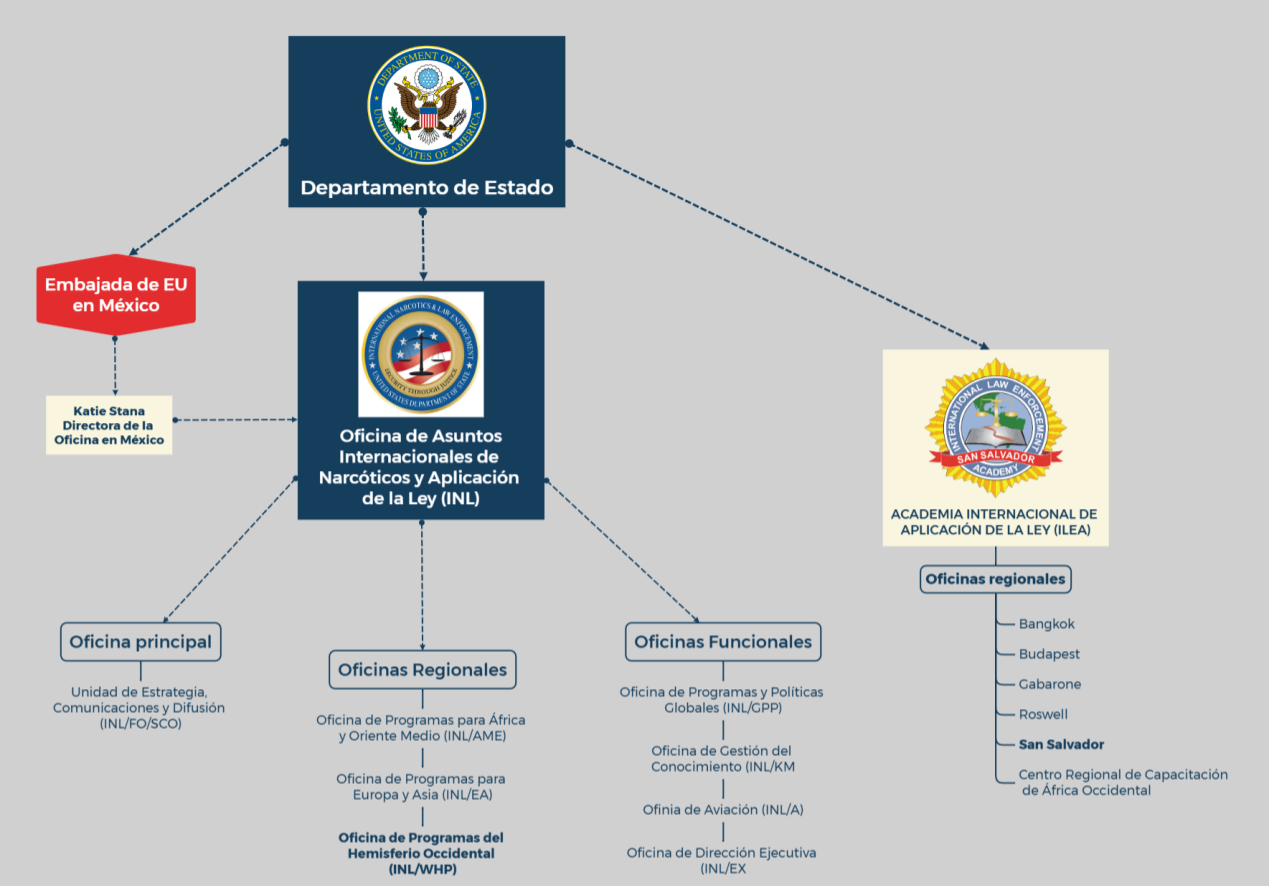
Figure 2. The INL’s presence in Mexico
Among the training courses that Mexicans have taken are: Advanced Special Investigations Unit; Investigations into the Diversion of Chemical Products; Emerging Trends in the Illicit Production of Synthetic Drugs and Production Techniques; Clandestine Laboratory Investigations Course; Cyber Exploitation and Investigation; Training in Detection of Fraudulent Documents and Interception at International Borders; Emerging Trends in the Illicit Production of Synthetic Drugs and Production Techniques; Executive Development for Strategy and Cyber-Financial Crimes; Executive Symposium on Policy and Development on Transnational Organized Crime.
When former Ambassador Ken Salazar ended his duties in Mexico, he reproached the López Obrador government for two things: one, the “hugs, not bullets” security policy; the other, not having accepted assistance on security matters.
With the available U.S. government data, it is clear that at least the resources spent by the INL in Mexico declined under the López Obrador government, from $232.4 million in 2019 to $98.8 million; and in the first year of President Sheinbaum, they keep dropping ($47.6 million). Perhaps that is why they seek agreements with state governments—agreements that violate sovereignty, the Constitution, and the National Security Law—to continue the interference by other means.
These elements are matters of national security amid the strengthening of punitive policies around the world, of interventionist practices that reach the judicialization of politics and the kidnapping of presidents through baseless court cases.
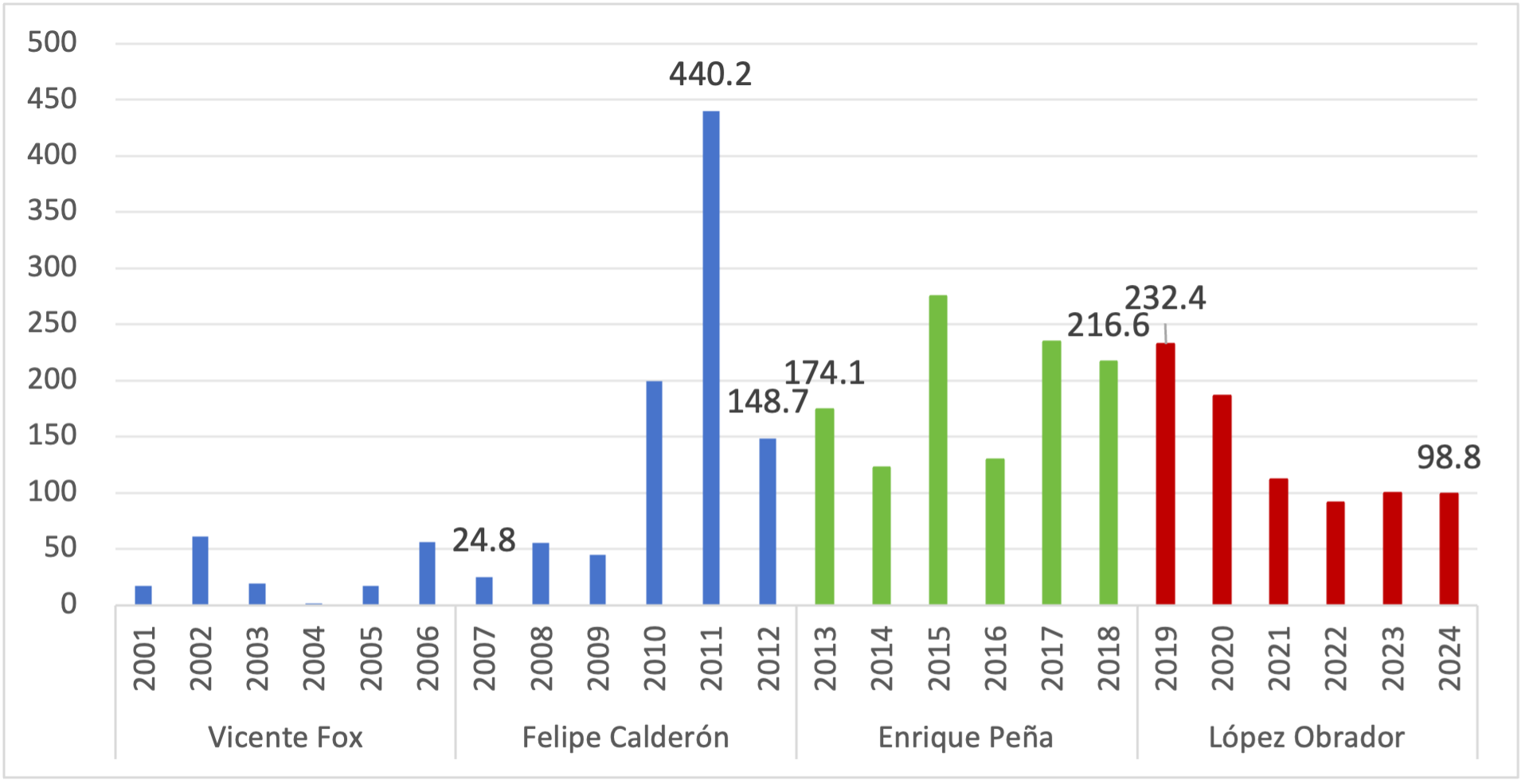
Chart 1. INL resources spent in Mexico by presidential term (millions of 2023 dollars). Source: author’s elaboration
Aníbal García Fernández holds a PhD, a master’s degree, and a bachelor’s degree in Latin American Studies from the National Autonomous University of Mexico (UNAM). Member of the CLACSO working groups “Crisis and World Economy” and “Violence in Central America.” His primary areas of study are the Inter-American Cold War, energy geopolitics, dependency and Latin American integration, militarism, and economic relations between the United States and Latin America.
-
The United States: Between Interference and the ‘Fight’ Against Drugs
July 6, 2026July 6, 2026
The State Department’s INL bureau spent $819.8M in Mexico under AMLO, funding SAT-flagged NGOs and Venezuelan coup-plotters behind Bukele’s territorial-control plan.
-

Morena Proposes Creating a “National Real Estate Alert” as a Strategy Against Property Seizures
July 5, 2026
Mexico City logged over 20,000 seizure investigations since 2020; the bill would instantly notify owners when someone tries to alter their property’s legal status.
-
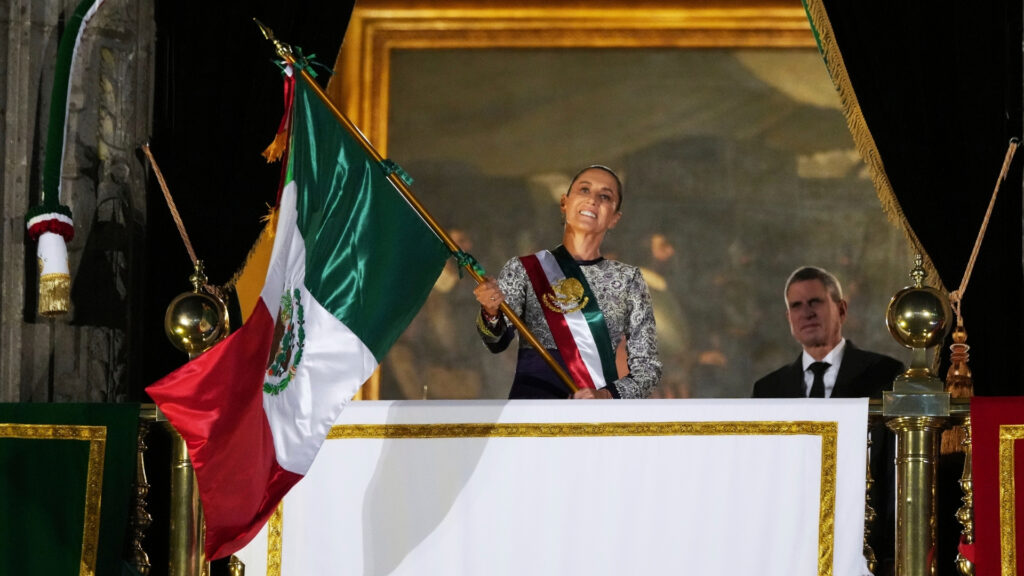
“All Countries Have the Right to Be Free”: Sheinbaum in Congratulating the US on Its Independence
July 4, 2026
Speaking at a Women’s Wellbeing event in Michoacán, Sheinbaum tied the US’s 250th independence anniversary to every nation’s right to be free and independent.
The post The United States: Between Interference and the ‘Fight’ Against Drugs appeared first on Mexico Solidarity Media.
From Mexico Solidarity Media via This RSS Feed.