

Camilo Lazo | National Chair of the American Party of Labor–
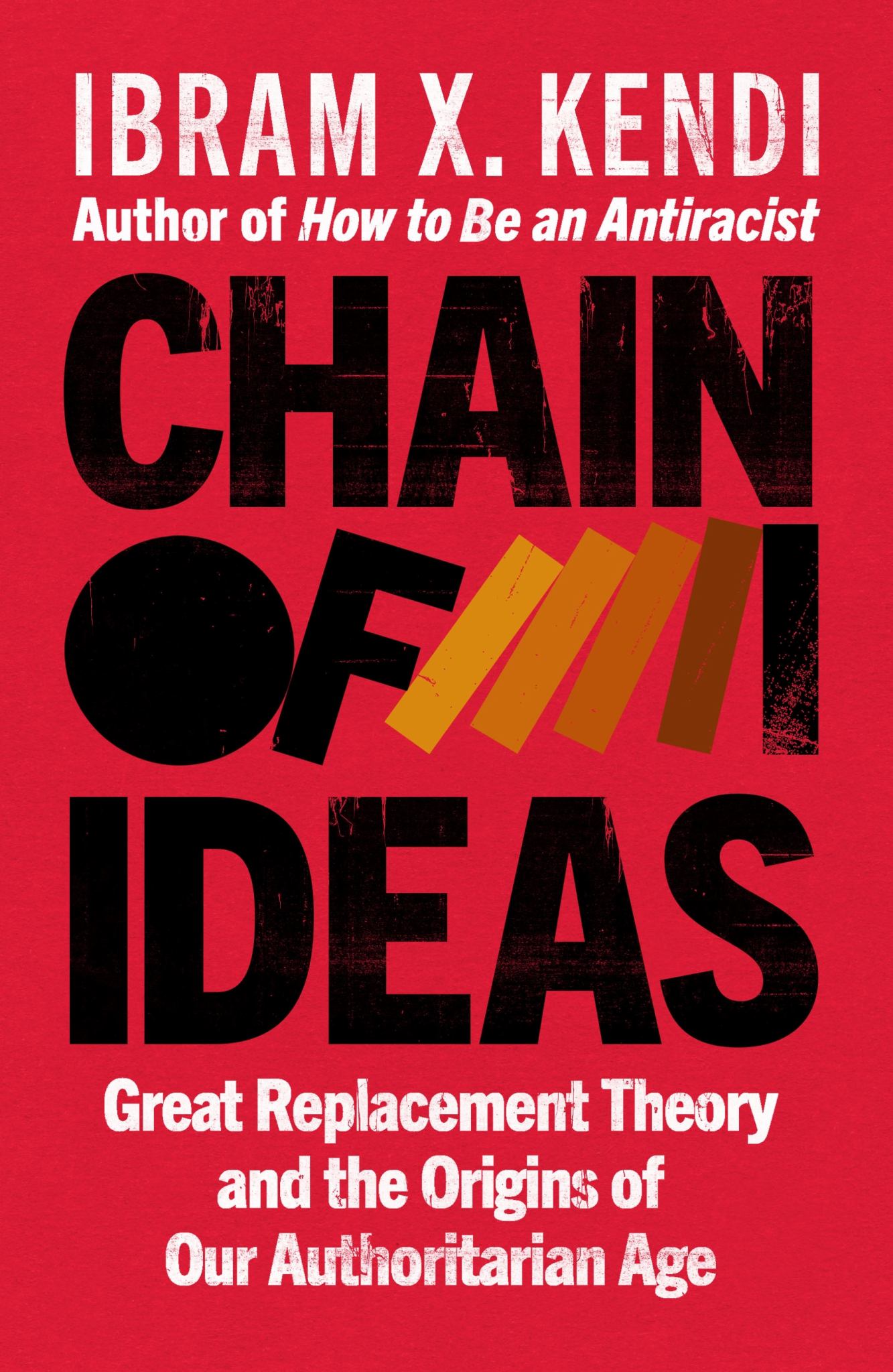
Front cover of Ibram X. Kendi’s “Chain of Ideas: The Origins of Our Authoritarian Age” (One World, 2026)
If one were to reduce Ibram X. Kendi’s Chain of Ideas: The Origins of Our Authoritarian Age to a single sentence, it would be. “I have only one thing to say to the so-called ‘Great Replacement.’ If people are being replaced, then perhaps it is because a social order incapable of feeding, housing, educating, or employing them deserves replacement.”
The publication of this book comes at a moment when the specter of authoritarianism once again stalks the globe. From the United States to Europe, from Latin America to South Asia, political movements once dismissed as fringe phenomena have assumed positions of influence and, in some cases, state power. Their rhetoric varies according to national circumstance; their symbols differ; their historical traditions are distinct. Yet, as Kendi argues, these movements are united by a common ideological thread: The belief that established populations are under existential threat from migrants, minorities, and demographic change. This doctrine, commonly known as “The Great Replacement Theory,” serves as the point of departure for his investigation.
Kendi’s central contention is straightforward. Great Replacement Theory is not merely one conspiracy theory among many others. Rather, it functions as an organizing principle around which a broader authoritarian/Neo-fascist worldview is constructed. Ideas about immigration, race, citizenship, nationalism, democracy, and violence become linked together in a self-reinforcing chain. It is this “chain of ideas” which gives the book its title and its analytical framework.
The subject matter is hardly new. Ever since the emergence of industrial capitalism, ruling classes and their political representatives have sought explanations for social crisis that divert popular attention away from the contradictions of the capitalism. When wages stagnate, employment becomes precarious, and communities disintegrate, the true explanation is that these conditions arise from the very nature of capitalism itself. Another “explanation” is that they arise because of foreigners, minorities, refugees, religious outsiders, or some hidden cabal conspiring against the nation. History demonstrates that the second explanation has often proven more convenient for those who benefit from the first reality.
This observation places Kendi within a long tradition of anti-fascist scholarship. Although Kendi himself is not a Marxist, and rarely employs Marxist terminology, his argument bears a striking resemblance to the classical Marxist interpretation of reactionary politics. Marxism-Leninism’s insight is that ruling classes confronted with crisis frequently attempt to redirect social anger away from economic structures and toward vulnerable populations. Racism, nationalism, and xenophobia become instruments through which class antagonisms are obscured.
Again, this is not to suggest that Kendi is a Marxist. He is not. Indeed, readers familiar with Marxist literature will quickly notice the idealist limits of his framework. For Kendi, ideas, not material conditions, occupy center stage. The book traces the genealogy and circulation of concepts, narratives, and beliefs. Capitalist development, economic restructuring, deindustrialization, and class conflict remain present, but largely in the background. The result is a work rich in intellectual history but weak in political economy.
This tension reflects a broader division within contemporary progressive thought. Since the collapse of the Soviet Union, much radical scholarship has shifted its focus from economic structures toward culture, identity, discourse, and representation. Kendi’s work belongs to this intellectual milieu. Like many contemporary historians, he excels at tracing the movement of ideas across national boundaries. He is less interested in examining the material conditions which permit those ideas to flourish.
There is a certain irony here. Great Replacement Theory is itself a profoundly material phenomenon. It thrives in regions hollowed out by deindustrialization. It flourishes among populations facing declining living standards. It gains traction wherever economic insecurity becomes acute. Yet, the economic roots of these anxieties often remain secondary to the ideological manifestations which most directly concern Kendi.
Marx famously remarked that men make their own history, but not under conditions of their own choosing. Kendi’s narrative occasionally reverses this relationship. Ideas sometimes appear as independent historical actors rather than as products of concrete socio-historical circumstances. The danger is that authoritarianism comes to be understood primarily as an intellectual error rather than as a political response to capitalist crisis.
Nevertheless, the strengths of Chain of Ideas are considerable. Kendi demonstrates an impressive command of the transnational nature of contemporary reactionary politics. Rather than treating authoritarian movements as isolated national phenomena, he reveals the extent to which they borrow from one another. Politicians, activists, media pundits, and sundry reactionaries participate in a global circulation of myths concerning demographic change, national decline, and cultural displacement. What emerges is a portrait of authoritarianism as an international movement rather than a collection of local grievances.
In this respect, the book recalls earlier efforts to understand fascism as a global phenomenon. During the interwar period, Georgi Dimitrov emphasized that fascism could not be understood solely through national history. It represented a broader response by threatened monopoly finance capitalism to social instability and political crisis. Kendi’s analysis differs significantly from Dimitrov’s, but both recognize that reactionary movements transcend national borders.
The question inevitably arises: Where does Chain of Ideas fit within the historiography of authoritarianism?
The Conservative interpretation generally views contemporary nationalist movements as legitimate reactions against globalization, immigration, and cultural change. From this perspective, replacement theory may be exaggerated, but the underlying concerns are considered reasonable. Kendi, rightly, rejects this position entirely.
The Liberal interpretation sees authoritarianism primarily as a threat to democratic institutions and constitutional norms. It emphasizes political polarization, misinformation, and the erosion of civic culture. Kendi shares much of this perspective and remains firmly within the liberal-democratic camp.
The Marxist interpretation differs from both. It regards authoritarianism neither as a justified reaction nor merely as a crisis of democratic norms. Rather, it posits authoritarian movements as products of underlying social contradictions generated by capitalism itself. Nationalism, racism, and conspiracy theories become ideological mechanisms through which economic discontent is redirected.
Kendi approaches the Marxist position but never fully embraces it. At crucial moments, one senses the presence of an argument struggling to emerge. He repeatedly demonstrates that replacement narratives gain power where economic insecurity is greatest. He repeatedly shows how elites manipulate racial fears for political purposes. Yet he hesitates to draw the conclusion toward which the evidence clearly points: That authoritarianism/fascism is not merely an ideological crisis but a systemic one.
This hesitation does not invalidate the book. But it does mark the limits of its perspective.
The greatest achievement of Chain of Ideas is that it restores seriousness to the discussion of contemporary authoritarianism. In an era dominated by social media outrage, partisan sloganeering, and intellectual superficiality, Kendi insists that ideas matter. He reminds readers that dangerous political movements do not emerge spontaneously. They are constructed. They evolve. They spread. They adapt. They possess histories.
The greatest weakness of the book is that it sometimes treats ideas as sufficient explanations in and of themselves. Marxists will undoubtedly ask “what social forces benefit from these ideas, what economic structures sustain them, and why they have become so influential at this particular historical moment?” Those questions remain only partially answered.
Yet, perhaps this criticism should not be overstated. Every historian writes from within a particular intellectual tradition. Kendi writes as an antiracist liberal historian confronting the rise of contemporary reaction. Judged according to that objective, Chain of Ideas succeeds admirably. It is ambitious, learned, accessible, and morally serious. Whether one agrees with all of its conclusions is ultimately beside the point.
The world described by Kendi is a world in which millions have been persuaded that their enemies are immigrants, minorities, and refugees. The Marxist asks a different question: “Who profits from that belief?”
Until that question is answered, the chain remains incomplete.
And yet, by tracing one of the most dangerous ideological currents of the twenty-first century from its origins to its contemporary manifestations, Kendi has provided an indispensable link.
References
Kendi, I. X. (2026). Chain of Ideas: The Origins of Our Authoritarian Age. New York: One World.
Marx, K. (1994). The 18th Brumaire of Louis Bonaparte. New York: International Publishers.
Dimitrov, G. (1972). The Fascist Offensive and the Tasks of the Communist International. New York: International Publishers.
Lenin, V. I. (1977). Collected Works, Vol. 25. Moscow: Progress Publishers.
Hobsbawm, E. (1996). The Age of Extremes: The Short Twentieth Century, 1914–1991. New York: Vintage.
Palmer, R. R. (1967). Age of the Democratic Revolution. Princeton, NJ: Princeton University Press.
From The Red Phoenix via This RSS Feed.