

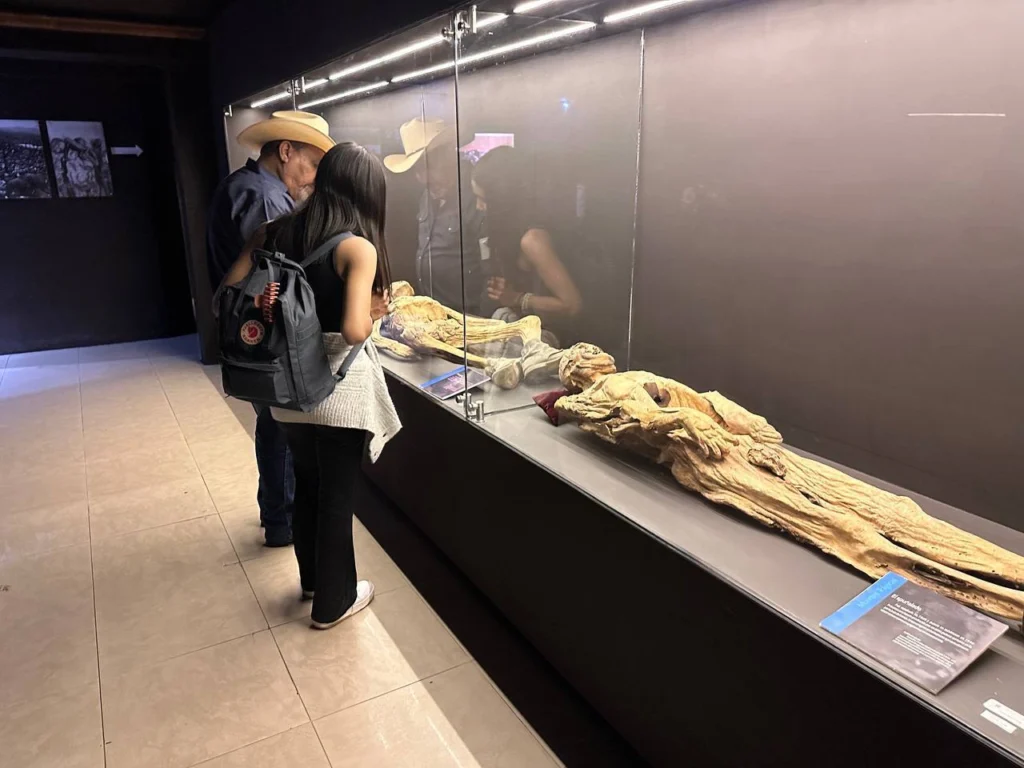
On July 1st, Bolivia Archaeology National Museum (Munarq) reopened its doors with the permanent exhibition ‘Eternal Roots, Living Legacies,’ an exhibition that highlights the connection between pre-Hispanic customs and current traditions of the Andean country.
RELATED:
Bogota’s National Museum Exhibits 1,194 Pre-Columbian Archaeological Pieces
After a revitalization process of nearly a year, supported by the Latin America Development Bank (CAF), Munarq presented the new exhibition, distributed across seven rooms, which explores the country rich pre-Hispanic heritage. The exhibition displays stone, organic, wooden, ceramic, and metal artifacts.
“Many customs we have in different regions of the country have been developed and are actually rooted in our past. The way we perform the ch’allar (blessing objects with alcohol), celebrate certain festivities, and believe in certain things, all have their pre-Hispanic origins,” stated archaeologist Rubén Mamani, a professional in Archaeological Collections at the repository.
The specialist added that these pieces represent the “legacies left to us by our ancestors,” which continue to manifest themselves in different ways and contribute to the nation’s cultural richness.
#culturaBO | National Geographic destaca las momias que resguarda en Museo Nacional de Arqueología de Bolivia. https://t.co/Pi0r1ZbSEm pic.twitter.com/cZZ8sdkdHV
— RC noticias (@rcbolivia) July 5, 2026
The text reads, “National Geographic highlights the mummies housed in the Bolivia National Archaeology Museum.”
The tour begins with the first hunter-gatherer inhabitants of what is now Bolivian territory, exhibiting arrowheads and a mural that replicates cave paintings. The second room addresses the first cultures from 2000 BCE emergence. The exhibit spans from the Inca period, showcasing ceremonial vessels, plates, and cups from the Chiripa, Wankarani, Tiwanaku, and Inca cultures, all achieved through the domestication of plants and animals that enabled settlement in fixed locations.
Subsequent spaces are dedicated to spirituality, ritual, and the connection with ancestors, as well as methods of communication, including quipus, a system of knotted and colored cords used for accounting. In the section on ‘Immortality’ and commemorations of the dead, the centerpiece is Saphi, the mummy of a 15th-century Inca girl from the Pacajes chiefdom in La Paz. This artifact was taken to the United States around 1890 and repatriated in 2019.
The final room also features an illa, or Andean deity carved in stone, an iconic figure illegally removed in 1858 and returned in 2014 by a Swiss museum. Mamani explained that originally this Andean stone illa or deity represents a woman, but when it was repatriated it was given another connotation, associating it as a precursor to the Alasita festival, the miniature wishes celebration.
#FromTheSouth News Bits| Bolivia: The organizations of the Cochabamba tropics met in response to the serious threats of the government of President Rodrigo Paz and its agenda of surrendering national sovereignty. pic.twitter.com/AY8nALNuko
— teleSUR English (@telesurenglish) June 24, 2026
From teleSUR English via This RSS Feed.