

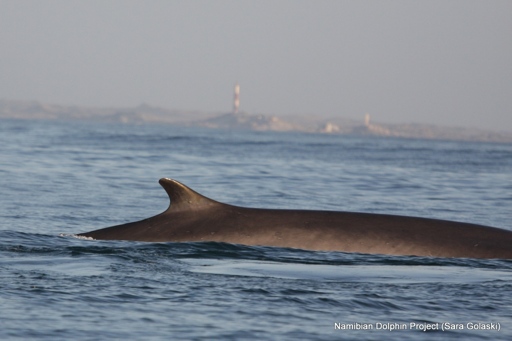
Sightings of blue whales and fin whales off Southern Africa’s Atlantic coast have increased in recent years, according to a newly published study. This could signal recovery of the marine mammals after being virtually eliminated from the area by commercial whaling in the 20th century, the study authors say. Scientists estimate around 350,000 Antarctic blue whales (Balaenoptera musculus intermedia) and some 725,000 fin whales (B. physalus quoyi) were killed in the Atlantic during the industrial whaling era from 1913-1978, driving both whales to near extinction. A research team led by Bridget James of the University of Cape Town, South Africa, set out to assess if both subspecies are recovering in the Benguela ecosystem in the southeastern Atlantic. It’s a stretch of water between the west coasts of northern Angola, Namibia and South Africa, where currents bring nutrients from lower ocean depths to the surface, producing rich blooms of krill, a marine crustacean that both whale subspecies eat. The team found that between 1964 and March 2025, there were 17 reports of blue whale sightings and one report of stranding in the region. They also recorded 76 fin whale sightings and six strandings. The blue whales were most often seen between late spring to summer (October-December) and autumn (March-April) in the Benguela ecosystem, while fin whales were seen year-round. While the number of sightings is still relatively low, 95% of them were recorded since 2012. James told Mongabay by email that the Benguela ecosystem is a migratory corridor between breeding and feeding grounds for the whales, and that…This article was originally published on Mongabay
From Conservation news via This RSS Feed.