

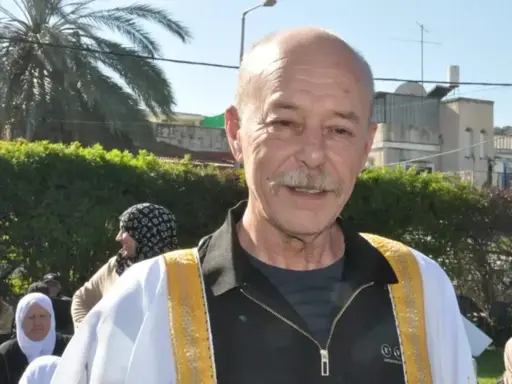
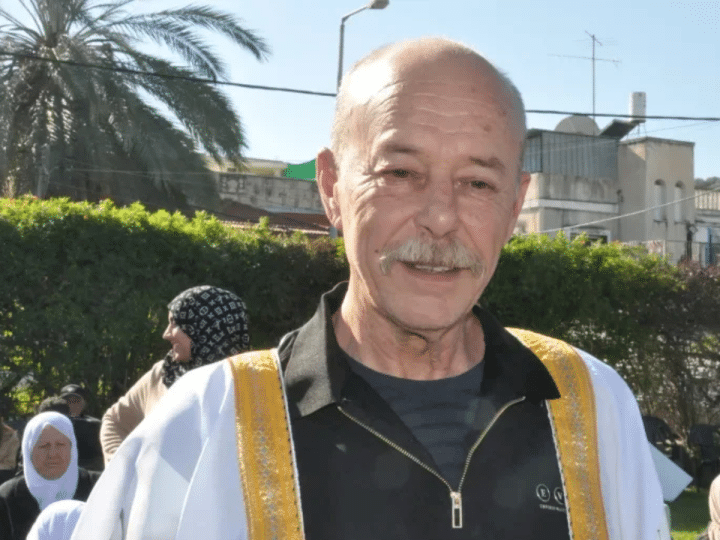
Maher Younis, a prominent Palestinian prisoner, who was released in January 2023 after spending 40 years in “Israeli” occupation prisons, has died. He was 68.
Abdullah al-Zighari, head of the Palestinian Prisoner’s Society, told the Canary:
Maher Younis was one of the enduring symbols of the Palestinian prisoners movement that remained unbroken despite decades of incarceration. He transformed the experience of imprisonment into a testament of patience, dignity and unwavering determination.
Younis was born in 1958 in the village of Ara within territories that had been occupied in 1948, and was affiliated to the Fatah movement.
At 25 years old, he was arrested shortly after his cousin Karim Younis, and the third defendant, Sami Younis. All three were convicted of murder for killing an “Israeli” soldier in the occupied Golan Heights three years earlier, in 1980.
But Palestinians view those such as Maher Younis, imprisoned in connection with the occupation, as political prisoners. They are thought of as freedom fighters, participants in a national liberation struggle against an unjust and brutal apartheid and colonial system.
This position is confirmed by United Nations General Assembly Resolution 37/43 adopted in 1982. It says Palestinians have the right to resist the Israeli occupation “by all available means, including armed struggle”.
Both Maher and Karim were sentenced to death by hanging. But a month later, this was changed to a life sentence. Then, in 2012, the life sentence was set to 40 years.
Palestinian symbol of resilience
Speaking about Maher, Al-Zighari said that throughout his imprisonment:
He remained a symbol of resilience, and played a significant role in the various chapters and collective struggles of the Palestinian prisoners’ movement.
Maher was known for supporting fellow inmates during his incarceration. He spent much of his time “liaising between fellow prisoners,” helping to maintain communication and resolving issues among inmates. He also participated in activities intended to preserve morale and dignity during his long-term imprisonment.
The Addameer Prisoner Support and Human Rights Association reported that he started a hunger strike in February 2013. This was for 11 days in Gilboa Prison to draw attention to prisoners arrested before the Oslo Accords were signed, and the lack of attention and priority they had received.
The Palestinian Authority promised that these prisoners, who numbered 109 at the time, would become a priority in negotiations, so Maher ended his hunger strike.
Ben-Gvir on Maher: ‘There will be no celebration…’
During his imprisonment Maher, like many Palestinian detainees at the time, pursued higher education. He gained a degree in political science. However, after 7 October 2023, as collective punishment, ‘national security minister’ Ben-Gvir put an end to education for Palestinian prisoners.
Sami was released in the prisoner exchange of 2011. Meanwhile, both Maher and Karim completed their full sentences and were released two weeks apart.
After his release, Maher said in an interview that he hoped for all prisoners to be freed while calling for Palestinian reconciliation and unity.
We all must work hand in hand and shoulder to shoulder for the liberation of Palestine and not only the unity of the prisoners but also their freedom. We must make a serious effort to free the prisoners…
The occupation’s police were given orders by Ben-Gvirat the time of Maher’s release.
We made it very clear there will be no celebration, no fireworks, no songs or music.
During his imprisonment, Maher was denied the opportunity to say farewell to his father, who died in 2008. He also had spent years in Israeli occupation prisons as a former prisoner.
According to Sada News, only weeks ago, Younis had been notified about a decision, issued by Benjamin Netanyahu, to revoke his “Israeli” citizenship. His lawyer, Khaled Muhajna, had been commissioned to file a legal appeal against the decision.
Prison conditions ‘worse they have ever been’
Many ex-detainees released from Israeli occupation jails suffer from health conditions. Al-Zighari says many detainees are transferred to hospital upon release because the conditions inside prison are so inhumane.
Some are extremely ill and face long-term medical problems, cancer and other diseases. Several months or years after release they lose their life. This has happened to many of the released prisoners, especially since 7 October 2023. It is because the conditions in the jails are the worst they have ever been.
Starvation, torture, severe overcrowding, absence of medical treatment, lack of sanitation and clothing — all these conditions are normal now for Palestinians behind bars.
The Palestine Center for Prisoners Studies has found at least 115 Palestinian detainees have died since October 7, 2023 while in the occupation’s jails. Ninety people have been identified.
Some, such as Khaled al-Saifi, 67, whose death was due to deliberate medical negligence, denial of essential medication and starvation while in custody, survive only a week after release.
Others, like Maher Younis, live for several years, before dying of medical conditions related to their time in detention.
What is clear is the death toll within the Israeli occupation’s prison system represents systemic, state-sanctioned violence, with absolutely no accountability. The international community must break its silence, demand accountability and make sure that “Israel” is punished for its violations of international law. As yet, this has not happened.
Featured image via SadaNews Agency
By Charlie Jaay
From Canary via This RSS Feed.
You must log in or # to comment.