

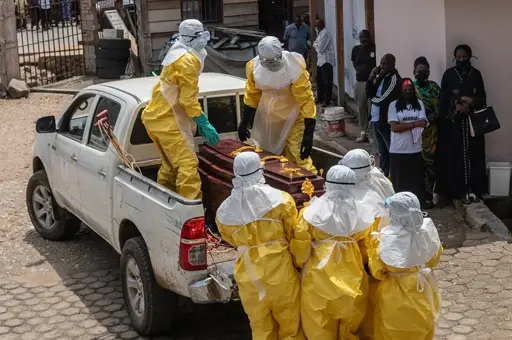
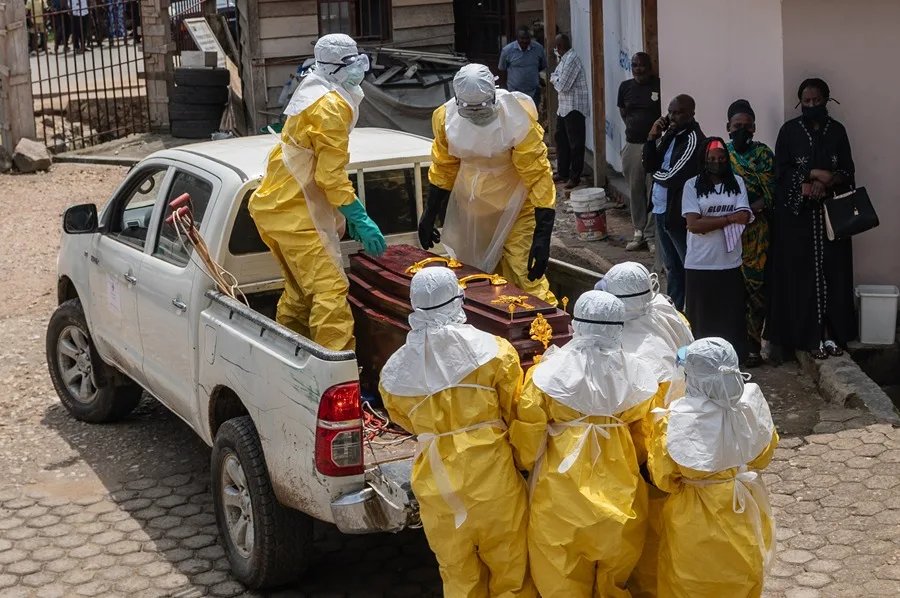
Congo Ebola outbreak kills 499 as cases surpass 1,500, with high fatality rate and regional spread raising global health concerns.
Related: At Least 18 Killed in Drone Strikes on Several Villages, Eastern DR Congo
Congo Ebola outbreak worsens with 499 deaths and rising infections
The Congo Ebola outbreak has escalated into a major public health emergency, with authorities confirming 499 deaths and 1,544 infections in the eastern regions of the Democratic Republic of the Congo (DRC). The outbreak, which began on May 15, continues to spread amid complex security challenges, raising concerns among health officials and international organizations.
According to official data released on July 4, the Congo Ebola outbreak is concentrated in the provinces of Ituri, North Kivu and South Kivu, areas already affected by armed conflict and limited healthcare access. The Ministry of Communication and Media reported that the epidemic has reached a fatality rate of 30.6 percent, underscoring the severity of the situation.
Health authorities confirmed that 213 patients have recovered, while hundreds remain under active medical treatment. Despite ongoing containment efforts, the Congo Ebola outbreak continues to pose significant risks due to mobility across borders and local resistance to health measures.
Congo Ebola outbreak response and containment efforts
Efforts to contain the Congo Ebola outbreak are being led by national health institutions in coordination with international partners. The National Institute of Public Health has intensified contact tracing, surveillance and public awareness campaigns to limit further transmission.
Authorities acknowledged that public mistrust toward medical directives remains a major obstacle. In response, local leaders and community organizations have joined campaigns to improve understanding of the disease and encourage cooperation with health protocols.
The Congo Ebola outbreak has also prompted diplomatic engagement. President Félix Tshisekedi emphasized the importance of cross-border cooperation, calling for coordinated regional action to prevent further spread. Neighboring countries are increasing monitoring efforts at border crossings and strengthening health screening systems.
External references for global health response:
Congo Ebola outbreak spreads amid conflict and regional risks
The Congo Ebola outbreak is unfolding in a region marked by persistent insecurity, which significantly complicates response efforts. Armed conflict in eastern DRC has hindered disease surveillance, access to affected communities and safe deployment of medical teams.
President Tshisekedi warned that instability in the region continues to undermine containment operations, making it difficult to track infections and ensure timely treatment. In response, South African President Cyril Ramaphosa supported calls for an immediate humanitarian ceasefire to facilitate health interventions.
The World Health Organization has classified the Congo Ebola outbreak as a public health emergency, noting that it is caused by the Bundibugyo strain, for which no widely authorized vaccine currently exists. This factor increases the complexity of controlling the epidemic.
The outbreak has already spread beyond the DRC, with Uganda reporting 20 cases and two deaths, while isolated infections have been detected in France. These developments highlight the international dimension of the crisis, as global health systems monitor potential further transmission.
Understanding Ebola and its impact
The Congo Ebola outbreak underscores the dangers posed by one of the world’s most lethal viral diseases. Ebola is transmitted through direct contact with the blood, bodily fluids or tissues of infected individuals or animals, making containment heavily dependent on strict hygiene and isolation measures.
Symptoms include high fever, vomiting, diarrhea and both internal and external bleeding, often leading to severe complications. Without prompt medical care, the disease can result in death, particularly in areas with limited healthcare infrastructure.
Treatment primarily involves supportive care, including hydration and symptom management, although vaccines and therapies exist for certain strains of the virus. Preventive strategies focus on isolation of patients, protective equipment for healthcare workers and minimizing exposure to contaminated materials.
The ongoing Congo Ebola outbreak highlights the need for sustained investment in healthcare systems, particularly in regions vulnerable to infectious diseases and humanitarian crises.
Geopolitical context
The Congo Ebola outbreak reflects the intersection of health emergencies and geopolitical instability in Central Africa. The persistence of armed conflict in eastern DRC complicates not only national response efforts but also regional and international coordination.
The spread of the outbreak to neighboring countries and even to Europe illustrates the global implications of localized health crises, reinforcing the importance of international cooperation and rapid response mechanisms. At the same time, the lack of a widely available vaccine for the Bundibugyo strain exposes gaps in global preparedness for emerging variants.
Efforts to establish a humanitarian ceasefire highlight how health crises can influence diplomatic agendas, pushing governments and international actors to prioritize cooperation over conflict. The outcome of these efforts may shape future strategies for managing epidemics in conflict zones.
From teleSUR English via This RSS Feed.