

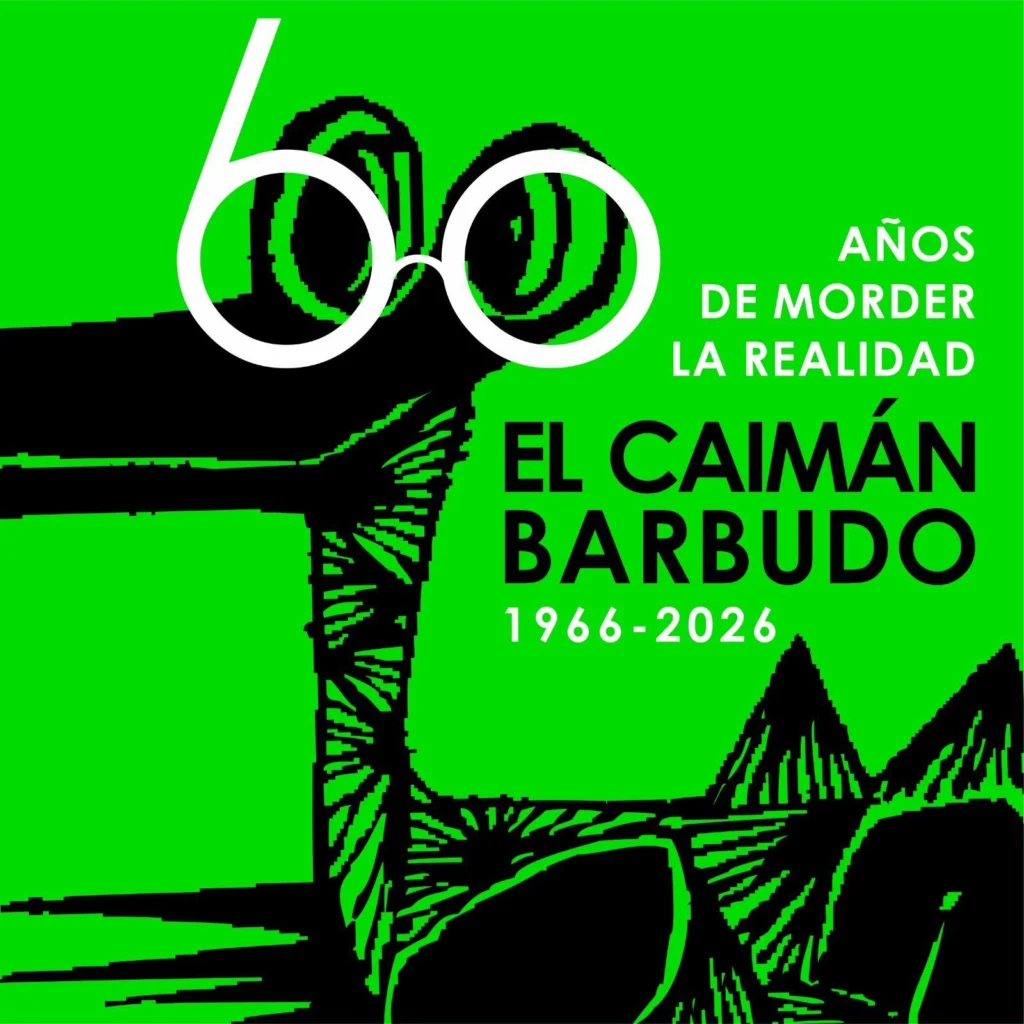
El Caimán Barbudo 60 years celebrates six decades shaping Cuban culture, debate, and literature with bold, critical and revolutionary voices.
Related: Havana Grid Failure Causes Widespread Power Outages in Cuba
El Caimán Barbudo 60 years: A legacy of cultural debate and revolutionary thought in Cuba
The El Caimán Barbudo 60 years milestone marks six decades of one of Cuba’s most influential cultural publications, a magazine that has shaped literary, artistic and intellectual debate since its founding in March 1966. Originally launched as a monthly cultural supplement of the newspaper Juventud Rebelde, the publication quickly evolved into an independent and defining platform for Cuban and Latin American cultural expression.
From its earliest editions, El Caimán Barbudo 60 years has been characterized by its commitment to critical thinking, artistic innovation and revolutionary discourse, becoming a space where generations of writers, poets, journalists and artists have contributed to shaping Cuba’s cultural identity.
The magazine emerged at a time when Havana was considered a cultural epicenter of Latin America, providing fertile ground for intellectual experimentation and debate. Over time, it expanded its reach, covering a wide range of artistic disciplines while maintaining its irreverent, fresh and socially engaged voice.
Origins and impact of El Caimán Barbudo 60 years in Cuban culture
The history of El Caimán Barbudo 60 years is closely tied to the broader cultural transformations that followed the Cuban Revolution. Its founding director, writer Jesús Díaz, envisioned the publication as a platform that would help define a distinct cultural path, independent from external ideological models.
Early contributors included prominent intellectuals such as Guillermo Rodríguez Rivera, who argued that true art could never be counterrevolutionary, emphasizing the importance of critical engagement rather than mere ideological alignment.
The first issues reflected a strong political and cultural intention, featuring essays on figures like Rubén Martínez Villena, Julio Antonio Mella and Pablo de la Torriente Brau, signaling a continuity of revolutionary thought through cultural production.
One of the defining moments in the magazine’s early history was the publication of the manifesto “Nos pronunciamos,” which declared that revolutionary art must be critical rather than apologetic. This position placed the magazine at the center of debates within Cuba and across Latin America about the role of culture in revolutionary processes.
El Caimán Barbudo 60 years and its role in artistic and intellectual movements
Throughout its history, El Caimán Barbudo 60 years has served as a meeting point for multiple artistic and intellectual movements. It played a key role in promoting the Nueva Trova movement, maintaining close ties with musicians such as Silvio Rodríguez and contributing to the broader development of Latin American protest song traditions.
The magazine became a platform where poets, storytellers, illustrators and journalists could experiment with new forms of expression, often addressing pressing social and political issues. It functioned not only as a publication but as a cultural institution, fostering dialogue between creators and audiences.
Writers such as Luis Rogelio Nogueras, Víctor Casaus, Raúl Rivero and many others found in the magazine a space for critical reflection and artistic exploration. Its pages captured the pulse of Cuban society, documenting its transformations, contradictions and aspirations.
The publication also stood out for its openness to debate. Controversial topics were not avoided but embraced, with opposing viewpoints often published side by side. This approach reinforced its identity as a forum for intellectual exchange and critical inquiry.
A collective project and editorial philosophy
A defining feature of El Caimán Barbudo 60 years has been its collective editorial process. Former editor Paquita de Armas described the magazine as a team-driven project, where decisions were made through open discussion and critique.
Editorial meetings involved rigorous analysis of each issue, with participants encouraged to question, debate and refine content collectively. This process ensured a high level of critical quality and fostered a culture of accountability and collaboration.
The magazine also pioneered investigative and literary journalism techniques, influenced in part by figures like Paco Ignacio Taibo II. Interviews, essays and reports were often developed collaboratively, reflecting a shared commitment to depth and rigor.
In addition, the publication expanded into cultural events and gatherings, including “peñas” where artists, writers and audiences could engage in dialogue, music and debate. These spaces extended the magazine’s influence beyond print, reinforcing its role as a living cultural organism.
Voices, memory and continuity
Over six decades, El Caimán Barbudo 60 years has accumulated a vast archive of cultural memory. Its pages have featured interviews and contributions from major figures such as Roberto Fernández Retamar, Pablo Milanés and Chico Buarque, among many others.
The magazine has also played a crucial role in supporting emerging talent. Through initiatives like the section “Por primera vez,” it provided a platform for young writers and artists, many of whom later became recognized figures in Cuban culture.
Figures like Bladimir Zamora embodied the spirit of the publication, combining critical thinking, artistic passion and a commitment to social transformation. His work in promoting music and poetry, particularly within the Nueva Trova movement, left a lasting impact on the magazine’s identity.
Today, under the direction of Yasel Toledo Garnache, El Caimán Barbudo 60 years continues to evolve, adapting to new media landscapes while preserving its foundational values of critical inquiry and cultural engagement.
Geopolitical context
The trajectory of El Caimán Barbudo 60 years reflects broader dynamics within Cuban and Latin American cultural politics. As a publication deeply rooted in revolutionary ideology, it has navigated tensions between state institutions, artistic freedom and international influences.
Its emphasis on critical debate and cultural autonomy distinguishes it from more orthodox models of cultural production, particularly those aligned with Soviet-era frameworks. In this sense, the magazine represents a distinctive approach to socialist cultural expression, one that prioritizes dialogue and diversity of perspectives.
At a regional level, its connections to movements like Nueva Trova and Latin American protest music highlight the role of culture as a tool for political expression and social transformation. The magazine’s history underscores the importance of independent cultural spaces in shaping public discourse across Latin America.
From teleSUR English via This RSS Feed.