

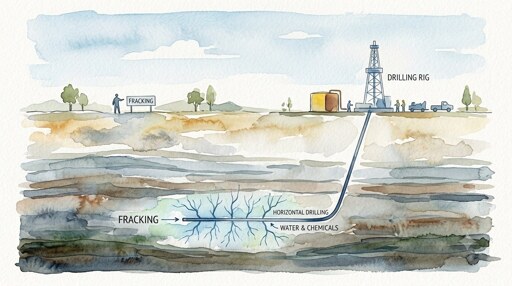
This article by Nancy Flores originally appeared in the July 4, 2026 edition of Contralínea, a Mexican investigative journalism magazine.
The report that the special commission of scientists, leading public universities, and government energy institutions presented to President Claudia Sheinbaum Pardo —to determine whether fracking exists with new, less-polluting technology that uses less water, and which could be applied to the exploitation of Mexico’s unconventional gas— is not conclusive, reveals Fabio Barbosa Cano. That means that this commission, convened by the Office of the Presidency through the Ministry of Science, still has not found a technology with those characteristics, he indicates.
The researcher from UNAM’s Institute of Economic Research maintains that this is because the supposed new hydraulic-fracturing technologies —known as electric fracking and cryogenic fracking, which would reduce the use of large volumes of fresh water or replace it with salt water or nitrogen— are only in the pilot-testing phase, and the global fossil-fuel industry has not yet employed them on a massive scale, so their effectiveness is unknown.
The sector expert —who has studied Mexico’s oil and gas reserves, the geology of the deposits, and the characteristics of the national and global industry and market for more than five decades— warns that the techniques proposing to use recycled water or seawater have failed to bring down costs, so they are still not economically viable for the exploitation of shale gas. Another problem added in that scientific analysis, he adds, is that of Mexican geology. This is because it would represent a great difficulty for gas-extraction wells to be successful.
The Engineering School academic emphasizes that the commission convened by President Sheinbaum involved UNAM, the Metropolitan Autonomous University, the National Polytechnic Institute, the Mexican Petroleum Institute, and 17 internationally renowned researchers. He also recalls that the report has not yet been made public, but indicates that, according to what some of the participants have told him, it “is not conclusive.”
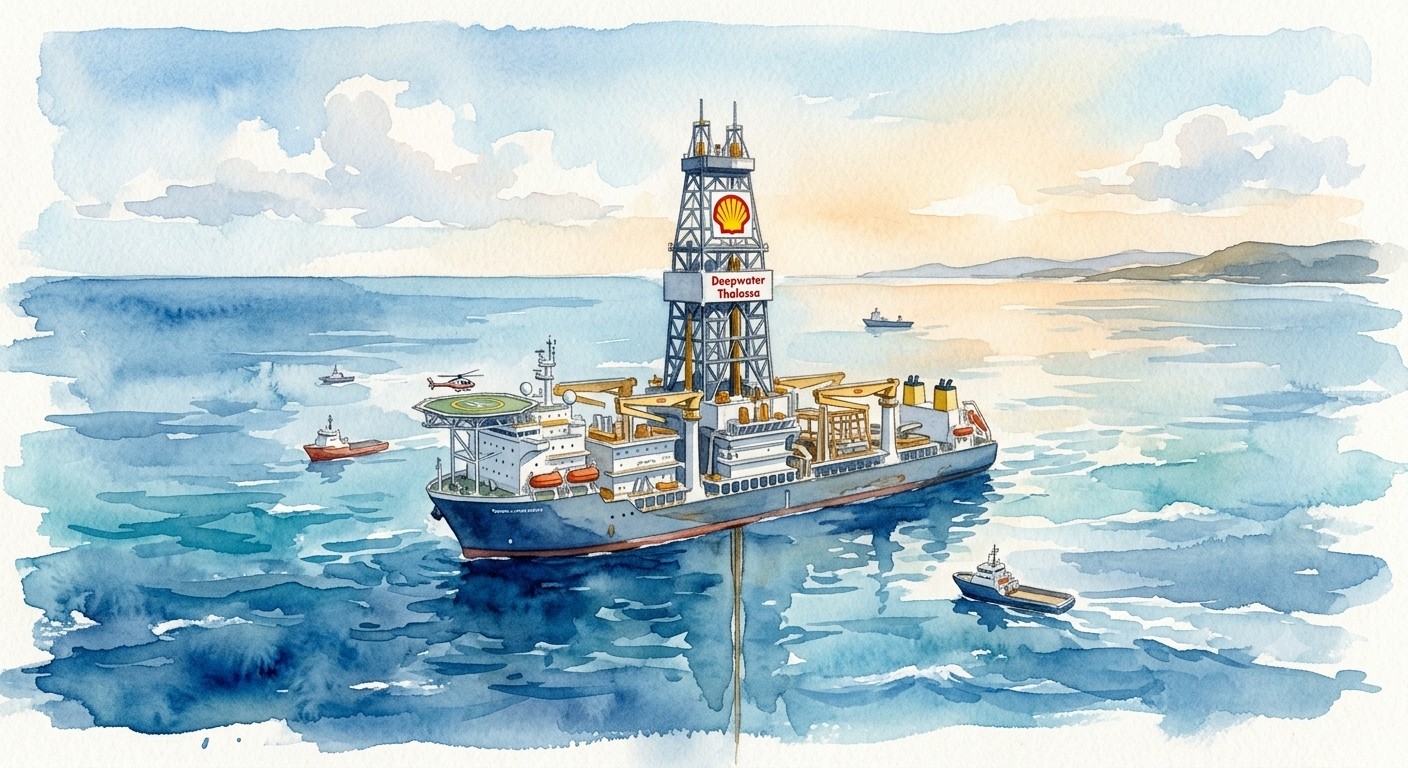
Illustration: Contralínea
This is because it “only points out conditions that the project must meet.” For this reason, Barbosa Cano predicts it will be deferred or canceled. After acknowledging himself as an open opponent of that technology because of the environmental damage it causes, the oil expert hopes that the possibility of Mexico using hydraulic fracturing to exploit shale gas will be definitively discarded.
The deferral “would be very good news because, in fact, some of the reports delivered to the president point out that we have great possibilities of exploiting hydrocarbons, oil, and gas in other locations, with many other characteristics. We have other projects and the locations.” On this last point, he stresses that location is the culminating point of the exploration process, since it determines where drilling should take place, and that information derives from scientists’ studies and the knowledge of multidisciplinary personnel.
The future of Petróleos Mexicanos, he indicates, is very promising because the country has very significant potential, with virgin fields. Nevertheless, he points out that the peculiarities of the strategic resource must be taken into account, since it is very heavy oil, which entails high development costs, because it has to be mixed with light crudes acquired abroad.
In an interview with Contralínea, Barbosa Cano also observes that another difficulty for this fracking project is private investment: this is because the business is not attractive to private capital. On this point, he explains that the transnational companies that currently hold concessions —derived from the privatization driven by Enrique Peña Nieto’s government through the oil rounds— have practically given up on exploiting unconventional gas, due to the multimillion-dollar failures they have faced in their first attempts.
In addition, he highlights that magnate Carlos Slim’s announcement that his companies —Grupo Carso and GSM Bronco— will not participate in fracking, considering it an “irrational business,” would represent one of the biggest brakes for Petróleos Mexicanos, because those companies have positioned themselves as its largest private partners.
On this point, the researcher notes that Grupo Carso and GSM Bronco not only hold blocks auctioned in Peña Nieto’s oil rounds and dozens of contracts with Pemex, but that they have recently acquired Grupo R’s platforms —a consortium headed by businessman Ramiro Garza Cantú, which dominated the oil sector for years— thereby consolidating themselves as the private companies with the most infrastructure for exploiting fossil fuels in the country. Hence, Slim’s announcement that he will not participate in fracking would be a constraint for the public oil company.
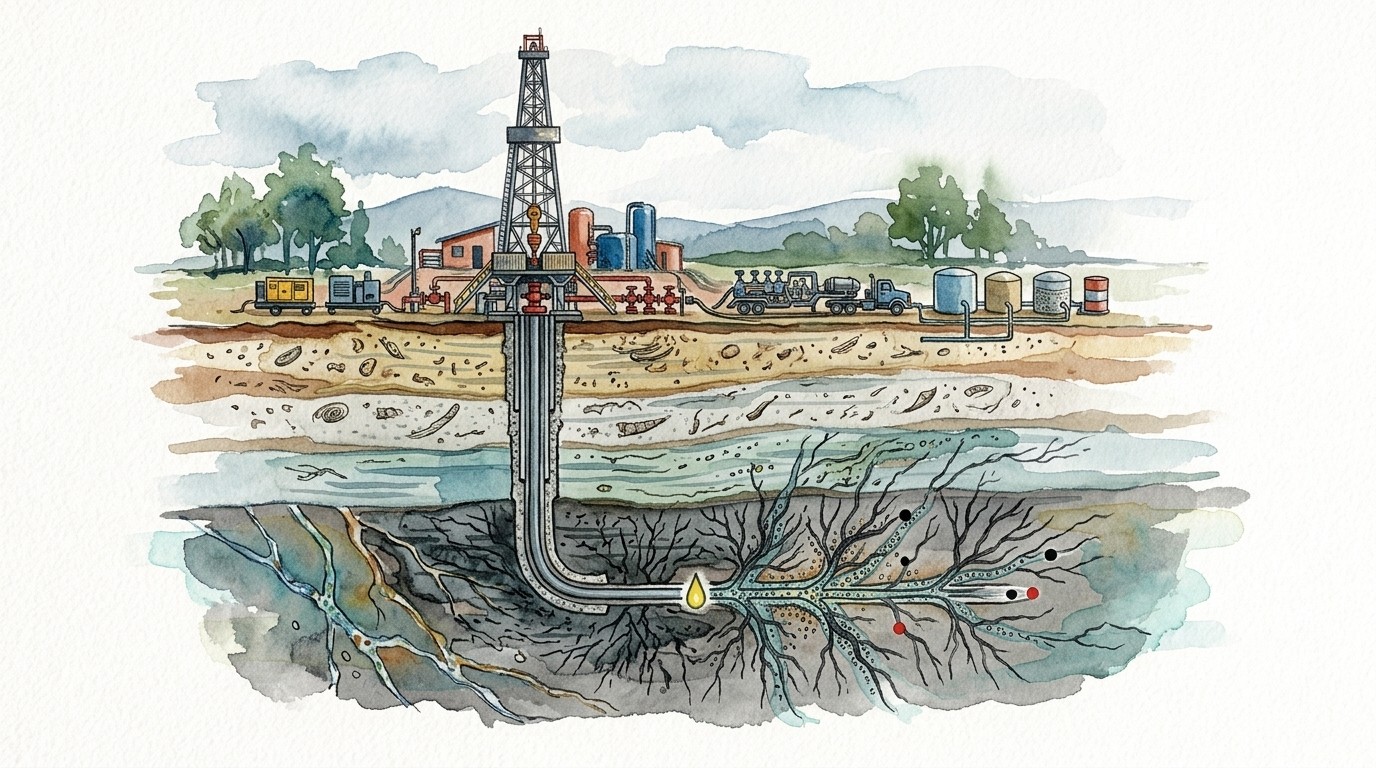
Illustration: Contralínea
He also highlights that, in his plan to attract private investment, Coahuila governor Manolo Jiménez made an international tour in mid-April in search of investors for what he called “the Coahuila project” —aligned with the federal government’s project— and found no allies among the transnational oil companies. Upon his return, he announced that the possibility of foreign companies developing projects of that nature was being postponed for five years.
Regarding the failures in the sector that would make the country unattractive for hydraulic fracturing, Fabio Barbosa cites the experience of Miguel Galuccio, founder and CEO of Vista Energy, one of the main developers of the Vaca Muerta project (Argentina): in Macuspana, Tabasco, they conducted fracking tests in two fields with unconventional formations, without success.
Another company that tried to apply this technology is Lewis Energy, which has had success with fracking in the fields of Texas, United States, but which in the adjacent fields on the Mexican side has not found these possibilities, nor the same level of richness. This is because there is great heterogeneity in the geology. On this point, the researcher warns that gas fields are not homogeneous, so it is not at just any point where drilling takes place that the possibility and the volumes of the adjacent fields will be found.
These same difficulties have been encountered, he explains, in Mexico’s deep waters. As an example, he presents the case of the French company Total, which won concessions in Peña Nieto’s rounds and, when it tried to exploit the resource, failed spectacularly, because there were five unsuccessful wells in a row.
Barbosa Cano stresses that each failure of the industry costs millions of dollars. And he continues presenting similar experiences, such as the one the transnationals Shell and Chevron had in the country’s deep waters: in 2021 they brought in, as partners, a drilling ship called Deepwater Thalassa, which includes a technology that had never been seen in our country. “The point was that the ship had two drilling towers, and while one was drilling at extreme depths at the edges of our exclusive economic zone, in a region we call the ultra-deep —which is closer to Havana than to Mexico— the other tower was doing the cleaning and drilling work, changing the barriers, and so on. In such a way that it never stopped working; everything was automated, no personnel, no workers whatsoever.”
He adds that Shell had enormous confidence that it would manage to extract 900,000 barrels a day in deep waters alone —”with everything that meant for the outlook of Mexico’s oil industry”— but it did not achieve it. On this multimillion-dollar failure, Barbosa Cano indicates that there is not much information, but it has been learned that it was a matter of geology, due to the existence of salt masses that shifted and covered the deposits accumulating organic sediments, which are transformed into petroleum, oil, or gas. “What happens with salt? Salt is a non-rocky body that clogs the pipe and hampers drilling: it does not allow the machinery, let’s say, to operate normally, but rather jams it.”
The researcher states that this landscape of industry failures negatively affects the mood for investment, and explains why Carlos Slim himself describes that business as something “irrational.” For this reason, he believes that Pemex will not be able to carry through the project to exploit unconventional gas with fracking.
On this point, he notes that the state oil company cannot exploit these shale-gas fields on its own, since it not only lacks the technology and infrastructure, but also does not have sufficient resources to fund the drilling of wells, regardless of whether they succeed or not. And he attributes this above all to how indebted Pemex was left during the neoliberal administrations.
At her morning press conference this past June 24, President Sheinbaum Pardo confirmed that the working group on the unconventional-gas issue already has a first analysis, which she described as follows: it has “a first advance: on what type of technology is used now, where it is feasible, where it is flatly not feasible to do it in Mexico, even if there are gas reserves, for environmental reasons; the prior considerations that must be taken; what characteristics it must have, whether there is water, whether there is no water, where the water must come from, how the water must be recycled. So, they have a first result, which we are going to present here, because we always want to be very open.”
The head of state noted in advance that this is a first report because the scientists, as well as the universities and institutions convened, will be asked to carry out a second phase of research to deepen this knowledge.
In addition to committing to listen to those who oppose fracking, Sheinbaum Pardo warned: “for us it is also very important that, even though gas consumption for electricity generation is going to be reduced, energy sovereignty is very important. We are seeing it in the world: guaranteeing that Mexico has its own energy sources is very important, very important. And there are three elements, it is: energy sovereignty, social justice, and also reducing environmental impacts. So, all three must be taken into account.”
-
Scientific Commission’s Report on Fracking Is Not Conclusive
July 4, 2026July 4, 2026
UNAM’s Fabio Barbosa says the commission still hasn’t found viable low-water fracking tech; Carlos Slim calls the business ‘irrational.’
-
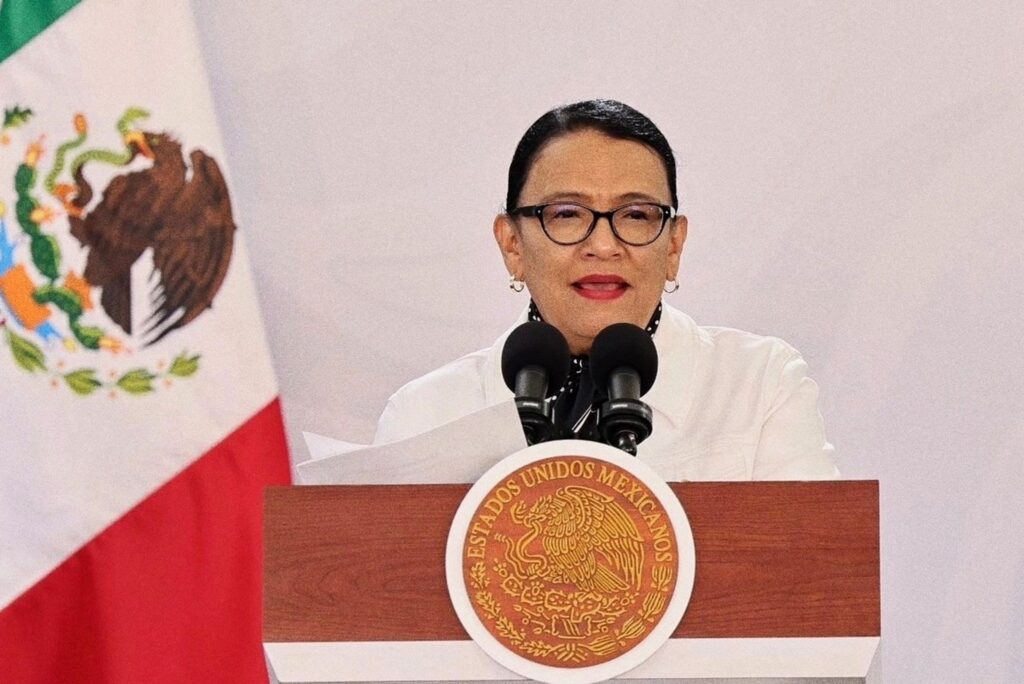
Wellbeing Fairs and Delivery of Millions of Items for the Population, Actions of the Michoacán Plan for Peace and Justice
July 3, 2026July 3, 2026
Rosa Icela Rodríguez reported 77 fairs in 68 municipalities, 414 guns swapped for cash, and 842,287 Michoacán scholarships worth 5.7 billion pesos.
-
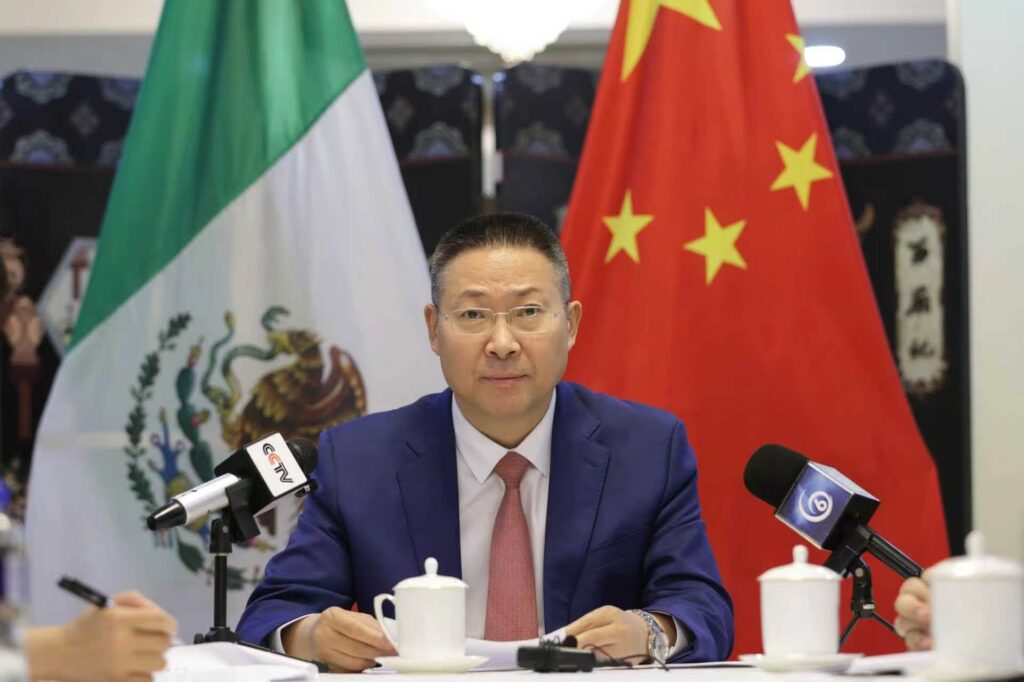
Communist Party of China Reaffirms Its Commitment to Mexico to Deepen Political and Cultural Cooperation
July 3, 2026July 3, 2026
At the CPC’s 105th anniversary, Ambassador Chen Daojiang touted 5% Q1 growth and Chinese-built light rail now ferrying World Cup fans between Mexican cities.
The post Scientific Commission’s Report on Fracking Is Not Conclusive appeared first on Mexico Solidarity Media.
From Mexico Solidarity Media via This RSS Feed.