

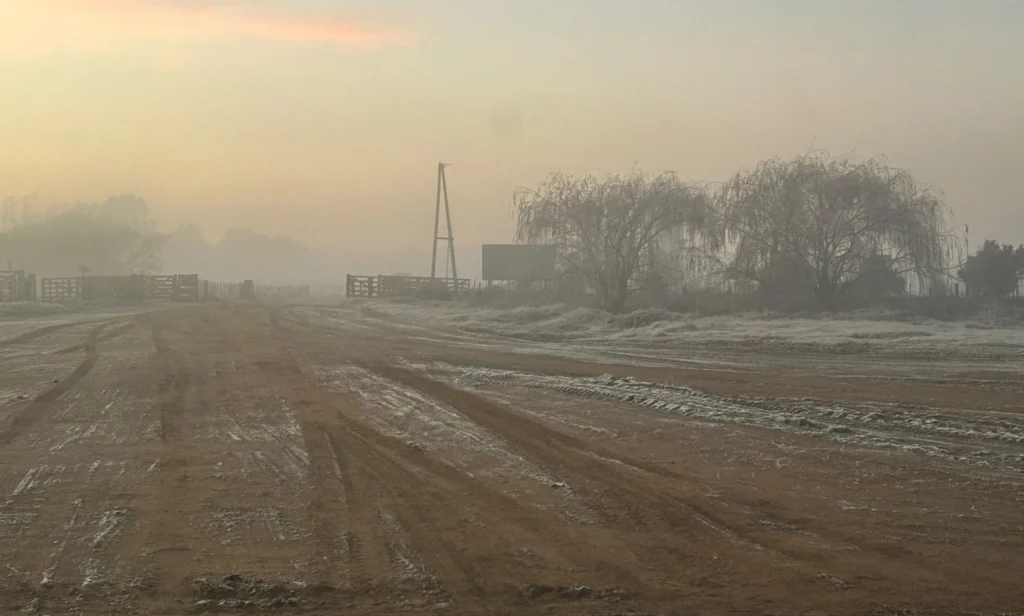
The Brazil’s National Institute of Meteorology issued this Friday alerts for freezing conditions and snowfall in southern states, warning of severe impacts on vulnerable populations and agricultural sectors.
Brazil’s meteorological authorities on June 3 issued maximum alerts after a powerful polar cold front caused historic snowfall and below-zero temperatures in southern states, threatening vulnerable communities and vital agricultural sectors.
The massive and potent polar cold front is currently moving directly over the meridional states of Rio Grande do Sul, Santa Catarina, and Paraná.
RELATED: Peru Prepares for Climate Impact, Declares Emergency for 796 Districts
According to the latest official reports released by the National Institute of Meteorology (Inmet), this intense atmospheric system is responsible for registering temperatures well below 0 °C in several high-altitude towns and cities across the southern territory.
Meteorological specialists have confirmed that this severe polar wave will not be limited to the southernmost tip of the South American continent. The system is triggering a widespread atmospheric event known in Brazil as “friagem”, a term describing the sudden and abrupt entry of polar air masses into geographic areas that typically experience tropical, warm and humid climates year-round.
AVISO DE FRIO | Nova massa de ar frio nos próximos dias vai prolongar o período de temperaturas baixas. Veja o que esperar e como a nova incursão de ar frio se compara com a de agora.
https://t.co/gP76ySnxM2 pic.twitter.com/7eRYf64V8d
— MetSul.com (@metsul) July 3, 2026
According to the official tracking models, the dramatic thermal drop is expected to advance rapidly over the next few days. The freezing air will reach the central-western state of Mato Grosso do Sul, the southern and western regions of Mato Grosso, and will eventually penetrate the southwestern boundaries of the vast Amazon region, bringing historic cold to tropical latitudes.
Severe Weather Impact
This unprecedented polar invasion occurs immediately after several consecutive days of heavy, torrential rains that battered Rio Grande do Sul and Santa Catarina. These southern states were previously hit hard by severe thunderstorms, violent wind gusts, and destructive hail, all associated with a stationary frontal system that dominated the regional weather pattern.
Weather experts warned that these freezing temperatures will remain constant throughout the entire weekend. They also pointed out that the wind chill factor across the three southern states will feel significantly colder than the actual temperatures shown on the thermometers, driven by the intense velocity of the icy polar winds sweeping the region.
The sharp temperature decline is also projected to impact the heavily populated southeastern states of São Paulo and Minas Gerais, as well as major areas of the Central-West. In these regions, thermometers are expected to plummet by several degrees compared to the relatively mild temperatures registered during the initial days of this week.
— MetSul.com (@metsul) July 3, 2026
Urgent Protection Measures
Faced with this dangerous climatic emergency, healthcare professionals and civil protection units have advised the public to take immediate precautions. Special focus and resources must be directed toward safeguarding highly vulnerable populations, specifically children, elderly adults and people experiencing homelessness, who lack the socio-economic means to withstand extreme hypothermia risks.
Additionally, regional agricultural agencies have issued emergency recommendations to local farmers and producers. They suggested implementing immediate protective measures to shield sensitive crops from the devastating impact of the snowfall and frost, which threaten to destroy vast plantations of seasonal vegetables, fruits, and other delicate winter cultivations.
From teleSUR English via This RSS Feed.