

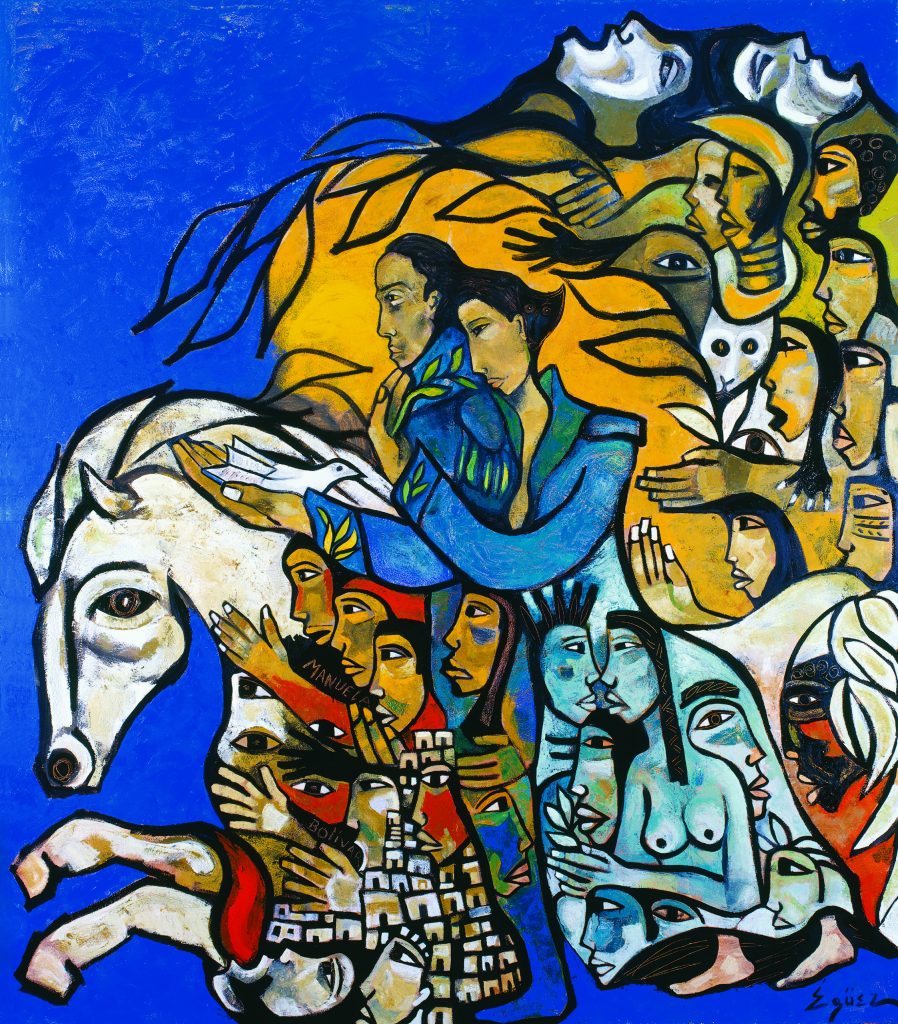
Pavel Égüez, La Patria Naciendo de la Ternura [The Homeland Born Out of Tenderness], Caracas, Venezuela, 2006.
Dear friends,
Greetings from the Nuestra América Office of Tricontinental: Institute for Social Research.
This June, we celebrate the bicentennial of the Amphictyonic Congress of Panama, the beginning of the unity and integration of Nuestra América. This gathering sought not only to reaffirm the independence won in the war against the Spanish Empire, but also to advance a project of deep social transformation that would overcome harmful legacies like slavery. It aimed to become a contribution toward achieving a universal equilibrium in which relations between nations could be conducted t without the interests of one being imposed on another. To comment on the importance of this historical milestone for our contemporary struggle, we asked Georgette Kuri—writing from Mexico, where the congress held its final sessions—to share her reflections with us:
Two hundred years after the Amphictyonic Congress of Panama convened by Simón Bolívar, we reclaim it as the first dream of Nuestra América and as the starting point of the great task that has been, then as now, to achieve Latin American unity. The weight of the United States, the ambivalence of Mexico, and the Latin American territories remaining in the neocolonial and imperialist crosshairs continue to pave the rocky path to our emancipation. However, our revolutionary agency and a clear understanding of the obstacles that have accompanied us throughout history are the lights that must guide our steps.

Alfredo Sinclair (Panama), Mujer Con Cesta De Pescado/[Woman with Fish Basket], (Unknown location).
Starting Point: The Amphictyonic Congress
Multiple factors contributed to the failure of the Amphictyonic Doctrine and its project of Latin American unity undertaken by Bolívar: the external influence of the United Kingdom and the United States, the diversity of stances among Hispanic American countries, the lack of ratification by governments, the territorial dispute between the Empire of Brazil and the United Provinces over the Banda Oriental, Peru’s invasion of Bolivia, Chile’s abstention, the embryonic Federal Republic of Central America, and Mexico’s insistence on hosting the Assembly and defining it as transitory.
Nonetheless, it is worth recognizing that moving the seat of the Assembly to Tacubaya, in Mexico City, led to its dissolution in 1828. Mexico’s preference for supporting the American League, which focused on joint military defence against potential European attempts at reconquest, reflected its concern with limiting a perceived concentration of power in other Hispanic American territories that might threaten the integrity of the nascent nations. This role as a mediator to contain hegemonies on the continent set a precedent for the subsequent annexation of Mexican territory by the United States, both due to the isolation in which Mexico experienced that process and the type of relationship that was established between the two countries.
For its part, and looking beyond Mexico, the United States always exploited the sessions of the Amphictyonic Congress to forge commercial ties with the Hispanic American countries, revealing its purely expansionist interest and escalating from bilateralism to a dispute over the project of continental unity. It aligned itself with the United Kingdom and sought agreements with Brazil, even using the estrangement and rivalry between some Hispanic American countries with that Empire as a ruse, showcasing the ancient yet deeply modern premise of divide and conquer.
Furthermore, the proclamation of the Monroe Doctrine in 1823 formally inaugurated the United States’ policy of intervention on our continent. This ranged from utilizing its diplomatic corps as agents of interventionism to drive external indebtedness and the financial dependence of our countries, to carrying out multiple overt actions of invasion, blockades, occupations, and territorial annexations throughout the 19th century. In 1898, this culminated in the convening of a Customs Union and the First International Conference of American States, demonstrating its active role in sabotaging Latin American unity and attempting to appropriate the project of Bolivarian integration. The 20th century witnessed Pan-Americanism camouflage itself as Inter-Americanism, alongside the militarization of Yankee imperialism and its policies of open intervention.
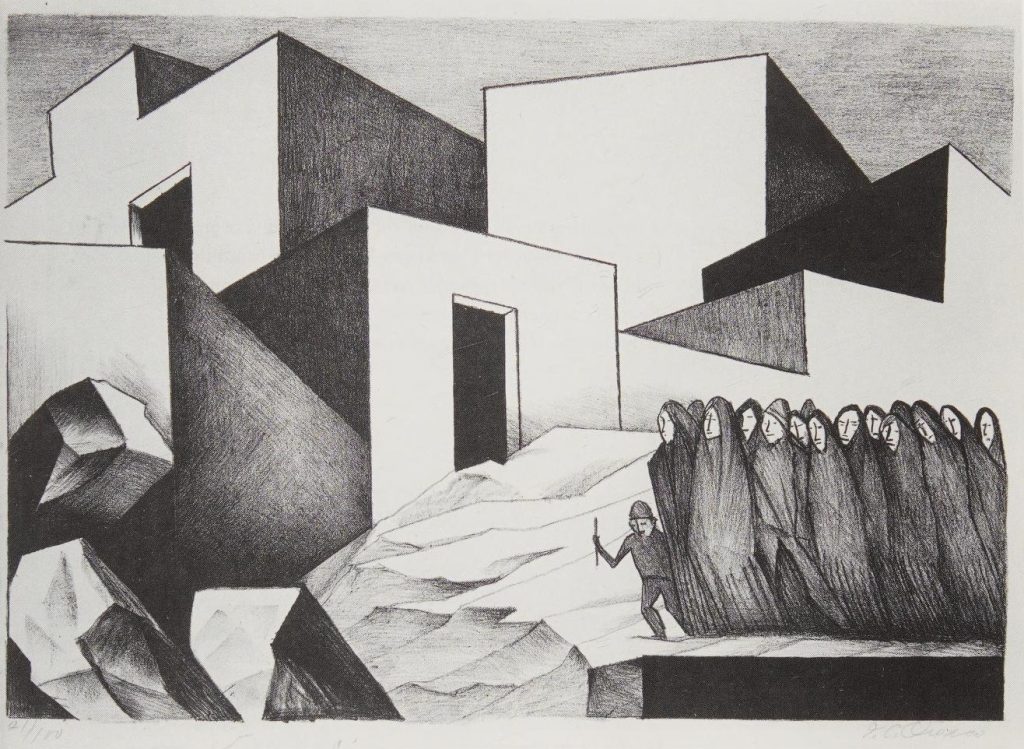
José Clemente Orozco (Mexico), Pueblo mexicano, [Mexican People], 1929*.*
Revolutionary Horizon and Latin Americanist Conviction
Given Mexico’s role in the 1826 Amphictyony, it is also necessary to remember other historical events in order to balance the scales. Once independence was consolidated, Mexico positioned itself as an insurgent vanguard against the oligarchic regimes installed in our countries, driven by the emergence of the peasant and working-class popular masses who spearheaded the first great revolution of our times.
The Mexican Revolution established agrarian reform and working-class rights as primary social demands. Its echo resonated in women’s suffrage movements across the length and breadth of the continent, in Central American National Liberation Movements, in the dissertations of José Carlos Mariátegui and Haya de la Torre in Peru, in the Guatemalan Spring, in the Cuban Revolution, in multiple and diverse guerrilla organizations—including Communist Parties—in the Sandinista Revolution, in the Landless Rural Workers’ Movement, in the uprising of the Zapatista Army of National Liberation, and in the Bolivarian Revolution, which placed a golden seal on the rebellious and long Latin American 20th century.
During this effervescent period, Mexico had the opportunity to serve as an example of profound social and state transformations: socialist education, regional-scale cultural movements like muralism, the convening of a constituent assembly, oil expropriation, and its own paradigms of diplomacy, solidarity, and sovereignty. It also possessed the political conviction to maintain close relations with socialist Cuba and to welcome large contingents of Latin American exiles displaced by the military dictatorships between the 1960s and 1980s. Today, it continues to take in victims of political persecution and receptively hosts those who choose it as a place to live.
With the installation of neoliberalism in Mexico at the end of the 1980s, a process of discontinuity—or at times estrangement—began regarding its efforts toward Latin American unity, which irremediably diversified and unfolded across multiple dimensions. Even so, in the 1990s, Mexico served as a mediator in different peace processes in Central America, as well as in the resolution of internal conflicts in Colombia and Venezuela in the current century. This review helps understand the complex ambivalence that has characterised Mexico’s relationship with Nuestra América, a dynamic also shaped by its proximity to the United States, its economic dependence, the forty million people of Mexican origin living in that country, and its geographical location in the northern part of the continent.
For all these reasons, it is of special value today to reclaim from Mexico the ideals of unity and integration inherited by the Amphictyonic doctrine and mobilized in this 21st century by the Bolivarian geopolitics of revolutionary Venezuela.
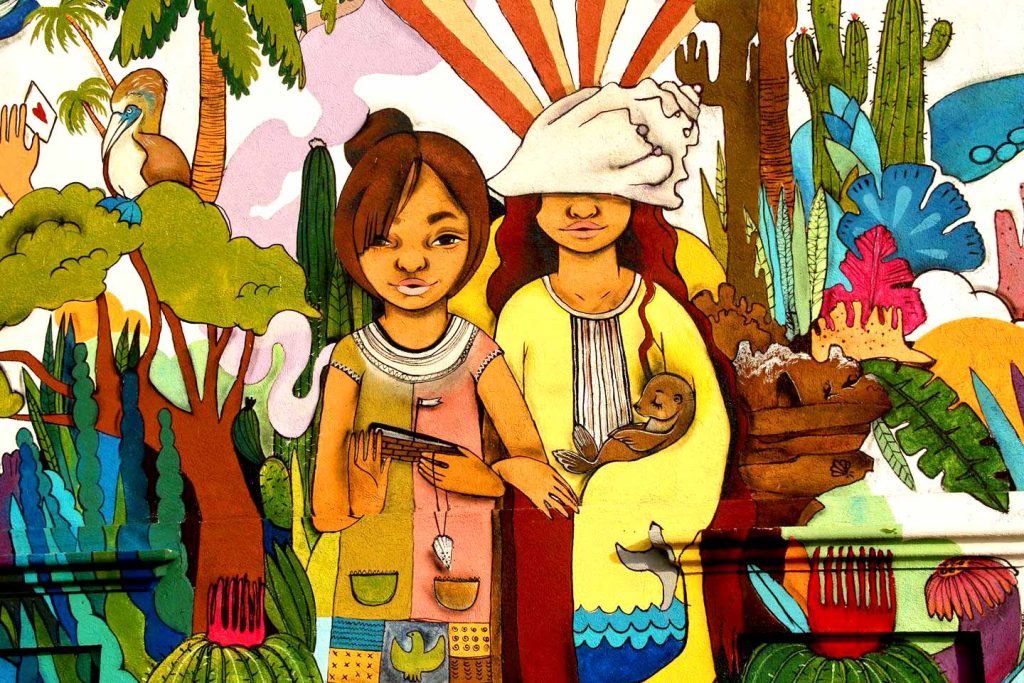
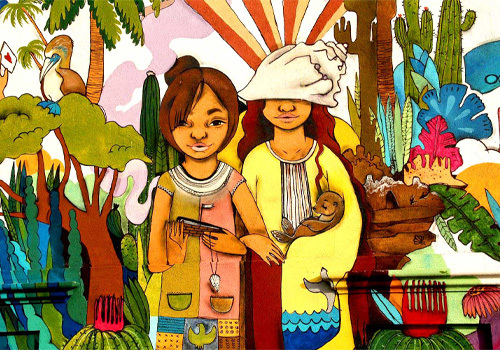
Uban Art by Eva Bracamontes (Mexico). More information: Utopix
Forever Breaking the Imperialist and Neo-colonialist Chains
It is important to consider the hypothesis that the Amphictyony dissolved because attempts at reconquest disappeared as a common threat. Although this idea has been generally dismissed, it matters because it brings us back to the sensation of being out of danger—a feeling that has repeated itself throughout Latin American history and from which we have yet to fully learn our lesson. First, because the threats of neocolonial and imperialist conquest never disappeared. Second, because it is precisely in times of calm that we must seize the moment and march forward with a firm step.
The 21st century has been the stage for progressive advances in Latin America and the Caribbean, driven forward by our societies through popular governments. We have taken up Latin American unity once more as our horizon, with Bolivarian geopolitics—inspired also by Cuba’s internationalist solidarity—as the project that has come closest to making that dream a reality. As in the past, US imperialism is the biggest opponent, willing to commit any atrocity to prevent it, as we are currently witnessing.
This year, 2026, began with a declaration of war by the United States against our Latin American peoples, with the sister republics of Cuba and Venezuela on the front lines as the most radical and successful endeavours toward our liberation. The imperialist and neocolonial threat is more active than ever, and no one is safe. In fact, few progressive governments are resisting the imperial onslaught alongside all our peoples, particularly those most oppressed by ultra-liberal and authoritarian right-wing factions.
It is worth remembering that part of the colonial yoke is a continent atomized into republics, which are more connected to Western metropolitan centres than to fraternal territories sharing the same history, identity, and culture. We must also rid ourselves of inherited territorial hierarchies between empires, viceroyalties, and captaincies, as well as the rivalries and suspicions intrinsic to Western modernity, which serve its geopolitics of war.
It is vital to defend the geopolitics of peace and the equilibrium of the universe that Bolívar envisioned as an alternative for life. In the arduous task of achieving Latin American unity, we must break the imperialist and neocolonial chains forever. Above all, we must commit to the principle that it is precisely in moments of greatest threat when we must close ranks and radicalize our positions.
Warm regards,
Georgette Kuri,
Tacubaya-Mixcoac, Mexico City
| Georgette Kuri is a Mexican Latin Americanist, professor, and researcher at the National Autonomous University of Mexico (UNAM), and a member of the Network of Intellectuals, Artists, and Social Movements in Defence of Humanity. She is the co-coordinator of the Working Group “Imperialism, neocolonialism, and intervention policies” of the Latin American Council of Social Sciences (CLACSO). |
From | Tricontinental: Institute for Social Research via This RSS Feed.