

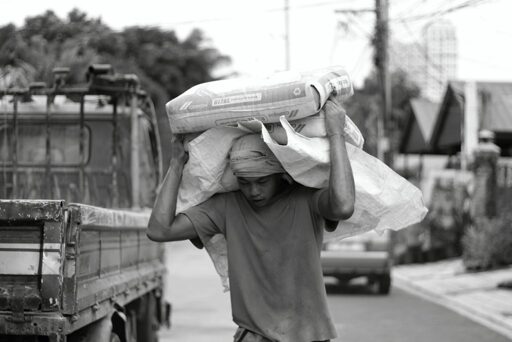
Ordinary Filipinos raised their eyebrows upon hearing the announcement that the Philippines has been classified as an upper middle income country.
According to the World Bank, the rating was based on the country’s gross national income (GNI). An upper middle income country has to reach GNI per capita of between $4,496 and $13,935. In 2024, the Philippines GNI per capita stood at $4,470.
What does this really mean?
Economists describe GNI as encompassing the total income earned by a nation’s people and businesses, including earnings from foreign investments and economic aid. In other words, GNI does not measure poverty. If at all, it is an indication of the worsening inequality in the Philippines.
Independent think-tank IBON Foundation has been pointing out the scandalous gap between the wealth of oligarchs and the impoverishment of ordinary Filipinos. From 2022 to 2026, the combined wealth of the five richest billionaires soared to 54 percent while the number of self-rated poor families grew by 52 percent in the same period, or 14.5 million families, citing a survey by SWS.
We experience this every day as we grapple with the rising costs of electricity, water rates, transportation costs, food, and other basic necessities. Minimum wage earners and those in the informal sector are most affected but even those belonging to the middle class feel the brunt of the crisis.
The so-called “historic” wage increase in Metro Manila is barely enough to meet the P1,305 daily cost of living for a family of five. Adding P85 per day would still translate to 54 percent short of the daily cost of living.
While we suffer, big corporations running our lives remain unscathed as their profits are guaranteed by the government. At the height of the oil price hikes, the Marcos Jr. administration did not lift a finger to control prices, scrap the value-added tax (VAT), and repeal the Oil Deregulation Law.
While foreign and large corporations enjoy tax holidays, ordinary workers and small local businesses have to contend with income tax and the regressive VAT on basic goods and services. Knowing that our hard-earned taxes go to the pocket of corrupt politicians is rubbing salt into our wound.
No amount of rosy figures churned out by the government and credit-rating institutions could erase the reality of the crisis faced by millions of Filipinos. So long as our economic policies continue to benefit only the few, there would be no genuine development for all. (DAA)
The post Upper middle income country, what? appeared first on Bulatlat.
From Bulatlat via This RSS Feed.